No reason for the Phillies to hang their heads about Bo Bichette as the Mets go wild
The silver lining for the Phillies is the price their rivals will pay for little upside. The Mets either win a World Series this season because of Bichette or they are right back where they started.
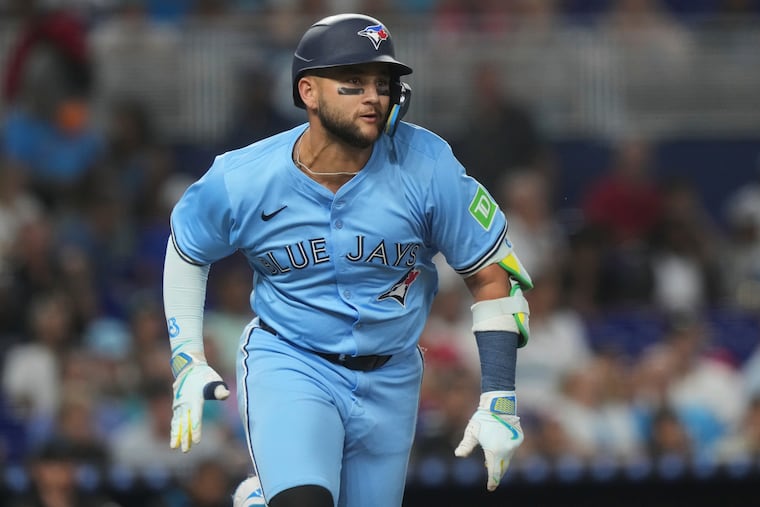
Well, that was fun. You can be mad that the Phillies didn’t sign Bo Bichette or you can be grateful for all the takes you heard along the way. However things turn out for the 2026 Phillies, you’ll always have those two weeks in winter when you could dream of a better tomorrow. No amount of money and opt-outs can take that away from you. Don’t you forget that.
Truth is, Bichette was always likely to turn out to be an illusion. The narrative won’t be spun that way. The reports emerging in the immediate aftermath of the Mets’ agreement with the former Blue Jays star on a three-year, $126 million contract suggest the Phillies thought they were on the verge of signing Bichette to a seven-year, $200 million deal. But that’s more a misreading of the state of play than it is reality.
If the Mets were willing to offer Bichette these kinds of terms, and Bichette was intent on taking the best deal for his personal finances, the Phillies weren’t going to sign him. Both of those outcomes were more likely to be the case than Bichette accepting a long-term deal that the Phillies felt made fiscal sense.
» READ MORE: Reports: Phillies bring back J.T. Realmuto with a three-year deal after Mets add Bo Bichette
That’s true — and always was true — for two reasons. The Mets are operating with a different definition of fiscal sense. They are also operating with a different level of urgency, given the departures of Pete Alonso, Jeff McNeil, and Edwin Diaz and their failed pursuit of Kyle Tucker. The Phillies could fail to sign Bichette and still have more or less the same roster that won 96 games last season. For the Mets, Bichette might have been their only hope at coming out of this offseason with a roster that looks to have improved over last year’s disappointment. Necessity plus wherewithal equals motivation. It’s tough to win a bidding war from a weaker position.
That’s not to say the Phillies were played for fools. If three years and $126 million with two opt-outs is what it took to prevent Bichette from signing with the Phillies, then the Phillies had a very real chance. Because three years and $126 million and two opt-outs is a borderline irresponsible deal. So much so that the Phillies couldn’t even think about structuring a long-term deal that would have beaten it.
Even if Bichette doesn’t opt out, he will reenter free agency at the age of 30 needing to sign a four-year, $75 million deal to come out ahead of where he would have been had he accepted the Phillies’ reported seven-year, $200 million offer. If he opts out after next year, he’ll need six years and $159 million, heading into his 29-year-old season. Kyle Schwarber just landed five and $150 million heading into his 33-year-old season.
The one silver lining for the Phillies is the price their division rivals will pay for very little upside. A lot of Bichette’s value is his youth — but the Mets aren’t getting any of that value given that he can become a free agent after next season. They are only getting the downside risk that Bichette’s value craters, in which case he won’t have been worth anywhere close to $42 million for one season and they’ll also owe him an additional two years and $84 million.
There is a reason the Phillies don’t like to include opt-outs in deals. They pretty much eliminate the ability to recoup value on your investment. Imagine if Zack Wheeler had opt-outs in his original five-year, $118 million deal with the Phillies. Basically, the Mets either win a World Series this season because of Bichette or they are right back where they started.
The Phillies can hardly stand on principle when it comes to fiscal moderation. But they are clearly in a different realm from the Mets or the Dodgers. I guess you can feel good about the fact that they will need to win games the old-fashioned way, relative to the competition. Let’s go, J.T. Realmuto!

Tim Mayza was among the best, most under-the-radar Phillies stories this year. And he's coming back for more after signing a new contract last week. The Lancaster County native joined Phillies Extra, The Inquirer's baseball podcast, to discuss his solid season, building a culture in the bullpen, the origin of his "Sheriff" nickname, and more. Watch here.
You can also subscribe to the podcast version of Phillies Extra on Spotify or Apple Podcasts.
Previous episodes: Aidan Miller | Scott Franzke | Larry Andersen | Matt Klentak | Jeff Francoeur | Luke Murton | Mike Hazen | Tony Gwynn Jr. | Kevin Stocker | Bobby Dickerson