‘Phillies Extra’ Q&A: Caleb Cotham talks aces, the development of Andrew Painter, and more
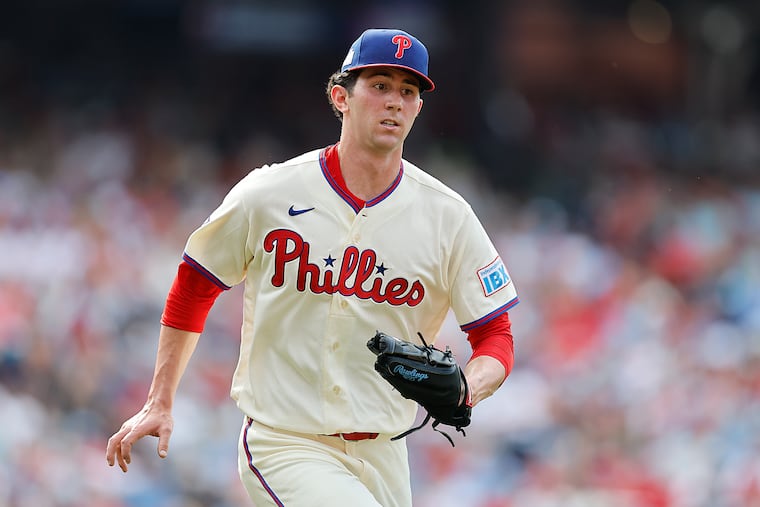
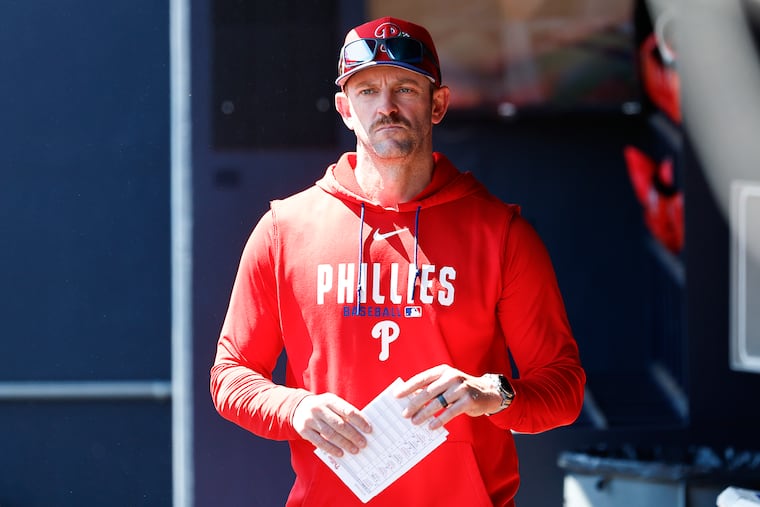
Cotham, who is in his sixth season as pitching coach, joined The Inquirer's baseball podcast to discuss the Phillies' biggest strength — their pitching.
Say this for the Phillies: They are, more or less, who we thought they were.
It wasn’t the path that everyone expected. But after a 9-19 start that got the manager fired, they are back in possession of a wild-card spot in the National League with a relatively soft schedule until the All-Star break.
And they’ve done it on the strength of their pitching.
Caleb Cotham is in his sixth season as pitching coach. He recently joined Phillies Extra, The Inquirer’s baseball podcast, to discuss Cristopher Sánchez’s emergence as the best lefty in the National League, Zack Wheeler’s wildly successful return from thoracic outlet syndrome, Andrew Painter’s rookie-year struggles, and more.
Watch the full interview below and subscribe to the Phillies Extra podcast on Spotify or Apple Podcasts.
Q: Cristopher Sánchez recently went 50⅔ innings without allowing a run, the longest streak by a left-handed pitcher since at least 1893. How much did you actually talk about the scoreless streak with him? And what was it like going through it with him?
A: Yeah, we never talked about it. I think that probably sums him up as good as anything. I never noticed a difference [in him] from my perspective. Because it’s so good in his work; it’s so good in catch play; it’s so good in how he interacts with his teammates, how he shows up on non-start days in the dugout — he’s engaged in the game; how he treats his bullpens; how he treats his pregame; the routine on the table in the training room, the weight room. I never noticed a difference.
» READ MORE: Is there a better duo in baseball than Zack Wheeler and Cristopher Sánchez? We asked the experts.
So, I think that it was kind of ho-hum for me. It was business as usual. And in the back of my head you know that that’s something, especially once it becomes pretty real. But I think the most impressive part of that for me — obviously not giving up runs for that length is the most impressive thing — but from a process standpoint, not even sniffing out a difference. Yeah, there’s a little bit [of a difference], just kind of [how] he fought to finish innings here and there. OK, that’s a little different for a third inning in this game. But for the most part, it was just kind of Sánchy doing Sánchy, and it got to a point where I didn’t know if he’ll ever give up a run.
Q: If I told you in the offseason that we’d be sitting here in the second week of June and Zack Wheeler would be pitching like this after what he went through last season with the thoracic outlet syndrome and the surgery and everything else, what would your reaction have been?
A: I’d be pretty thrilled. Zack knows himself so well, and he knows his game, he knows what his kind of shortcomings are, what his strengths are. He’s got [catcher] J.T. [Realmuto] back there. I think there’s now six years where I know Zack, and there’s a catalog of cues and feels and things we’ve talked about and worked on. So, I think you know that’s all thrown into kind of the cauldron. But Zack’s the linchpin.
It doesn’t surprise me that he’s back to kind of the [pre-surgery] competition level. It is very impressive that the stuff is where it’s at. I think the velocity is one thing, but also just the pitch shapes, like the splitters. The splitter is arguably as good as it’s ever been, movement-wise. The sweeper has been very good. He’s thrown last couple starts some of the better curveballs he’s thrown. The cutter was kind of a pitch he didn’t quite have early in the year; it’s gotten better lately, even though he threw a really good one [last week in Toronto] that a guy put a good swing on. But just the skill of the pitch shapes and controlling movement, I think that, to me, is incredibly impressive because the feel aspect and him not walking guys. His walk rate right now is as low as it’s been. Last year was a really good year, and it’s low again.
» READ MORE: What if the Phillies’ most impactful addition was a resurgent Trea Turner? He’s working to make it happen.
I still think there’s another level for him. I think he has another level he can go to, which happens every year anyways. But I think the people around him and his dedication — he has a very high desire to be really, really good; it bothers him to not be good. So, from that aspect, I’m not surprised. But it’s still very, very impressive, and it’s not easy. He makes it look very easy, and it’s not.
Q: What’s the message to Andrew Painter right now? Because it sounds like the focus with him is really just on throwing strikes.
A: It might not feel that way, but he has thrown strikes. I think he’s 80th-percentile [in] walk rate, breaking into the big leagues this year with ABS [the automated ball-strike system]. To me that’s very impressive. It would be way easier to walk more guys … it’s easier now than it ever has been to throw balls. The zone’s very small. There’s a way hitters can turn those borderline pitches that are called [strikes] into balls, so I think from that perspective he’s done pretty good. He’s held the zone.
His superpower is he can land a bunch of offspeed for strikes, but it’s kind of just inside that, what’s the level 1.5? I think being out of the zone with two strikes is something we’ve talked about a lot. That speaks to the K-rate. I think he’s getting a lot of opportunities at striking guys out, he’s just not quite finishing them. And it’s not always about the swing and miss on the heater. Sometimes it’s just bouncing a breaking ball when you need to. I think if you do that, you pose a little bit bigger problem to the hitter. Then, they’re a little more apt to miss the first fastball. But I think, specifically to the fastball, his ability to pitch down in the zone, throw strikes at the bottom, to not show them the up [above the zone] quite as much will maximize his chance to get a swing and miss when he needs to go up.
» READ MORE: Is it finally time for Mike Trout to be traded? The all-in Phillies make too much sense.
… if you throw the fastball up, up, up, up, up, their eyes have seen it, the foul ball turns maybe into a ball in play, and kind of cascades up the damage hierarchy. And that foul ball might turn into whiff if it’s the first time they saw it. So, I think just a little bit of hiding the ball from the hitter, not showing them the best location, and to me that’s control of the zone and control of height. But I think he has thrown strikes, he’s not walking them, but he’s not [striking them out] as much as we think he can, and I think he will. That just comes from a little bit of experience.
I think he’s held his own. There’s been games where he’s lost his zone, and the feeling on the mound where you don’t quite know where it’s going a little bit at times. That’s a pretty lonely feeling. And what I know about Paint is that he has fought through those outings. He threw 40-42 pitches in the first inning the other day [in Toronto], and he found a way to get into the fifth. That’s impressive to me, and that’s going to be something that’s going to help him long term.

The Phillies and Braves are set to square off again this weekend in Atlanta, so it's the perfect time to check in with Jeff Francoeur, who played for both teams and calls Braves games on TV and radio. Francoeur joined Phillies Extra to help break down the race for NL East supremacy. Watch here.
You can also subscribe to the podcast version of Phillies Extra on Spotify or Apple Podcasts.
Previous episodes: Luke Murton | Mike Hazen | Tony Gwynn Jr. | Kevin Stocker | Bobby Dickerson | Jim Bowden | John Middleton | Ryan Howard | Dan Baker | Ricky Bottalico