Phillies radio calls give him ‘goose bumps.’ Then he shares those chills with everyone on social media.
Nick Piccone’s hustle after every game gives a radio broadcast a new life, allowing Scott Franzke’s words to be reheard again and again. “It’s flattering,” says the Phillies’ radio voice.
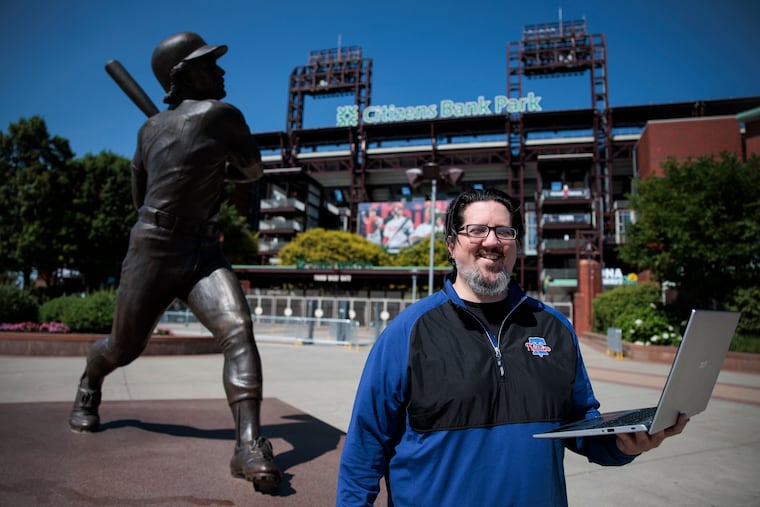
The Phillies game wasn’t over yet last month but it was over as Nick Piccone kept the TV on mute like a distraction in the background. The Phils trailed the Nationals by two runs and were down to their last strike with the bases empty in the ninth on June 23. It was over.
But Piccone — just like lots of diehards who accepted a loss but refused to stop watching — didn’t turn it off.
“Just in case,” he said.
And then it happened. The Phillies scored eight runs with two outs, delivering the most unlikely win of the season. It was time for Piccone to work. He’s built a following in recent seasons for being the guy who clips the radio calls of Philly sports highlights and posts them to social media.
» READ MORE: One-stop shopping for the Phillies at the trade deadline again? Here’s three teams that could be a fit
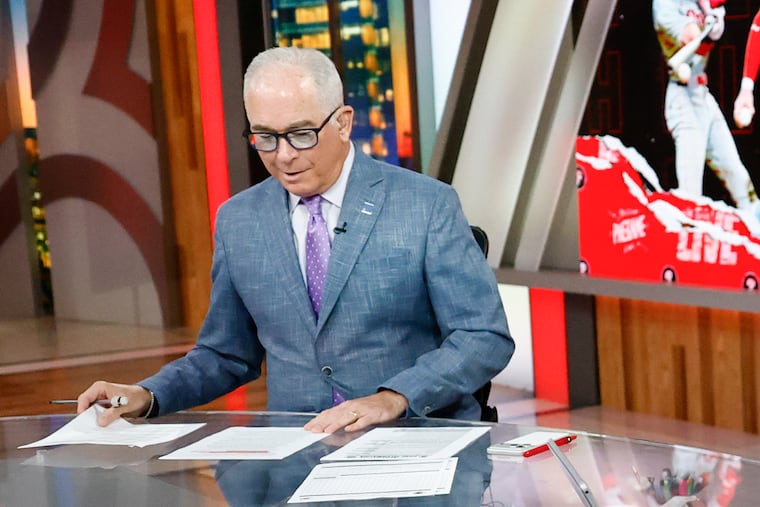
First, he had to listen to how Scott Franzke — the Phils’ radio voice on 94.1 WIP — described the action.
“I got goose bumps when I listened to it,” said Piccone, who lives in Delaware County. “And I just knew Phillies fans are going to love this.”
He posted a montage of Franzke’s pitch-perfect calls that night and then watched them go viral. Philadelphia loves its teams but the city has always had a deep relationship with the voices, putting Piccone at the intersection of fandom and the way we enjoy it.
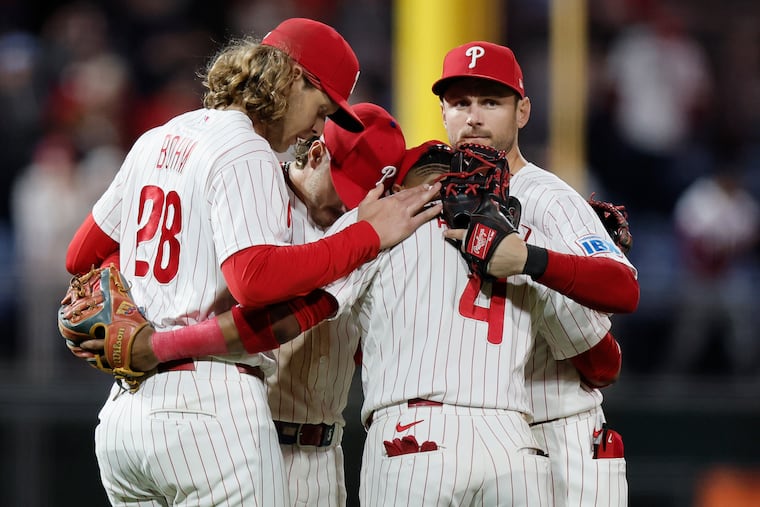
Brandon Marsh’s homer was thrilling, but how much better did Franzke’s narration make it feel?
“You could tell that the fan kind of came out,” Piccone said. “Like, he didn’t think that was going to happen. He had the same reaction that we did, and he’s calling it. He reaches that second level for a regular season game when I’m sure he probably thought this was going to be a loss. You could hear the surprise in his voice.
“If you’re listening live on the radio, you feel that instantly. And even if you’re watching the video, you’re like, ‘Oh my God.’ Having him feel what we feel and hear his voice match what we’re feeling inside, makes it so much better. It makes those moments so much better.”
Piccone does not get paid to post his videos, but he commits himself every game — “I watch every pitch,” he said — to tracking the calls of the big plays and sharing them on social media. He does the same thing for other teams. It’s how he enjoys the game.
It takes about 10 minutes for Piccone to edit the clip on his computer and post it on social media.
“People would message me from Europe or Asia and say, ‘I’m stationed here’ or ‘I moved here for work, and your videos make me feel like I’m home,’” Piccone said. “When I started doing it, I wasn’t even thinking about that stuff. So when people say that I was able to provide that, I was like, ‘Wow.’ That’s a huge reason why I continue to do it.”
» READ MORE: Roy Halladay was a high school pitching coach in 2017. It helped him enjoy baseball again, just before he died
His hustle gives a radio broadcast a new life, allowing Franzke’s words to be heard again and again. Some people want to relive a moment they already enjoyed. Others want to feel closer to home.
“It’s flattering, honestly,” Franzke said. “It’s humbling to know that it resonates enough with someone to know that they’re willing to go through that sort of trouble and effort to spread the word.”
From Dolly to Franzke
Franzke was told when he first got into the business to have someone in mind to whom you are broadcasting.
“For me, the general Delaware Valley listener is stuck in traffic on the Schuylkill,” Franzke said.
His voice is the soundtrack of traffic jams, days at the beach, and backyard barbecues. Kids tune their radio to the Phils while they’re putting on their PJs, just like their grandparents used to sneak transistor radios under their pillows. They listen to Franzke on their porch at night and power walk around the neighborhood with his voice in their earbuds.
The Phillies broadcast their first game on the radio in 1936 with a former umpire named Dolly Stark calling the action. He was regarded as the National League’s top ump but quit after the 1935 season when the league balked at his request for a raise from his $9,000 salary.
“A new sports thrill,” said the advertisement for the games that were broadcast on WIP 610. “Seeing the game through the umpire’s eyes! Hearing what he thinks about every play, while that play is being made! And it’s a thrill that will last all summer.”
Stark called games for just one season before he returned to calling balls and strikes. But the game became the perfect radio sport. The pace is slow enough for the broadcaster to share a story and make you comfortable. Yet the action becomes exciting enough for them to build drama and make you feel something.
The umpire was followed by greats who became voices of summer like By Saam, Bill Campbell, Harry Kalas, and Franzke. Richie Ashburn ordered pizzas, Chris Wheeler taught you something, and Larry Andersen admires the umpire. There’s just something about baseball on the radio. It works.
» READ MORE: A fan kept Tug McGraw’s 1980 World Series jersey in his dresser. Now it’s being auctioned off.
“I think one of the reasons that baseball on the radio still works is because people can consume it passively,” Franzke said. “They’re driving, falling asleep in their beach chair, or doing yard work. They can do other things and be a part of it. A lot of people like the audio wallpaper, if you will. It’s there. It’s around them. They enjoy it passively and do other things in their life. We’re just along for the ride, I guess.”
Piccone’s clips show that Franzke is more than just enjoying the ride. He’s driving the car. It wasn’t a silent clip of Marsh’s homer that went viral last week. It was the clip of Marsh’s homer with the announcer sounding just as stunned as you were that it happened.
Franzke said it’s the moment that “generates the goose bumps,” since he’s just a guy. And it was the guy calling that moment last week that gave Piccone chills.
“It doesn’t matter when it is during the season, September or April, the story of the game takes over,” Piccone said. “I think he tells that story perfectly in his calls. Offense, a great defensive play, a strikeout. That emotion comes through and you know it’s a big moment.”
Being that guy
Piccone grew up on the 1993 Phillies and started watching the other teams in 1999 as a freshman at Kingsway High School. He soon was a diehard: devastated when they lost and elated when they won.
“I just consume it,” Piccone said last month. “Like, I’m mad the Phillies lost today.”
But the guy who chops up the audio of every radio broadcast didn’t grow up listening to the radio. He just watched it on TV.
“People who say they were brought up listening to sports on the radio, I’m kind of jealous of them,” Piccone, 40, said. “Because I didn’t even think of consuming sports in that way when I was younger. I’m glad I’m able to do it now.”
» READ MORE: ‘Overlooked’ Santino Harwood got his chance at an HBCU despite not being Black. Now he’s in the Swingman Classic.
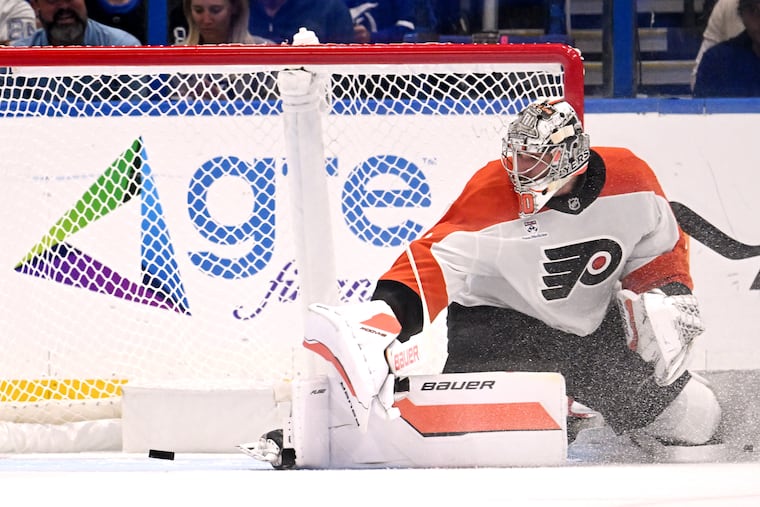
“We just have amazing play-by-play guys. You think of the Phillies, you think of Franzke. You think of the Flyers, you think of Tim Saunders. You think of the Sixers, you think of Tom McGinnis. Eagles, Merrill Reese and Mike Quick. They’re synonymous with the teams.”
Piccone planned to do what he does now — clip the radio call and match it to the TV feed — when the Eagles played the Patriots in Super Bowl LII. But his buddy’s Wi-Fi dropped that night, so Piccone closed his laptop and watched the game like a normal fan. And then the Eagles won, and he wished he had the clips.
He made sure to have a stronger connection in 2022 when the Phillies went to the World Series. He clipped every call that October, and his social media following soared.
He sends out Franzke’s call along with the team’s Spanish broadcasters and the opponent’s call. Piccone noticed that the TV calls are the ones usually shared by the teams or networks. The radio guys, he thought, weren’t getting their due.
People soon started messaging him for specific calls or pointing out things he may have missed. He suddenly felt like he had a responsibility. He became that guy.
“It’s fun being known for that,” said Piccone, who writes for Crossing Broad. “I like being that guy.”
The Phillies season likely will end in October again, giving Piccone plenty of moments to share. The goose bumps, he said, usually are felt in the fall when the stakes are higher. But sometimes the broadcaster makes you feel it on a weeknight in June. And that’s why you leave the game on.
“People will say, ‘I heard your call,’” said Franzke, who is not on X, formerly known as Twitter. “And there’s two places they heard it: WIP playing it back or on social media. It’s cool that Nick invests that kind of time. At the end of day, this promotes what we’re doing.”

The Phillies haven't won a playoff series since 2023, and their postseasons keep getting shorter and shorter. How can they fix it? Radio play-by-play announcer Scott Franzke joins Phillies Extra, The Inquirer's baseball podcast, to discuss Trea Turner's future, the managerial uncertainty, whether the Phillies can get "creative" to change the mix of the roster, and more. Watch here.
You can also subscribe to the podcast version of Phillies Extra on Spotify or Apple Podcasts.
Previous episodes: Larry Andersen | Matt Klentak | Jeff Francoeur | Luke Murton | Mike Hazen | Tony Gwynn Jr. | Kevin Stocker | Bobby Dickerson | Jim Bowden | John Middleton