
Partner Content
At Jefferson Health, a High-Tech, High-Touch Vision of Care
With access to faster appointments, at-home care options, advanced treatments, and ethical use of AI, Jefferson Health’s President, Dr. Baligh Yehia, is putting people first.
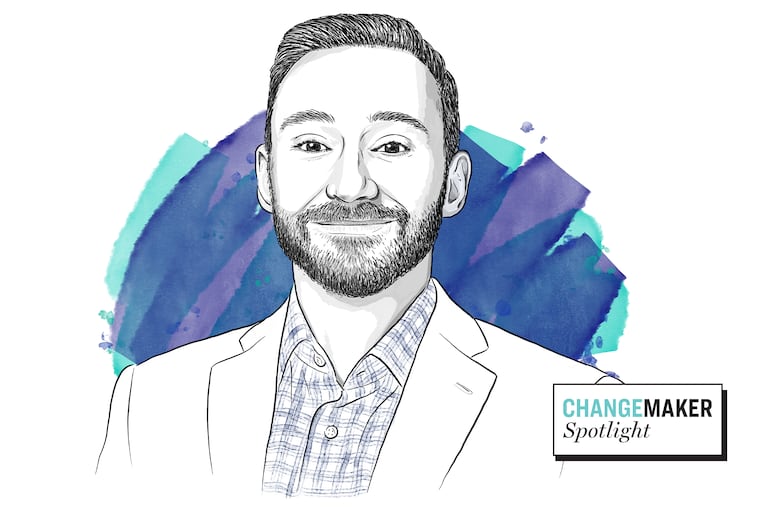
For Dr. Baligh Yehia, transforming health care starts with a simple idea: access should feel effortless. As president of Jefferson Health, one of the nation’s largest academic health systems, Yehia is rethinking what access means and focusing on helping patients move through every step of their care journey seamlessly.
Jefferson Health is building a model that goes beyond traditional sites of care to meet people where they are — whether that’s through virtual visits, community-based programs, or care delivered directly in the home. The goal isn’t just about convenience; it’s also about confidence: reducing uncertainty, easing anxiety, and making care feel more human. Patients can now connect with oncology teams within 48 hours of a concerning diagnosis. Virtual care accounts for a significant share of visits, expanding Jefferson’s reach well beyond its campuses. And, programs like Telestroke and Teleneurology are bringing specialized care into underserved communities in real time.
For Yehia, leadership in health care today demands a redesign of the experience. “Every person is different. Every community is different,” he said. “If we’re serious about access, we have to design care around that reality.” At Jefferson, that philosophy shows up in a powerful commitment: put people first, and build everything else around them.
How do you define true access to health care?
Access to health care today is about far more than getting an appointment. It’s about how easily people can find care, understand it, and move through it. That includes virtual visits, in-person care, home-based services, follow-up support, and connections to medications and specialists.
True access is coordinated. It’s personalized. And it meets people where they are: in their lives, not just in our system.
Jefferson is creating as many “front doors” as possible for patients. What does that look like in practice?
At Jefferson, we think every interaction is a front door to better health, whether it’s an ER visit, urgent care, primary care, a community health screening, mobile unit, or one of our education programs. The goal is simple: make it as easy as possible for people to get the care they need, when and how they want it.
We’ve invested heavily in virtual care, because it expands access in meaningful ways. For example, our virtual primary care program has expanded rapidly and now represents about 10% of appointments. It enables patients to connect quickly while still maintaining the trusted relationship with their care team. And when you pair that with programs like Teleneurology and Telestroke, which deliver neurological evaluations via secure video technology, you can deliver world-class specialty care to communities that otherwise wouldn’t have access. We’re able to support local communities with expert care through a combination of in-person and virtual care. That’s powerful.
“The goal is simple: make it as easy as possible for people to get the care they need, when and how they want it.”
The Same Day/Next Day Cancer Care program allows patients to see an oncology clinician at Sidney Kimmel Comprehensive Cancer Center via telehealth in 48 hours or less. Why does being able to make an appointment quickly matter?
Because it removes one of the hardest parts of care: uncertainty. When someone hears the word “cancer,” time slows down, and all too often, patients need quick interventions. This program addresses that. Within 48 hours, patients are connected to an oncology team and a path forward.
It’s about acting quickly but also about giving people reassurance, clarity, and a sense of control at a moment when they need it most. It’s about access to peace of mind.
How do you compete with new companies offering medications online?
It’s true: there are more options than ever for accessing medications online, but not all are rooted in coordinated, comprehensive care. At Jefferson Health, we believe access must be paired with expertise, safety, and a relationship you can trust.
Patients aren’t just accessing a service; they’re entering a system designed around their needs. That’s what we can offer, and it’s fundamental to who we are.
What are some of the most effective ways Jefferson is serving diverse communities throughout Philadelphia?
This is fundamental to how we think about access. It starts with communication, ensuring every patient can engage with their care in a way that feels clear, comfortable, and personal. We’ve expanded translation services to support more than 200 languages, allowing patients and caregivers to connect more easily with their care teams. But access goes beyond language. It’s also about understanding people in the context of their lives, their families, their cultures, and what matters most to them. That’s what it means to truly live out our first value to “put people first.”
We’ve also made significant investments in the communities we serve, including $2.7 billion in community benefits. That includes expanding health literacy, supporting community health workers, and partnerships in the neighborhoods we serve. Our community health workers are trusted voices who help connect people to screenings, healthy food, and preventive care, and help them navigate a system that can often feel complex.
Ultimately, this is about building trust and improving outcomes at the community level. When we understand what matters most to someone — whether it’s staying healthy to dance at a child’s wedding or simply maintaining independence — we can better support them in achieving their goals.
Jefferson recently launched a systemwide artificial intelligence strategy aimed at reclaiming more than 10 million hours of clinician time by 2028. How is Jefferson using AI without losing the human touch?
AI should give clinicians something back: time. Today, too much of their day is spent on administrative work: filling out forms, documenting in the electronic health record, and communicating with insurance companies. If we can use AI to reduce that burden, we enable them to be more present with patients and with each other.
Joe Cacchione, Jefferson CEO, and I talk a lot about the importance of being high-tech and high-touch. Technology should enhance the connection, not replace it.
What’s one thing you wish people knew about Jefferson Health that they may not know?
Jefferson Health combines deeply compassionate, personalized care close to home with some of the most advanced therapies and innovations in medicine today. While many people know us for our community connection, they may not realize just how cutting-edge our care truly is.
For example, our Neurorestoration program is leading the way in innovative treatments like vagus nerve stimulation (VNS) therapy, offering new hope to patients with complex neurological conditions. We are also pioneering breakthroughs in transplant care, including performing North America’s first living-donor RAPID liver transplant — a novel, staged approach that expands access to lifesaving transplantation for patients who previously had limited options.
As an academic health system, we provide patients access to hundreds of clinical trials, giving them early access to therapies that are shaping the future of medicine and improving outcomes every day.
Whether it’s heart and vascular care, neurology, oncology, women’s health, rehabilitation, transplant, or beyond, our teams bring together expertise, innovation, and humanity to deliver exceptional care at every stage of life.
How do you lead in an era of rapid change?
Leadership today is less about having all the answers and more about setting direction.
I often think of it as being a compass rather than a map. A map tells you exactly where you’re going and how to get there through predictable steps. However, all too often, the path isn’t clear. You have to be the compass that moves your team in the right direction, while staying grounded in your values: put people first, do the right thing, and pursue excellence. You can guide teams through uncertainty with clarity and confidence.
When you think about the culture you’re building at Jefferson Health, what do you prioritize?
At Jefferson, our most important asset is our people, period. Not our buildings or our technology, but the individuals who care deeply about their work and about each other. That shared commitment shows up in how we serve our patients every day, and it drives our focus on putting people first. That mindset extends to how we lead. It’s about doing the right thing consistently, whether that’s a small, everyday action or supporting someone at an important moment in their career.
PHILLY QUICK ROUND
I feel most like a Philadelphian when… I am walking or running along the Schuylkill and past the Art Museum. You move through so many of the city’s most iconic symbols — the river, Boathouse Row, the Rocky statue — and you can feel the energy and history of Philadelphia all at once.
On a day off, you’ll find me… spending time outside gardening, grabbing a coffee, or walking our standard poodle, Buzz.
What I love most about Philly is… its grit. It can be mistaken for toughness, but to me, it’s really a deep sense of pride and commitment Philadelphians have to the city and to each other.
What does being a changemaker in Philadelphia mean? It means making a tangible difference: strengthening communities, expanding opportunity, and finding ways to give back. At its core, it’s about improving lives and helping move the city forward.
Lucy Danziger is a journalist, an author, and the former editor-in-chief of Self Magazine, Women’s Sports & Fitness, and The Beet.