
Partner Content
A Vision to End Hunger in Philadelphia
Loree Jones Brown, the CEO of hunger relief organization Philabundance, believes addressing the root causes of food insecurity is the key to ending it.
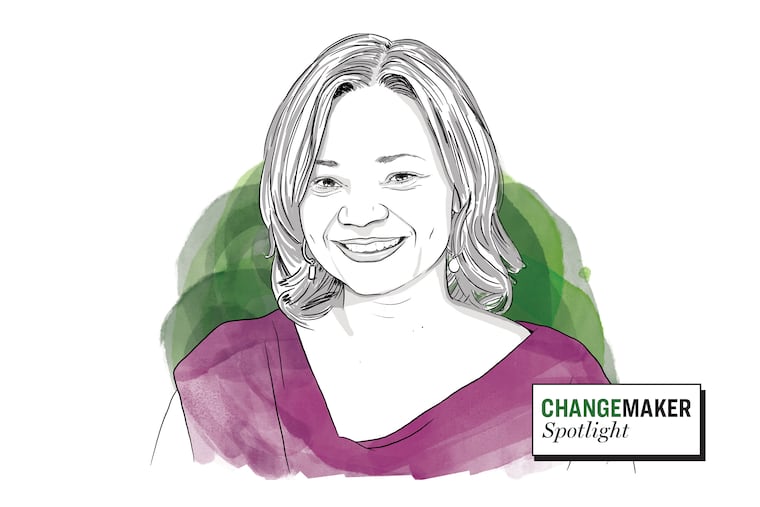
“Everyone deserves the dignity, right, and ability to make choices for themselves and their families,” Loree Jones Brown, the CEO of Philabundance, said. Brown, a Philadelphia native, is an energetic leader with a background in public service, education, and nonprofits. The hunger relief organization she leads serves nine counties across southeastern Pennsylvania, distributing more than 50 million pounds of food each year. It also strives to end the root causes of hunger, in part by addressing job insecurity: Philabundance operates a community kitchen that offers professional training for the food services industry. With Brown at the organization’s helm, Philabundance hopes to ensure every family in the greater Philadelphia area has access to healthy food today, tomorrow, and in the future. Here, the CEO explains her approach to solving food insecurity now and for good.
Where did you grow up?
I’m actually from Philly. I was born here at the Naval Hospital in South Philly. I moved to Germantown, then we moved to South Jersey. Then I came back to Philly for high school, went to Girls’ High, and then went to Atlanta for college, and Princeton for grad school.
What drew you to lead Philabundance?
Service has been central to my life. Marian Wright Edelman once said, “Service is the rent we pay for being. It is the very purpose of life and not something you do in your spare time.” That’s always stayed with me. For me, service isn’t just a job. It’s who I am.
What drew me in [to Philabundance] was the organization’s complexity. It addresses the many layers behind food insecurity. Often, hunger is tied to other challenges like homelessness or health issues. My past experience in government, social services, education, and nonprofits helps me navigate these interconnected problems and support our mission.
How would you describe Philabundance’s mission?
Simply: to drive hunger from our communities today and end it for good. That means feeding people every day and tackling the root causes of hunger. We manage a complex operation — donating, rescuing, and purchasing food, including fresh fruits and vegetables — to ensure our neighbors have healthy options. Partnering with grocery stores and other organizations, we work to get safe, nutritious food onto tables and create lasting solutions. We also provide emergency food, run community kitchens, partner with health care programs, and advocate for policies that support people facing hunger.
I’m speaking to you now from our community kitchen, where we run a 16-week culinary training program for adults on public assistance. It teaches not only knife skills, but life skills, helping people build careers and stability. Philabundance isn’t just about food assistance, it’s about long-term solutions. That’s what drew me to lead this work. Philabundance takes a whole, vertical approach to food insecurity. It’s not just solving the problem, somebody needs to be fed today. It’s really about how to solve the root causes of hunger, both in terms of individuals’ lives and also the policy and problems that have led to this situation.
We had a participant, for instance, who previously worked in local transit but needed a new path. Through our community kitchen program, she gained culinary skills, ServSafe certification [a food safety certification for food service workers], and a renewed sense of purpose. We also connect graduates with internships and jobs at restaurants, casinos, schools, and other local kitchens. A skilled team of instructors, including professional chefs, guides them through the program.
“Knowing that, on any given day, a child in Philadelphia ate because of us is powerful.”
What motivates your work?
I find motivation in the impact we have every day. Even small wins matter. This past summer, we provided 70,000 meals to children who weren’t getting food at school. Knowing that, on any given day, a child in Philadelphia ate because of us is powerful.
I also draw inspiration from our 330 partner organizations. Visiting food pantries, you see volunteers showing up with heart, creating a dignified experience for people accessing food. At one pantry, Blessed Virgin Mary Church in Darby, families can select groceries and clothing in a bright, welcoming space. Seeing neighbors treated with care and respect reminds me why this work matters and fuels our commitment to fight hunger.
How have recent changes to federal programs like SNAP and Medicaid affected your work?
Federal cuts have drastically shifted the landscape. During the pandemic, food banks, including ours, grew rapidly. Generous donations from individuals, foundations, and corporations, along with government support like stimulus checks, SNAP expansions, and the Child Tax Credit, allowed us to meet unprecedented needs. From 2020 to 2022, we doubled in size.
Since those supports ended, maintaining food quantity and quality has become harder. Food insecurity has risen sharply: in our nine-county region in Pennsylvania and South Jersey, the number of people facing hunger jumped from 500,000 in 2021 to nearly 700,000 in 2023. Cuts to SNAP, combined with our own federal funding losses, including $1.5 million we previously used to purchase local food, make it extremely difficult to expand. Our goal is to at least maintain our $8 million food budget to continue providing the same quantity and quality of food.
We’re also stepping up support for SNAP itself, helping people navigate the application process and connect with benefits. With new restrictions, more people may lose access, and state budgets may not fill the gap. Volunteers, community partners, and donors remain critical as we try to bridge that divide.
We couldn’t do it without our partners. Thousands of volunteers contribute tens of thousands of hours each year, saving us roughly $700,000 in labor. Our grocery and food industry partners donate around 27 million pounds of food annually, and our 37,000 donors, who make contributions of $5 and up, make it possible to sustain our programs.
How do the economic challenges you mentioned affect donations?
Donations fluctuate with the economy, but we also rely on strong partnerships with grocery stores and the food industry. Our food sourcing team connects with stores at both corporate and local levels to rescue safe, healthy food that might otherwise go to waste. Last year, 17 million of the 27 million pounds we distributed came from rescued food, collected by Philabundance or our nonprofit partners, and then delivered to people in need.
These supermarkets will donate food and funds. Sometimes you’ll see it in the register roundups. When you go to a lot of grocery stores, there’s that prompt at the end that asks, “Do you want to round up for your local food bank?” That’s one of the ways that they’re able to provide us with money. So some of it’s from their customers, but some of the funds are from the companies. Stores like Giant and Acme are among our largest donors of food and funds.
How do you measure success for Philabundance and your team?
We track key metrics across all programs. In the community kitchen, we measure enrollment, graduation rates, and post-graduation salaries, aiming well above minimum wage. On the food bank side, we track how much food reaches communities and its quality. Last year, 92% of the food we purchased and distributed met the national standards for healthy food. Success is seeing people fed, gaining skills, and building stable lives.
What’s the biggest misconception about food insecurity, especially in Philly?
Many people misunderstand who experiences food insecurity. Increasingly, dual-income and even middle-class households need help because the rising costs of housing, medicine, and food outpace wages. Food insecurity exists everywhere, even in wealthy counties like Chester and Montgomery, affecting working families, seniors, veterans, and children. I often meet people who once relied on Philabundance themselves — bank tellers, supermarket workers — and now volunteer to help others.
Finally, many don’t realize what a modern food bank does. We provide more than canned goods. Our standard is food we’d serve our own families, including fresh fruits, vegetables, lean proteins, dairy, and a variety of options to meet people’s preferences.
Can you share a story about a community positively impacted by Philabundance?
One story that stands out is our “birthday boxes” program from the community kitchen. Families with limited resources often can’t afford birthday cakes or cupcakes to bring to their children’s classes. So we created boxes with cake mix, applesauce, cupcake tins, candles, and even mac and cheese for a celebration. Before we launch anything, we check with our neighbors to make sure it meets their needs.
When I told this story to people I know who are moms, they were like, there’s all this shame that comes if you can’t send cupcakes or birthday treats to school for your kid. I know it might seem superficial when you think about the impact of food insecurity on diet-related diseases, but this is huge for kids. If we can tell that kid, you matter because you do have worth, it’s important to them.
What gives you hope that hunger can be ended?
The pandemic showed that when individuals, nonprofits, and government work together, we can prevent dramatic spikes in food insecurity. While some communities in rural areas, families of color, and children still faced challenges, coordinated support helped many avoid the worst impacts. That collaboration gives me hope that with the right resources and commitment, we can continue to make meaningful progress against hunger.
Another source of hope is the power of community. When thousands of individuals give what they can, like our 37,000 donors, we move closer to addressing hunger. The pandemic also highlighted the link between food and health. Food-insecure communities fared worse during the pandemic, reminding us that access to healthy food is essential for overall well-being. That’s why we’re partnering with health care institutions to connect nutrition and health in meaningful ways.
Across the region, health care organizations run pantries, some with food banks like ours, some independently. We also partner with health insurers to provide healthy meals for food-insecure Medicaid members, prepared in our community kitchen by students and graduates. They are delivered directly to homes. It’s a full-circle approach to tackling hunger.
What do you hope people will gain from Philabundance?
Independence. Everyone deserves the dignity, right, and ability to make choices for themselves and their families. That’s why, even in the short term, we let people choose their own food at the pantry. True dignity comes from being able to walk into a store and decide what’s best for your family.
Have you read anything recently that’s inspired you?
I usually listen to books. Right now, I’m listening to The Black Cabinet: The Untold Story of African Americans and Politics During the Age of Roosevelt, by Jill Watts, which is fascinating. It’s about the government. I’m also listening to Matthew Desmond’s Poverty, by America. His previous book, Evicted: Poverty and Profit in the American City, really blew my mind when I first read it. It showed how policy decisions shape people’s lives.
Do you have a mantra you live by?
“Progress over perfection.” That’s always been my mantra. We’re tackling big problems, and we won’t always get it right. But failure isn’t the end of our work. It’s a chance to learn from what didn’t work and move forward.
PHILLY QUICK ROUND
Your favorite Philly food? Fried chicken from SOUTH Restaurant & Jazz Club.
Favorite small business? I love BLACQSKIRT in Mount Airy, a small clothing and gift shop.
Sports team? I root for all the Philly teams, especially the Eagles and Phillies right now. And eventually the Sixers and Flyers will come back!
Favorite athlete? Jordan Davis of the Eagles came to Philabundance about three years ago and volunteered. He came in with his parents and his little brothers, and they were absolutely the sweetest people you’d ever want to meet.
You don’t know Philly until you’ve… really walked here, which I’ve done. I once walked more than 26 miles through Fairmount Park with Mayor John Street.
What do you wish people knew about Philly residents? We’re passionate about sports, our city, and everything Philadelphia!
A great Philadelphian? Ken Frazier, a North Philly native who became a lawyer, a CEO, and has been an advocate for expanding access to quality affordable health care in underserved communities.
Philadelphia-based artist? Jill Scott.
Favorite thing to do in Philly? Longwood Gardens, just walk and just look at the beauty.
A place you wish everyone would visit at least once? The African American Museum in Philadelphia.
Lucy Danziger is a journalist, an author, and the former editor-in-chief of Self Magazine, Women’s Sports & Fitness, and The Beet.