
Partner Content
Helping Philadelphia’s Children Heal
Antonio Valdés, the CEO of Children’s Crisis Treatment Center, on the organization’s more than 50 years of helping young people flourish and communities thrive.
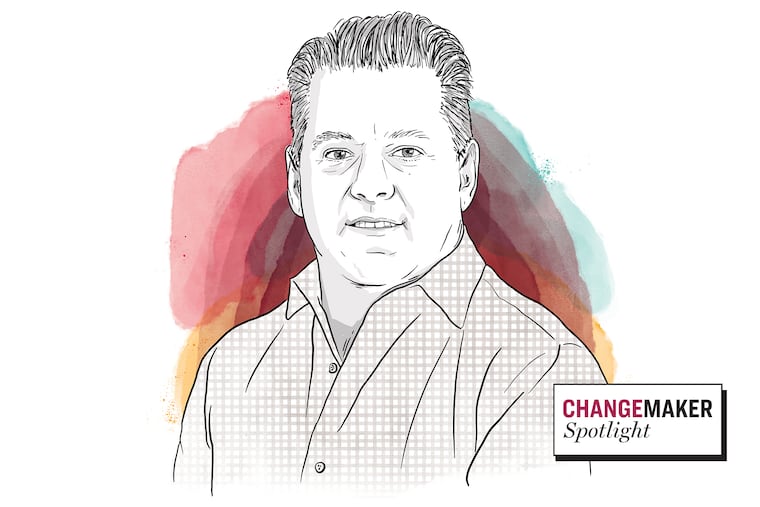
For more than five decades, Philadelphia’s Children’s Crisis Treatment Center (CCTC) has opened its doors to vulnerable young people and families who have been impacted by violence, loss, and adversity. “Helping a child heal doesn’t just change their life. It strengthens their family, their extended network, and, in a very real way, their community,” the organization’s CEO Antonio “Tony” Valdés, 61, said. “That’s what continues to inspire me: understanding that the work we do at CCTC ripples outward, touching countless lives beyond the one child sitting in front of us.” Since taking the helm in 1997, Valdés has transformed CCTC from a small local agency into a cornerstone of children’s mental health care in the greater Philly region, helping the nonprofit expand from four programs to 15, to reach more than 3,500 young people each year.
Valdés has spent his career focused on the guiding belief that every child, no matter their circumstances, deserves the chance to feel safe, seen, and supported. Under his leadership, CCTC has redefined what community-based care looks like, meeting families where they are, honoring their cultures and experiences, and building systems of care rooted in empathy and equity. In this Q&A, Valdés reflects on the urgent mental health needs facing Philadelphia’s children, the evolution of trauma-informed care, and how CCTC continues to offer hope where it’s needed most.
What inspired you to do the work you do today?
I think it has a lot to do with how I grew up. I was very fortunate as a child. My parents are immigrants, my father from Cuba, my mother from the Dominican Republic. When I was young, my dad started his own business and we moved from the States back to the Dominican Republic. Living in another country as a teenager gave me a deeper sense of perspective.
It made me think about culture as the environment we live and grow in, the “soup,” so to speak, that shapes our narratives and defines how we experience the world. That way of seeing things naturally led me to think about systems: families, neighborhoods, schools, and how they all influence children’s lives.
So when I began working in mental health, I was already thinking in those systemic terms. A few years later, I had the chance to work with children and it immediately clicked. I realized that the earlier you reach a child, the greater the impact you can have.
Helping a child heal doesn’t just change their life. It strengthens their family, their extended network, and, in a very real way, their community. That’s what continues to inspire me: understanding that the work we do at CCTC ripples outward, touching countless lives beyond the one child sitting in front of us.
What do you bring to this job that is unique?
First, I’m very persistent. Once I decide to go down a path, I keep pushing forward. Second, I’m personable and social. I interact casually with people, which makes me approachable. Finally, I bring a practical, analytical approach to the work. Many CEOs in this field come from operations or program backgrounds, and I do too, but I also have a knack for numbers and finance. That combination allows me to manage the business side of CCTC effectively while staying deeply connected to our programs and the families we serve.
Right now, our annual budget is about $30-35 million, and managing that while staying true to our mission requires both persistence and practicality.
“When a child experiences something terrible at four and starts acting out at nine, those are often connected. Ignoring that link does a real disservice to the child.”
You’ve talked about the importance of early intervention. Why does that matter so much?
The earlier you intervene and support families, the better. A lot of our work at CCTC focuses on helping parents and caregivers understand what their children are experiencing, what we call “psychoeducation.” We help them see that many behaviors, even the difficult ones, make sense in light of what a child has lived through. It’s not “bad behavior.” It’s a natural response to trauma. It’s actually not normal for a child to go through terrible things and show no signs of distress.
Science now backs this up. The landmark Adverse Childhood Experiences (ACEs) study, conducted more than 20 years ago, revealed powerful connections between early trauma and long-term health outcomes, including not only behavioral issues or substance use problems, but even higher rates of heart disease and cancer. What we’ve learned since then, through brain imaging and neuroscience, is that trauma in early childhood can actually shape how the brain develops. The brain adapts to prioritize survival, and other areas, the ones that regulate learning, relationships, and emotion, can be underdeveloped as a result.
That’s why early, loving, consistent relationships are so crucial. The most powerful protective factor is the presence of caring, dependable adults in a child’s early life. The next is a sense of belonging and community. When those are strong, children build resilience.
Some adversity can actually help children grow, as long as that balance tips toward safety, love, and connection.
How has CCTC evolved since its early days?
The people who founded CCTC in the early ’70s probably wouldn’t have used the language we use today, but they were clearly responding to a growing awareness that children’s behavior was often rooted in trauma. That early insight has shaped CCTC from the beginning. Over the years, the field has evolved, and so have we. About 18 years ago, we made a major shift by embedding trauma-informed principles into every part of the organization. It changed not only how we treat children, but how we support staff, collaborate with partners, and engage with the community. It became a core philosophy, not just a clinical model.
That focus has kept us true to our mission. We’re not trying to be all things to all people. We’re a children’s behavioral health agency and everything we do aligns with that purpose. Staying disciplined in that way allows us to build stronger partnerships and deliver deeper impact.
Today, we serve children from about 18 months through 18 years old, but most of the kids we work with are between three and 13. Roughly 75% are 10 or younger. That’s really where our heart is: early and elementary-age children, because that’s where we can make the greatest difference.
What’s been the biggest challenge for CCTC over the years?
One of the biggest challenges has been working within systems that are incredibly complex, whether that’s government, insurance, or even community and political structures. These systems often tend to move toward the least common denominator: keeping things steady, avoiding risk. Innovation doesn’t always get rewarded.
But CCTC has always been an organization that looks ahead. We’re constantly asking: What’s next? Where do we need to be two, three, four years from now? That kind of thinking sometimes puts us at odds with the larger system, and that can be frustrating. There have been times when we knew an idea would make a real difference, but it took years before the funding or policy landscape caught up.
A good example is care coordination, or what some call “case management.” We’ve always believed in helping families navigate all the challenges that can prevent them from engaging in treatment: housing instability, food insecurity, lost utilities, lack of transportation. For years, that kind of work wasn’t funded or even recognized as essential. But to us, it was obvious, since if a family’s basic needs aren’t met, therapy alone won’t change much.
What’s a big goal for CCTC’s future?
One of our biggest goals is to bring what we do directly into the natural settings where children and families already are. That’s where real access happens: in schools, recreation centers, community programs, and other places that feel familiar and safe.
When mental health care is part of everyday life, it becomes normalized. We’re already doing some of this, placing parenting groups and educational programs in community settings, to help families better understand the roots of behavioral challenges. Many parents we meet are doing their best, but no one’s ever helped them recognize how their own childhood experiences might still be shaping their parenting today.
What transformations have you seen in the development of children who have come to CCTC?
I look at it on two levels: observable outcomes and how a child functions in their life. On the surface, success shows up in things like fewer suspensions or detentions, reduced fights, and improved grades.
But real success goes beyond behavior. It’s about helping children make sense of what happened to them. Kids who’ve experienced trauma should never simply forget it. They need to learn how to live with it, understand its impact, and gain the skills to respond differently. That helps them manage triggers, regulate emotions, and gain self-awareness.
What misconceptions about trauma or mental and behavioral health do you most want to challenge?
There are a few. The first is one that still lingers. The idea that “kids are young, they’ll forget.” That’s just not true. When a child experiences something terrible at four years old and starts acting out at nine, those behaviors are often connected. Ignoring that link does a real disservice to the child.
The second misconception is about resilience. People sometimes say, “She’s stronger because of what she went through.” Trauma doesn’t make you stronger; protective factors do. Maybe that person had strong family support, stable housing, or a teacher who cared. Those things build resilience, not the trauma itself.
And the third is about the multigenerational nature of trauma. When harmful behaviors aren’t addressed, they echo through families. A parent who grew up with abuse or neglect might not repeat the same actions, but the emotional patterns of anger, control, and detachment can still carry forward. Recognizing that connection across time, generations, and communities is key to breaking the cycle.
What is your mantra?
I try to live by the idea of focusing on what you can actually impact. I stay focused on what makes the biggest difference.
PHILLY QUICK ROUND
Favorite Philly food? For Dominican food, I really like Mamajuana in Fishtown and a few spots in North Philly, like El Meson and Barú.
Sports team you love: I’ve been a Phillies fan my whole life.
What you wish people knew about those who call Philly home: What I wish people knew about Philadelphians is how much the city has changed over the past 20 years. Many outsiders still see Philly as it was 25-30 years ago, but today it’s far more diverse, not just in food and restaurants, but across neighborhoods.
Greatest Philadelphian of all time? My pick for greatest Philadelphian of all time is easy: Ben Franklin.
Favorite thing to do when you have free time in and around Philly: I love exploring new restaurants I haven’t tried yet, especially with friends.
Lucy Danziger is a journalist, an author, and the former editor-in-chief of Self Magazine, Women’s Sports & Fitness, and The Beet.