
Partner Content
Why Claire Borelli Embraces Change
TIAA’s SEVP and chief people officer sees transformation as an opportunity to improve. She believes technology should augment human capability and champions an employee-first approach to adopting AI.
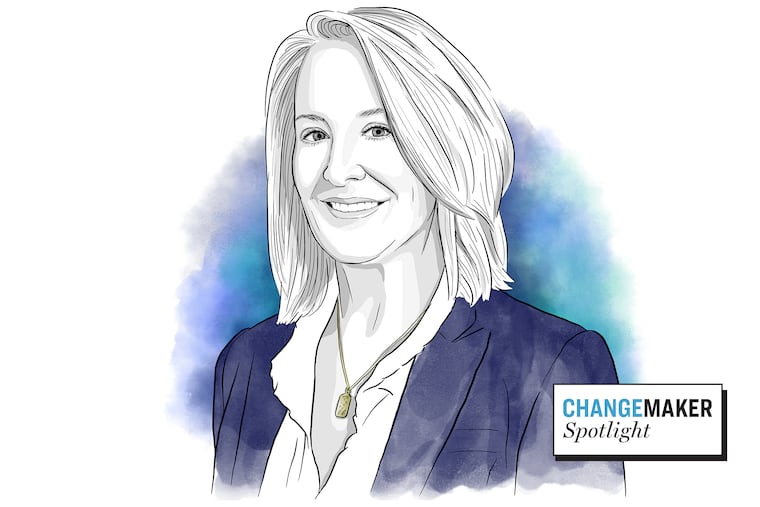
For Claire Borelli, the future of work isn’t a choice between technology and humanity, but an effort to bring the two together. A native Philadelphian and an enormous Eagles fan, Borelli is the senior executive vice president and chief people officer at the retirement services provider TIAA. She is helping lead the organization’s 13,000 employees through one of the most consequential shifts facing today’s workforce: the rise of artificial intelligence. Drawing on three decades of experience in HR, Borelli is a champion of an employee-first approach to AI adoption. She believes technology should be used to augment human capabilities and that change is an opportunity for growth. Her philosophy is simple: Welcome change while valuing the humanity at the heart of the workplace.
What does it mean to be a changemaker?
The first thing it means, and this is much easier said than done, is being okay with change. I’ve always been energized by change because it creates opportunities to make things better. I’ve been fortunate to have a platform to help drive that change and, more importantly, help others see the possibilities that come with it.
You are the driving force behind TIAA’s ELEVATE program, an internal workforce development initiative that gives employees dedicated space to build new skills, connect with peers and leaders, and actively manage their professional paths within the company. Did something in your own career inspire this mission?
My career changed because I said yes to something I wasn’t ready for. I didn’t set out to work in HR, but at Merrill Lynch, I was asked to help build an employee service center and rethink how HR operated. I had no HR background. I was way over my skis, and it scared me.
But I learned to take risks, trust the process, and give an opportunity a chance, even when it isn’t what [I] imagined for [myself]. That stretch assignment gave me new skills, relationships, and exposure, and ultimately launched my HR career. That’s what I love about ELEVATE: creating those unexpected opportunities for others, especially in the age of AI, when roles may shift and employees can take advantage of expanding their skill sets to prepare for an AI-powered future.
“I’ve always been energized by change because it creates opportunities to make things better. I’ve been fortunate to have a platform to help drive that change and, more importantly, help others see the possibilities that come with it.”
Was there a moment that shifted your thinking about AI?
My oldest son changed how I think about AI. Two years ago, when my CEO asked me to help lead our AI transformation, I was intimidated. My son said, “Mom, imagine having someone in your office 24/7 who knows more than you do and can help with anything: recruiting, compensation, talent. And yes, they’re smarter than you.” That visual stuck. AI wasn’t going to replace me; it can make me better.
That’s the message I share with our people. Some jobs will disappear, new ones will emerge, but many will simply get better. If AI gives someone 30% of their time back, that’s 30% they can devote to a new project, skill, or opportunity. The challenge now is reimagining how we put that capacity and our people to work.
TIAA has emphasized an employee-first approach to AI adoption. How did the organization put that into practice?
What built trust wasn’t just talking about an employee-first AI strategy. It was putting action behind it. We knew AI would change roles, and in many cases, expand them. We doubled down on internal hiring and strategically paused most external hiring. Rather than immediately going to market and backfilling, we asked our leaders to consider if AI could take on the work or if it made sense to expand the scope of an existing internal role.
We told managers: before you look outside, look at our existing talent first. There were skeptics initially, but it worked. Year over year, we saw a 67% increase in internal hiring. That sent a powerful message to our associates: as AI changes work, we’re investing in you, not leaving you behind.
Which leadership traits do you believe will matter most over the next decade as AI automates more routine work?
AI is changing the landscape. When I was growing up, knowledge was power. If you knew your subject and were sharp, you were good to go. That won’t be enough in the future. As AI takes on more technical and routine work, traits like empathy, innovation, emotional intelligence, and strong communication skills will become even more valuable.
Think about an architect designing something for Philadelphia. Technical knowledge will still matter, but AI can increasingly support that expertise. What becomes more important is understanding the context: What is Philadelphia’s history? What does its art and culture tell us? How do its neighborhoods and politics shape what people need? And how can you think differently to solve for those needs?
That’s what we need to teach the next generation: not simply what to know, but how to think, connect, and understand people. You can’t always get those nuances from data. Sometimes you need to have coffee with someone, walk a neighborhood, or understand what motivates people. That humanity, and the relationships that come with connecting to others, will be essential to success in an AI-powered world.
You report directly to CEO Thasunda Brown Duckett and serve on TIAA’s executive committee. What have you learned about leadership by working alongside her?
Thasunda is a force, probably the most inspirational leader I’ve ever worked with. What sets her apart is that she truly leads with people and culture in mind. Technology and products can be replicated; people are the real differentiator, and she walks that talk.
She’s also a rare combination of visionary and operator. She can set a bold vision and get into the details to make it happen. She’s taught me the importance of connecting with people personally, understanding what motivates them, finding purpose, and having fun at work.
You’ve said trust accelerates decision-making and collaboration, especially during periods of rapid change. What are some practical ways leaders can build that trust?
Trust starts with transparency, communication, and active listening. Leaders need to explain what they’re doing and why, but also create opportunities to hear what people are saying and then be clear about what they can and can’t change.
At TIAA, we heard that employees at some of our smaller office locations weren’t feeling as connected as those in bigger hub offices. We introduced site leaders who could listen, communicate, and bring people together. Engagement scores rose significantly, by nine percentage points in Philadelphia. It reinforced for me that trust isn’t just about communicating early; it’s about listening intentionally and showing people that you’ve heard them.
How do you strike a balance between empathy and accountability when making tough organization-wide decisions or delivering news that may affect employees’ lives?
People may forget what you told them, but they remember how you told them. As a leader, especially in HR, you sometimes have to make difficult decisions that are right for the organization.
The key is to be clear about the decision and the why, transparent and timely in communicating it, and empathetic in how you deliver it. The same applies to tough feedback: holding someone accountable and telling them what isn’t working early, honestly, and with care is ultimately an act of respect.
If you could give one piece of advice to a young professional, what would it be?
Take risks. Don’t assume your career has to follow a straight line. The sideways moves and unexpected opportunities often teach you the most and make you more versatile.
I’m a Type-A person; I like a plan, so I had to learn this myself. Every career “swerve” adds something to your toolkit. And in an AI-driven world, that range of experiences, perspectives, and human judgment will only become more valuable.
You raised five kids while building a C-suite career. What advice would you give to other parents on how to manage big jobs and big families? Any secrets to keeping everything and everyone on track?
There’s no such thing as balance. At any given moment, work or family is going to get more of you, and you have to be okay with that.
I’ve been fortunate to have a true partner in my husband, especially raising five kids (now ages 42 down to 29). But the biggest lesson is to be present where you are. If you skip the staff meeting for the soccer game, be at the soccer game. If you stay for the meeting, be at the meeting. Shut down the voice telling you that you should be somewhere else.
Our CEO Thasunda says life is like a diversified portfolio: how you invest your time will shift. Stop trying to give everything 100% at once.
PHILLY QUICK ROUND
Favorite Philadelphia neighborhood? Rittenhouse is great to walk to and have dinner, but I just love the neighborhood where my two younger children live, which is Queen Village. I just love the historic feeling of it.
Favorite place to celebrate an Eagles win? Lincoln Financial Field, unless it’s an away game, and then it’s in my home. I like all the cooking and all that family time.
What do you cook for a game? Every Sunday game is a pot of gravy. We’re Italian!
Favorite local restaurant or hidden gem? I love The Saloon. Their appetizers are fabulous. They have the long hots, poblanos, and fabulous steaks there. Just open the menu, and I’ve ordered them all.
Which Philadelphian past or present do you most admire? Can I say Rocky? I’m kidding. I admired Kobe Bryant, for sure. I think about how driven and Type-A he was. And in his later life, he became more like a coach to his daughters and really inspiring.
Personal motto or mantra? It’s “This too shall pass.” Because no matter how good life is, we always have moments that take us out. It’s important to remember that those moments pass.
What are you most grateful for right now? I’m pretty happy about LeBron James coming to the Sixers!
Lucy Danziger is a journalist, an author, and the former editor-in-chief of Self Magazine, Women’s Sports & Fitness, and The Beet.