
Partner Content
How Jefferson is Deepening its Community Ties to Improve Health Outcomes
A new report from the organization shows how Philadelphia’s largest academic health system is expanding access to care, tackling food insecurity, and creating career pathways.
From the Poconos to Cherry Hill, Jefferson has become a familiar presence. As the largest academic health system in the Greater Philadelphia region, the nonprofit institution sees millions of patients each year across its 33 hospitals and more than 700 care sites spanning Pennsylvania and New Jersey. That reach, said Keith Leaphart, the executive vice president and Humana chief health equity and community impact officer at Jefferson, gives the organization a particular responsibility to its communities.
“We are the primary safety net system here,” Leaphart, who also serves as vice chair of The Inquirer’s board of directors, said. “We’re serving a lot of people who are uninsured and underinsured, and we’re not turning them away.”
Jefferson’s 2025 Community Impact Report, “Driven to Improve Lives,” explains how the anchor institution is using its unique model as an integrated health system that includes a university and a not-for-profit health plan to address the region’s needs. The report highlights more than $2.7 billion in community funding, including investments in access to care, health professionals’ education, and community-based services. It also offers a road map for Jefferson’s community partnerships and initiatives: building trust through neighborhood partnerships, expanding access to nutritious food, creating pathways into healthcare careers, and preparing the next generation of providers to meet people where they are. “At Jefferson, we believe our responsibility goes far beyond the walls of our hospitals,” Jefferson CEO Dr. Joseph Cacchione said.
“At Jefferson, we believe our responsibility goes far beyond the walls of our hospitals.”
Building Bridges to Bring Healthcare to All
Jefferson’s 2025 Community Impact Report that approach through investments in initiatives like the Community Health Worker Academy, a paid job-training program for new healthcare professionals who help their neighbors navigate health and social services.
The program is an example of how Jefferson has been intentional about mobilizing health workers who come from the same communities that they serve and are often able to speak with patients in their preferred languages. Empowering community members to provide care creates a powerful access point for residents who may not otherwise connect with care systems. Community health workers also help build trust between their neighbors and health institutions.
Similarly, Jefferson’s Inspire Network, which launched last November, partners with faith-based organizations across the region to empower faith leaders to help their congregants better understand the healthcare system. “When someone gets sick or they need care, they’re often going to a community of faith and asking for prayers and support and comfort and meal trains,” Leaphart, the Jefferson leader, said. By teaming up with faith leaders, Jefferson can help them meet their congregations’ needs directly. The health system also invites faith leaders to its quarterly Partners in Purpose events to foster relationships and collaborate on their work together. To date, Jefferson has partnered with more than 150 faith-based organizations to offer health services like screenings. The organization also hosts family-friendly events like Night at the Zoo, an annual visit to the Philadelphia Zoo that provides residents with access to affordable health options. Last year’s occasion drew 4,000 residents.
To build on the success of partnerships like these and create opportunities for future collaborations, Jefferson recently launched a community engagement request form through which workers with community-based organizations can request a JeffCARES team visit to their place of worship or social event to provide free screenings and other health services.
A Recipe for Expanding Food Access
Jefferson’s community-impact report also shines a light on the work the organization is doing to increase access to healthy meals in the Philadelphia region, where more than 600,000 people experience food insecurity. The health system partners with food banks like Philabundance and Second Harvest Food Bank of the Lehigh Valley and Northeast Pennsylvania and runs a number of community pantries, volunteer programs, and initiatives, including custom meal plans that support cancer patients undergoing treatment in Willow Grove.
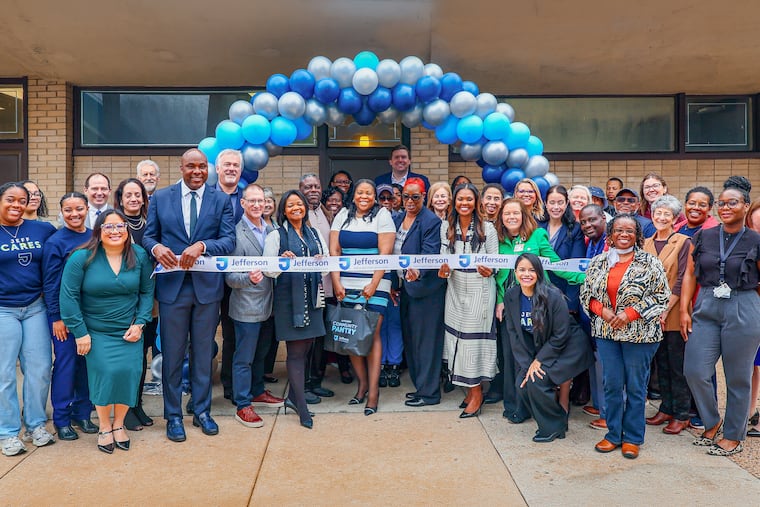
One highlight from the report is the JeffCARES Community Food Pantry, the first Philabundance food pantry located within a hospital. It opened in April 2025 at Jefferson Einstein Philadelphia Hospital in North Philadelphia. “Philabundance has been a valued partner of ours for many years, but establishing a hospital-based site was something our community truly needed,” Dixie James, the president of Jefferson Health’s Central Region and the chair of the Philabundance Board of Directors, said.
In addition to fresh dairy products, meat, and shelf-stable items, the pantry provides recipes for nutritious meals tailored to support a variety of health conditions, including diabetes. The pantry is open to patients, community members, and Jefferson colleagues.
“Access to safe, healthy, nutritious foods, [and] fresh produce is something that we know is directly connected to overall better health. If you’re able to eat healthy, you’re going to have better health in general. We want to be at the center of that,” Leaphart said. “That doesn’t happen without partnerships.” Jefferson serves around 150 meals per week to families and has distributed about 6,700 bags of food so far this year.
Careers That Grow With Community Partnerships
Another important part of Jefferson’s community-impact work, as detailed by the report, is career development. “One of the things that we’ve been really intentional about is building out pathway programs and pipeline programs for young people to be exposed really, really early to careers in medicine,” Leaphart said. The organization, which is the region’s largest employer with 65,000 employees, is getting kids interested in the healthcare industry by inviting staffers to visit classrooms to talk about their careers as Jefferson School Speakers.
Jefferson has more than 20 programs across the enterprise engaging students from elementary to high school in career exploration, as well as pipeline initiatives with reputable workforce development organizations. Jefferson also runs dedicated programs for high school and college students through partnerships with educational institutions. “One that we’re really excited about is the Jefferson Workforce Development Program, a partnership between the School District of Philadelphia, North Philadelphia’s Esperanza College, and Jefferson Health,” Leaphart said. The program offers free training to high school students interested in careers as patient care technicians or medical assistants.
Students who successfully complete the training are qualified to enter the healthcare industry as entry-level workers. Since launching the program last April, Jefferson has hired 27 students who earned their certification in the course.
Community partnerships are also emphasized within Jefferson’s own academic institution. Students at Thomas Jefferson University, for instance, are encouraged to actively volunteer in the community. “Volunteering is core to everything that we do,” Susan Aldridge, Ph.D., the president of Thomas Jefferson University, said. “When you start here at Jefferson as an undergraduate student, within your first week, you’re volunteering in the local community, which is really unique and reflects the culture of our institution.”
Many medical students with Sidney Kimmel Medical College volunteer with the student-run program JeffHOPE, through which they work alongside physicians to provide health screenings to vulnerable populations through a network of free drop-in clinics at homeless shelters — yet another example of how Jefferson is committed to expanding access to care. To date this year, Jefferson has hired 1,308 Thomas Jefferson University graduates.
Community-First Leadership
For Jefferson, improving access to health and education extends beyond hospital campuses and care sites into schools, shelters, food pantries, houses of worship, and community events — places where people feel comfortable and are already seeking support.
“As a leading academic health system, we have both the reach and the obligation to improve health across entire communities — by expanding access, investing in people, and partnering in ways that create lasting impact,” Cacchione said. As the report makes clear, Jefferson’s mission to improve lives depends on building the partnerships, pathways, and trust that help communities thrive.
Chloé Pantazi-Wolber is a writer and editor. Her work has appeared in Business Insider, Philadelphia magazine, The Rooted Journal, Travel Bulletin, The Paris Review, and more.