Crying wolf in a crowded subway: Reposted from Oct. 7, 2005
Blogger's note: Last week I referred to a blog post that I wrote in October 2005 about the Bush administration using terror alerts to political ends. This notion - scoffed at by many back in the day -- has now been endorsed by Bush's own former Homeland Security Secretary, Tom Ridge. Thanks to some great detective work by reader montani semper liberi, you can read it yourself and see why crazy liberal ideas sometimes prove to be not so crazy after all. Here's the post from 10/7/05:
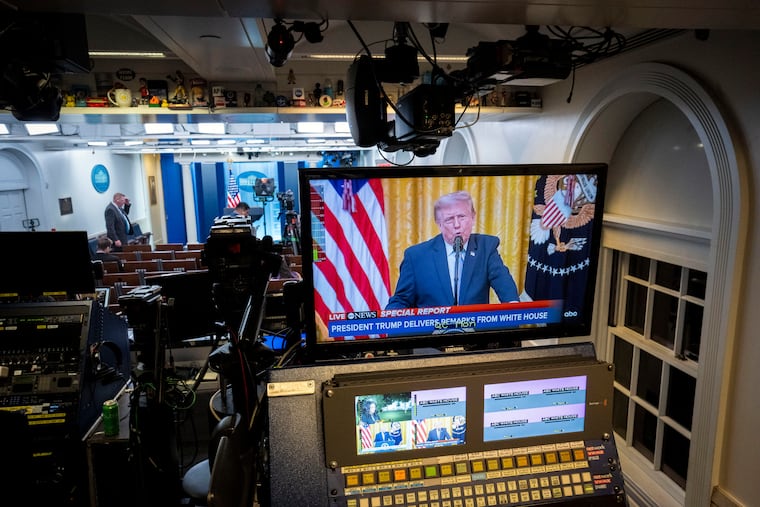
Remarkably enough, Karl Rove's possible legal problems were book-ended today by two pieces of terror news. Before, came a presidential speech on the war on terror. After, came a supposed terrorist threat to New York's subway system. Stop what you're thinking. It's just an amazing coincidence. The terrorists just happened to wait to make these threats until there's bad news about the administration that it needs to preempt. Just a coincidence.
-- Keith Olbermann, MSNBC, Oct. 6, 2005.
NYC BLOWN UP FOR PAYING TOO MUCH ATTENTION TO ROVE, MIERS
-- headline on Gawker, Oct. 7, 2005.
When you heard last night that authorities believed there was a credible terrorist threat in the New York subways on the same day that the Bush administration was under siege, with Karl Rove's legal woes accelerating and Bush's approval rating hitting a record low of 37 percent, did you think to yourself: Hasn't this happened a couple time before?
How about...13 times, according to Olbermann on his "Countdown" show last night. Unfortunately, he didn't document them, but this pretty good 2004 timeline does trace 15 such incidents -- and that's before yesterday's cry-wolf-a-thon.
1. Dec. 21, 2003
The announcement: "The government on Sunday raised the national threat level to orange, the second-highest, saying attacks were possible during the holidays and that threat indicators are ?perhaps greater now than at any point? since Sept. 11, 2001."
Bush's bad news: First media reports that WMD hunter David Kay, having found nothing in Iraq, was getting ready to resign. The news was the clearest signal yet that the main stated reason for invading Iraq had not panned out.
The backstory: Earlier this year, after former Homeland Security Chief Tom Ridge had stepped down, he conceded that some terror alerts were based on evidence that DHS had believed to be pretty flimsy -- and he cited this alert in particular:
"More often than not we were the least inclined to raise it," Ridge told reporters. "Sometimes we disagreed with the intelligence assessment. Sometimes we thought even if the intelligence was good, you don't necessarily put the country on (alert). ... There were times when some people were really aggressive about raising it, and we said, 'For that?' "...
The threat level was last raised on a nationwide scale in December 2003, to orange from yellow ? or "elevated" risk ? where the alert level is now. In most cases, Ridge said Homeland Security officials didn't want to raise the level because they knew local governments and businesses would have to spend money putting temporary security upgrades in place.
"You have to use that tool of communication very sparingly," Ridge said at the forum, which was attended by seven other former department leaders.
And Lisa Myers of NBC found out what that flimsy evidence was:
CIA analysts mistakenly thought they'd discovered a mother lode of secret al-Qaida messages. They thought they had found secret messages on Al-Jazeera, the Arabic-language television news channel, hidden in the moving text at the bottom of the screen, known as the "crawl," where news headlines are summarized.
U.S. officials tell NBC News that CIA experts ? technicians working for the Directorate of Science and Technology ? thought they had found numbers embedded in the crawl signaling upcoming attacks; dates and flight numbers, and geographic coordinates for targets, including the White House, Seattle's Space Needle, even the tiny town of Tappahanock, Va. What the analysts thought they had found was something called "steganography" ? messages hidden inside a video image.
2. April 2, 2004
The announcement: Terrorists might try to bomb buses and rail lines in major U.S. cities this summer, according to a bulletin sent Thursday night by the FBI and Homeland Security Department.
The warning cited uncorroborated intelligence as pointing to a bomb made out of ammonium nitrate fertilizer and diesel fuel, similar to the one used to blow up the Oklahoma City federal building in April 1995.
Bush's bad news: The day before, April 1, 2004, four contractors for Blackwater USA were killed, multilated, and displayed in public in Fallujah, leading to an escalation of combat in Iraq. During this time, then-National Security Advisor Condoleezza Rice was also seeking to rebuff efforts to get her to testify before the 9/11 Commission.
3. Aug. 2, 2004.
The announcement: As of now, this is what we know: Reports indicate that al-Qaida is targeting several specific buildings, including the International Monetary Fund and World Bank in the District of Columbia, Prudential Financial in northern New Jersey, and Citigroup buildings and the New York Stock Exchange in New York.
Backstory: Much of the information that led the authorities to raise the terror alert at several large financial institutions in the New York City and Washington areas was three or four years old, intelligence and law enforcement officials said on Monday.
This came after Howard Dean was ridiculed on the right for saying that he's concerned that every time something happens that's not good for President Bush, he plays what Dean calls "this trump card" of terrorism.
It's true that yesterday's alert was announced by New York officials and actually downplayed somewhat by federal officials in D.C. But it's also true that New York was acting on information that came not from thin air but from two federal agencies, the FBI and the CIA. It's also possible that Mayor Michael Bloomberg, in a re-election fight, had learned a trick from the master, or that he was doing his GOP compadre Bush a big favor.
And there are other negative consequences. In the case of the post-Democratic convention terror alert, the Bush administration seems to have backed up its efforts by releasing the name of a suspect who'd been arrested in Pakistan named Muhammad Naeem Noor Khan -- even though Khan had been secretly trying to help authorities bust up terror cells in England.
For the sake of three year old intelligence, the Bush administration had helped blow the first inside double agent the Pakistanis and the British had ever developed. The British had been preparing a set of indictments and pursuing the investigation, in part by using Khan. They were forced to move before they were ready. Some suspects escaped on hearing Naeem Noor Khan's in the media. Of those who were arrested, several had to be released for lack of evidence against them.