There are some things that Americans actually can agree upon. Whatever your political perspective, most folks would probably say the 2016 has been the worst year in recent memory, and it's barely half over. The nation is still reeling from last week's news -- the senseless sniper attack that killed five Dallas police officers, and the videotaped police shootings of Alton Sterling and Philando Castile. This in a year marked by the ugliest presidential campaign in many cycles -- both likely nominees with sky-high unpopular ratings, one under fire for her ethical lapses and the other blatantly appealing to America's worst instincts. Throw in mass killings such as Orlando, terror attacks overseas, even the deaths of beloved cultural icons like Prince or David Bowie, and you can understand why some pundits would look back in time for the last time things were so bad.
Since most of us weren't around for the slaughter at Gettysburg, that talk has centered on the tumultuous year of 1968. A number of writers -- and tweeters -- said that last week carried echoes of that season that ripped America apart, 48 years ago. Ross Douthat in the New York Times invoked a famous Joan Didion piece from those years and wrote that 2016 bears "echoes and recurrences linking this difficult moment to the American berserk of two generations back."
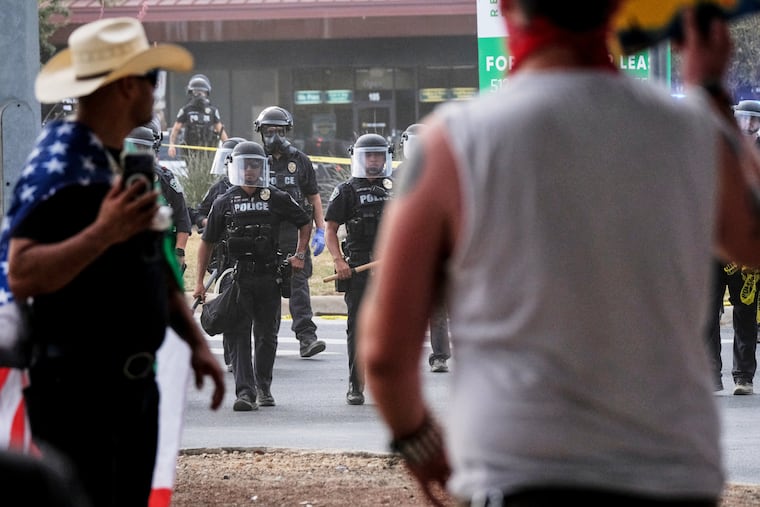
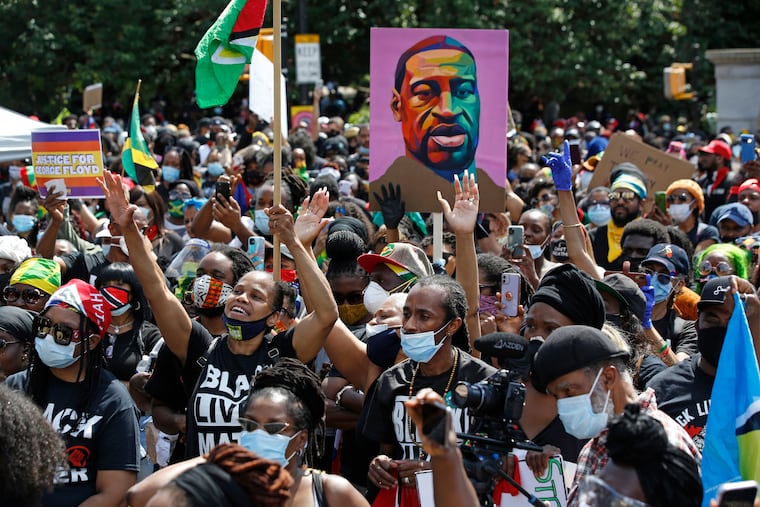
And yet, thankfully, to anyone who lived though 1968 (I saw it through the filter of a 9-year-old child) or any student of history, the past is in many ways...past. In 1968, the political chaos was not only more, well, chaotic but involved unthinkable bloodshed in the assassinations of Robert Kennedy and Martin Luther King. A candidate who believed, at the time, in racial segregation won the electoral votes of five American states that November. It was one of the worst years for the Vietnam War, which would eventually be about 10 times as deadly for Americans as Iraq and Afghanistan would prove to be. On the issue at hand, racial violence: from the start of 1967 through April 1968, some 220 people -- rioters and law enforcement -- were killed in the urban unrest in places such as Detroit and Newark. There's been nothing comparable in recent times; no one died, thankfully, during the outbreaks of unrest in 2014 in Ferguson or 2015 in Baltimore; Thursday's deadly attack by a lone gunman took place during a peaceful protest march, not during a riot. Protesters today are less likely to engage in violence, but so is law-enforcement, as epitomized by the so-called "police riot" of cops wailing in hippies at the 1968 Democratic National Convention in Chicago. With the "whole world watching," it's hard to imagine police misconduct on that scale again. So it's worth noting that a) the past doesn't always have to repeat and b) the present can always be made better than it is now. Honestly, do you have to have lived through 1968, or studied its history, to know that some aspects of 2016 -- the massive income inequality, the broken political system, continued injustice in urban policing, and never-ending American militarism abroad -- are unacceptable?
More on today's problems, and how we got here...tomorrow.