What put 18-month-old Delorian Davis into an irreversible coma is beyond doubt.
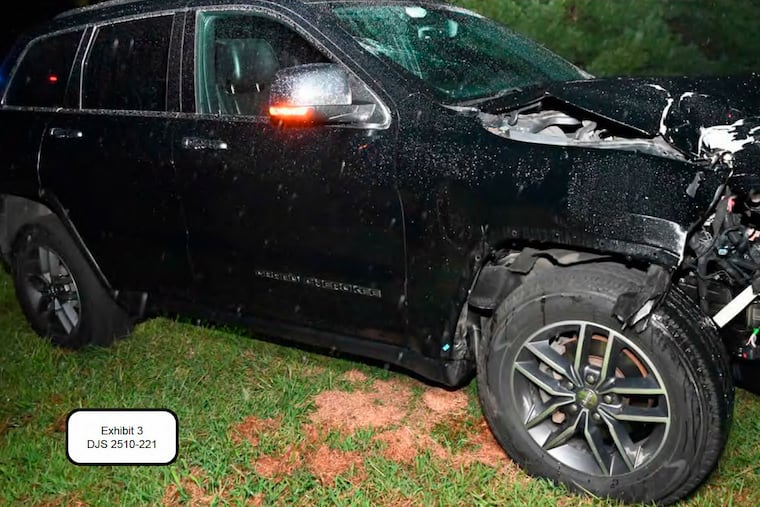
Two men -- Carlos Colon, 46, and Thomas Reyes, 43 – are each serving 26- to 52-year prison terms for plowing into a group of people on a North Philadelphia sidewalk in a stolen SUV, disabling Davis and killing her 4-year-old sister Lucretia.
What caused Delorian's death almost 20 years later remains an open question. But whatever killed her on Jan. 10, 2013, a Philadelphia judge has ruled, it is not enough to now retry Colon and Reyes for murder.
Veteran Common Pleas Court Judge Benjamin Lerner quashed the criminal charges against the two men on Dec. 8. On Jan. 14, Assistant District Attorney Erin Boyle told Lerner that the District Attorney's office would not appeal his ruling, bringing an end to the case against Colon and Reyes.
There is no statute of limitations - the time in which criminal charges must be filed - for murder. For prosecutors, the key is convincing a judge or jury the death is directly linked to the original injury, not an unrelated intervening trauma or disease.
And in Delorian's case, said Boyle, that link turned out to be outside the science of forensic pathology.
Both men were held for trial after a preliminary hearing last June despite a ruling by Assistant Medical Examiner Edwin Lieberman that Delorian died of dehydration at age 21 in what he called an accidental death.
By Dec. 8, Boyle said, Lieberman testified that he had found nothing since then to change his ruling.
At the preliminary hearing, Lieberman said he found no outside cause for Davis' dehydration, such as infection, fever, or kidney problems.
Lieberman said the 21-year-old woman's condition was identical to 1993: a "persistent vegetative state," unable to move her eyes or limbs or communicate in any way. She was fed through a tube inserted into her stomach.
Nevertheless, Lieberman testified, "there was not a bedsore on her body, which to me is a sign of very good care, excellent care."
Davis was cared for at home by her mother, Darlene, and nurses eight hours a day, five days a week, after the accident.
Defense lawyers Paul M. George and Lonny Fish argued there was no way to prove that the dehydration that killed Delorian was directly linked to the horrific July 15, 1993, crash at Fourth and Berks Streets.
The attempt to prosecute Colon and Reyes for murder two decades later was unusual but not unheard of.
In 2010, for example, a septuagenarian petty criminal named William J. Barnes was tried for the murder of Philadelphia Police Officer Walter T. Barclay. Barclay was shot and paralyzed in a 1966 robbery, and Barnes served 16 years of a 20-year prison term before being paroled in 2006.
A year later, Barclay died at age 64, and the District Attorney's Office had Barnes arrested and charged with murder.
Barnes challenged how prosecution medical experts could directly link the 1966 gunshot wound to the urinary-tract infection and blood poisoning that eventually killed Barclay.
Three car crashes and two wheelchair accidents, Barnes' lawyers argued, sped the downturn in Barclay's health. They also cited evidence that Barclay's live-in caretakers abused him, kept him confined in his room, underfed him until he developed scurvy, and let him develop incurable bedsores.
A Common Pleas Court jury acquitted Barnes in 2012.