ESPN layoffs: Philly guys Jayson Stark and Andrew Brandt open up about losing their jobs
Jayson Stark and Andrew Brandt both open up about finding out they had lost their jobs at ESPN.
It's been nearly two weeks since ESPN made the decision to lay off 100 employees, and we're still finding out who some of those names are.
On Friday, SportsCenter anchor Sarah Walsh announced on Instagram that she was among those let go, informed of the decision just after returning from maternity leave spent with her twins, Hutton and Brees.
Among the biggest names in the latest round of cutbacks at the network, forced mostly by increasingly expensive league contracts and the growth of cord-cutting, was longtime baseball reporter Jayson Stark.
Stark, a native Philadelphian who covered the Phillies and baseball during his 21-years at the Inquirer and will be inducted later this month in the Philadelphia Jewish Sports Hall of Fame, was caught off guard when told that after 17 years, he was no longer an employee of ESPN.
"I didn't see it coming," Stark said during an appearance on the Mike Missanelli Show on 97.5 The Fanatic. "I was really surprised by it."
Stark wasn't the only one surprised by the news. The longtime baseball writer received hundreds of messages from players, coaches, owners, and even the occasional rock star after news of his layoff spread across the internet.
“How could they fire Jayson Stark?” asked Pearl Jam singer Eddie Vedder, a longtime Chicago Cubs fan, according to former ESPN analyst Peter Gammons.
While Stark said he was overwhelmed with the response he's received (a tweet he sent announcing he was let go garnered more than 2 million impressions), he did note that he was a bit upset that one of his Twitter followers didn't reach out to him.
"I haven't heard anything from [Jerry] Seinfeld," Stark joked. "I'm a little down about that."
Stark said he didn’t know why ESPN let him go, but the network’s cuts to its baseball coverage were especially brutal. In addition to Stark, baseball analysts Raul Ibanez, Dallas Braden, and Doug Glanville were let go, and the once-nightly Baseball Tonight program has been reduced to one show per week. In addition, ESPN will partner with the MLB Network to air some if its programming on ESPN2, starting with Intentional Talk, which began airing May 1.
"I'm definitely going to stay in baseball. In fact, there's a very strong possibility I'll do something very similar to what I did before," Stark said. "I just don't know yet. I'm going to take my time and not rush into anything."
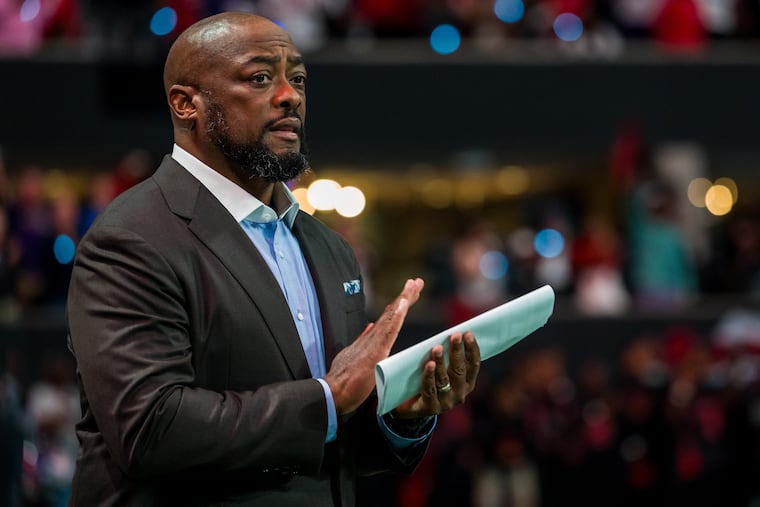
Another Philadelphia native who was a victim of the layoffs was Andrew Brandt, who joined the network as an analyst back in 2011. A memo from ESPN CEO John Skipper pointed out the need for “an increased focus on versatility,” and it’s hard to get more versatile than Brandt. In addition to his ESPN job, Brandt is director of the Jeffrey S. Moorad Center for Sports Law at Villanova and a lecturer at the University of Pennsylvania’s Wharton School of Business. He also writes a weekly column for Sports Illustrated’s Monday Morning Quarterback.
In fact, during his six years with the network, Brandt appeared on a variety of shows, such as SportsCenter, Outside the Lines, and the now-canceled NFL Insiders, almost always under a new title — NFL business analyst, sports legal analyst, sports business analyst, labor analyst, etc. But that versatility didn't save Brandt, who announced on Twitter last week that he was among the cuts at the network.
On his weekly podcast The Business of Sports With Andrew Brandt, the former ESPNer said he knew the layoffs were coming. But as he prepared to be part of the network’s coverage of the NFL draft, Brant thought he was safe, for two reasons — he had just re-signed his contract in February, and he was scheduled to appear on Outside the Lines on Thursday at Chickie's & Pete's ahead of the draft.
"Well, that's not a good sign," Brandt told himself. "No one wants to hear that they're called into a meeting with the human resources department."
"I think the most realistic explanation is simple corporate finance, where for whatever reason Disney, the parent company, said, 'We need this much off your books by a certain time,' " Brandt said. "All of these millions of dollars of salaries are now in a write-down to show their corporate head … that they've done this."
"Hopefully, smart, measured analysis will still have a home," Brandt said. "We'll see where it goes from here."