N.J. high court sides with Christie on pension suit
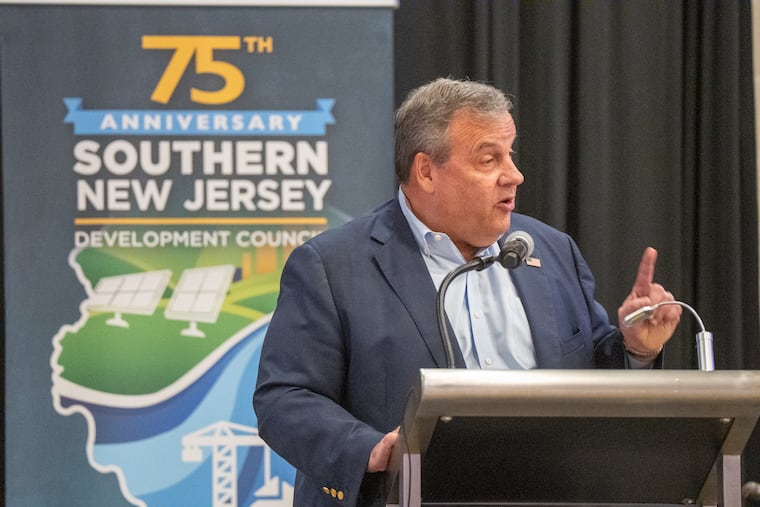
TRENTON -- The New Jersey Supreme Court on Thursday rejected a second legal challenge to Gov. Christie’s 2011 pension overhaul, ruling the state did not violate a contractual right when it froze cost of living increases for retired public employees.
TRENTON -- The New Jersey Supreme Court on Thursday rejected a second legal challenge to Gov. Christie's 2011 pension overhaul, ruling the state did not violate a contractual right when it froze cost of living increases for retired public employees.
The 6-1 decision is a fiscal win for the state, which had warned that an adverse ruling would have a "devastating impact" on the pension system for public employees.
A group of retired prosecutors and unions representing public employees argued that Christie impaired workers' contractual rights to cost of living adjustments (COLAs) upon retirement, which they said were enshrined in a 1997 law. The plaintiffs said this violated the contracts clauses of the state and U.S. constitutions.
"To construe a statute as creating a contractual right, the Legislature's intent to limit the subsequent exercise of legislative power must be clearly and unequivocally expressed concerning both the creation of a contract as well as the terms of the contractual obligation," Justice Jaynee LaVecchia wrote for the majority.
"In this instance, proof of unequivocal intent to create a non-forfeitable right to yet-unreceived COLAs is lacking. Although both plaintiff retirees and the State advance plausible arguments on that question, the lack of such unmistakable legislative intent dooms plaintiffs' position. We conclude that the Legislature retained its inherent sovereign right to act in its best judgment of the public interest and to pass legislation suspending further COLAs."
The ruling reverses an appellate division decision that said public workers did have a contractual right to cost of living increases.
The state did not dispute that public employees have a contractual right to a pension benefit upon retirement. However, it said that right only applied to the basic pension benefit, not COLAs.
The 2011 law -- which also raised the retirement age and required workers to contribute more toward their pensions and health benefits -- said COLA levels could be restored once the pension funds were stable.
The state argued the plaintiffs had not demonstrated that the Legislature passed the 1997 law with the "unequivocal intent" to establish a contractual right to COLAs, thus failing to meet a key legal threshold.
At oral argument in March, Assistant Attorney General Jean P. Reilly told the justices they should rule in favor of the state if there was "any ambiguity" with regard to the Legislature's intent.
The 1997 law says public workers vested in the retirement system have a "non-forfeitable right" to retirement benefits.
A "'non-forfeitable right to receive benefits' means that the benefits program, for any employee for whom the right has attached, cannot be reduced," the law says.
There was one exception: the right did not apply to post-retirement medical benefits.
Charles Ouslander, a plaintiff and retired prosecutor, argued that the law's specific exclusion of medical benefits showed that the legislature and then-Gov. Christie Todd Whitman intended the contractual right to cover all other components of the "benefits program," including cost of living increases.
The plaintiffs had requested that the court order the state to reinstate cost of living adjustments for public workers who retired before the law took effect in June 2011, including back pay.
A 2010 law amended the 1997 one, removing the "non-forfeitable right" provision for newly vested members of pension system.
Thursday's ruling sustained the 2011 pension and health benefit overhaul for the second time. Last year, the high court sided with Christie when it said the state was not contractually bound to contribute specific amounts of money to the pension system each year.
The Democratic-controlled Legislature has responded by moving forward with a proposed constitutional amendment that would require the state to make annual contributions to the pension system. The amendment is expected to head to voters in November.
Opponents worry the amendment could weaken New Jersey's ability to respond to fiscal crises by prioritizing the pension system above other such things as school aid.
A Monmouth University poll released Thursday showed broad public support for the amendment -- but also confusion about what it would actually do.