Support for Pa. bill on gasoline quality test
State officials and lobbyists called on lawmakers yesterday to pass a bill working its way through the House that would establish a program to test gasoline quality.
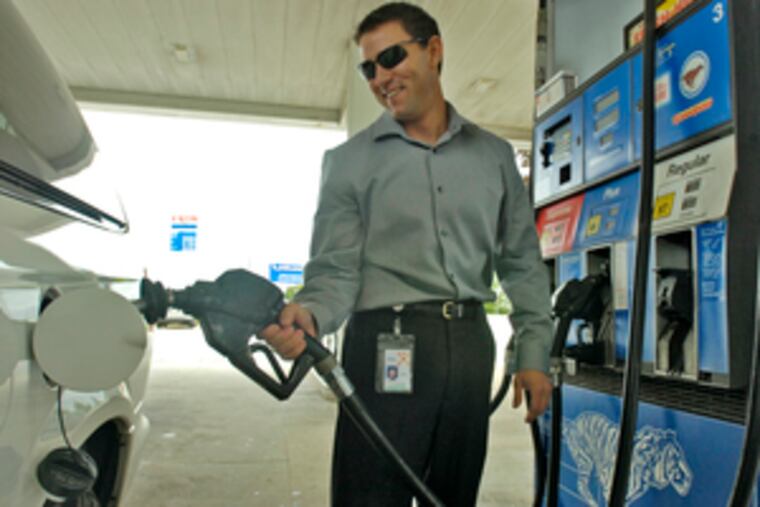
State officials and lobbyists called on lawmakers yesterday to pass a bill working its way through the House that would establish a program to test gasoline quality.
Pennsylvania is one of the four states that do not test octane levels in the gasoline consumers buy at the pump.
"Today, when you pay for gas, you cannot be assured you're getting what you paid for," said Jack Wagner, Pennsylvania auditor general, who called for passage of the bill before the legislature adjourned for the summer.
The call for stricter gasoline measures comes five months after an audit by Wagner's office found that 20 percent of the state's gas stations were not fully inspected. State law requires that each pump be checked annually to see if it dispenses the amount of gas indicated on the meter.
The audit also found that no octane checks had been done since 1999. Those checks were part of a pilot test that was never adopted permanently because it was found to be too expensive.
Now, with authorities reporting five cases of tainted gas sold in three counties since February, Wagner's office, AAA Mid-Atlantic, and the Pennsylvania Gasoline Retailers Association are urging passage of the bill.
Poor-quality gasoline can damage a vehicle's engine and possibly lead to failure on the state's auto-emissions test, AAA said.
The other states that do not require octane-rating inspections are Alaska, Nebraska and Ohio.
As it stands, no one knows how accurate octane-rating labels on pumps are, Wagner said.
Rafal Sawicki of Perkasie learned that the hard way. In April, his 2006 BMW 525 sputtered and died after pulling out of a Hatfield gas station.
Five hundred dollars later, mechanics decided the problem was bad gasoline, said Sawicki, who uses only premium grade, or a 93 minimum octane rating, in his car.
"I always assumed that somebody checks them," Sawicki said of the stickers that tell drivers the octane rating they are buying.
But no state agency does - though some gasoline station owners, such as Jon Cordisio, an Exxon dealer in King of Prussia, do occasional self-checks.
"When we deliver the product, we're hoping the quality is what the supplier said it is," said Ross DiBono, executive director of the Pennsylvania Gasoline Retailers Association. He joined representatives from Wagner's office and the AAA yesterday at Cordisio's station to support the bill.
Staff and equipment to launch the program could cost as much as $1 million, officials said.
In response to the January audit, the state hired more inspectors and set up a consumer hotline, as well as implementing other corrective measures.
The appropriations committee sent House Bill 684, sponsored by Rep. Joe Markosek (D., Allegheny), to the full House this week, and it is scheduled for a vote Monday.
A similar bill in the Senate has been pending in committee since April 10. No vote has been scheduled.