Antiwar activist ran credit card company
Richard Wade Vague has an unusual background for an antiwar activist: He was head of the nation's fastest-growing credit card bank when he began speaking out against the U.S. invasion of Iraq.
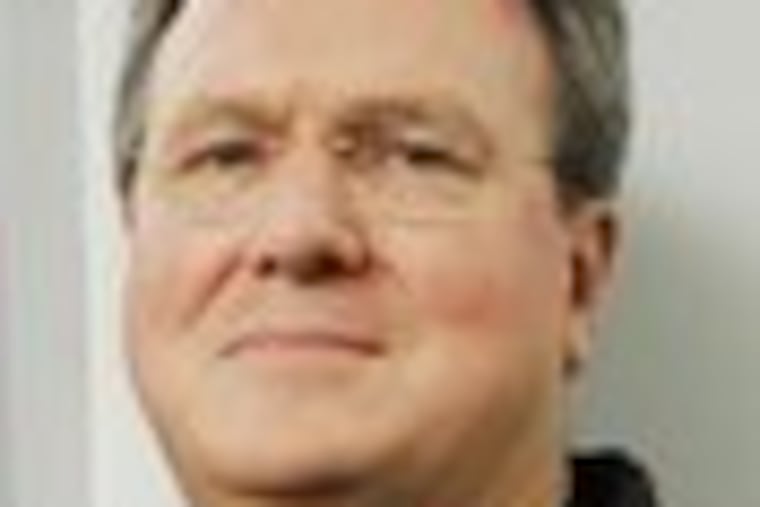
Richard Wade Vague has an unusual background for an antiwar activist: He was head of the nation's fastest-growing credit card bank when he began speaking out against the U.S. invasion of Iraq.
Vague, of Center City, led Bank One Corp.'s First USA Bank when it was the largest credit card lender in the world in the late 1990s. He later started an online card bank, which, as part of Barclays Bank, posted an industry-leading annual growth rate before Vague left two years ago. He now runs Energy Plus Co., which markets electric service to consumers and small businesses.
Since 2004, Vague also has headed American Respect, which maintains that "U.S. policies and actions in Iraq and throughout the world have increased world terrorism." The group studies and promotes alternatives.
Question:
You opposed the Iraq war early and funded conferences and newspaper ads against it. How did other people in your industry react to your activism?
Answer:
I have not been very involved in politics in the past, and was Republican, so it has been fairly uncomfortable for me - and the reaction has been very mixed. But I have always tried to approach others with a courteous tone and to simply put facts and considerations in front of them rather than argue.
Nevertheless, the U.S. economy will not start to get better until we stop spending on the war. . . . I feel an urgency about the discussion for reasons beyond the human tragedy of soldiers and civilians dying in Iraq.
Q:
Is it common for top executives to take public stands on issues not immediately related to their businesses?
A:
It is unusual, and for valid reasons. Shareholders, employees and customers deserve to have their executives focused on the immediate issues that face their company. But certain issues are directly relevant to business and are therefore the proper domain of business activism. . . .
Q:
Are there businesspeople you consider role models for integrating public activism with their day jobs?
A:
Robert Rubin, who served as chairman of Goldman Sachs . . . was active in political matters. He then became one of our nation's more successful Treasury secretaries.
Q:
How do you describe U.S. foreign policy toward predominantly Muslim countries? What should we change?
A:
The most important policy we have toward Muslim countries is our terrorism policy, which has been misguided and has led to increased global terrorism, a $2 trillion war, and $100 per barrel oil.
While we clearly need to pursue true terrorists, the real solution to terrorism has to be economic and political rather than military. . . . If you kill a terrorist but don't take care of these causal issues, another terrorist will simply rise to take his place. If you instead reverse the political and economic calamity, this terrorism will wither away.
Q:
President Bush says Iraq is stabilizing, and U.S. troops need to stay or our enemies will take over. Is he right?
A:
Instead of supporting our stated goal of unifying the country under a common government, [U.S.-led forces] are essentially ceding the most troubled regions to local warlords, such as Sunni warlords in Anbar province, where they had previously been fighting against those same warlords. This has had the effect of temporarily reducing violence. . . . This only delays the day of reckoning, however, and leaves unaddressed and unresolved the structural problems of the country.
Q:
Are there examples where big nations like the United States have successfully adapted the strategies and tactics you recommend?
A:
The U.S. has successfully used economic policy to combat dangerous instability and ideologies on a number of occasions, the most famous being the indispensable Marshall Plan in Europe deployed after World War II. Several South American countries have used economic policy as a tool in recent decades to help successfully fend off violent terrorists such as Peru's Shining Path.
Q:
Who are the United States' actual and potential allies in Muslim countries?
A:
While no country supports all the things we would want them to, not even Britain, and none of them has a government that has all the features we would like, countries such as Turkey, Morocco, Jordan, Malaysia and many others are allied with us on a very large number of matters.
Q:
How have you formed and evolved your views on the U.S. role in the world?
A:
I try to read as broadly as possible - from books about Darius in Persia in the 5th century B.C.E., to China and Africa in the Middle Ages, to Japan in the first half of the 20th century.
I look for the universal principles history reveals about human nature and the patterns of history that emerge.
When 9/11 occurred, though many viewed it as a singular moment in history and view the current terror threat as unique, they are in fact part of well-established patterns from the past.
Q:
Have you visited Muslim countries? Have you been able to spend time with Muslim scholars and businesspeople?
A:
My family and I have had the privilege of visiting a number of predominantly Muslim countries around the world, including Morocco, Egypt, Turkey, Indonesia, Malaysia and others, and I have numerous relations with Muslim businesspeople and scholars.
My view is that countries tend to behave more in accordance with their form of government and their relative GDP per capita than their predominant religion.
. . . The businesspeople and scholars I have met in these countries have been very impressive.
Q:
Your new business deals with retail electricity marketing partnerships. How is that similar to, or different from, consumer banking as you practiced it during your credit card years?
A:
Our new business is surprisingly similar to the credit card business. We use direct marketing to sign up consumers and small businesses just as we always did . . . and we've even found that signing partners such as airline frequent-flyer programs as a way to get new customers works as it did in the credit card business.
Q:
You read a lot, and you share your favorite books in your blog site,
» READ MORE: www.Delanceyplace.com
. What is your purpose there?
A:
It's just something I love to do. I post an excerpt from a work of nonfiction each business day, and have about 20,000 people who have signed up to receive the daily e-mail. . . . I absolutely love the comments, suggestions and insights that come from these readers.
- Joseph N. DiStefano