Rise in corn could have ripple effect
DES MOINES, Iowa - As spring planting nears, farmers are making a choice that could affect what Americans pay for car fuel, chicken wings and many other consumer products.
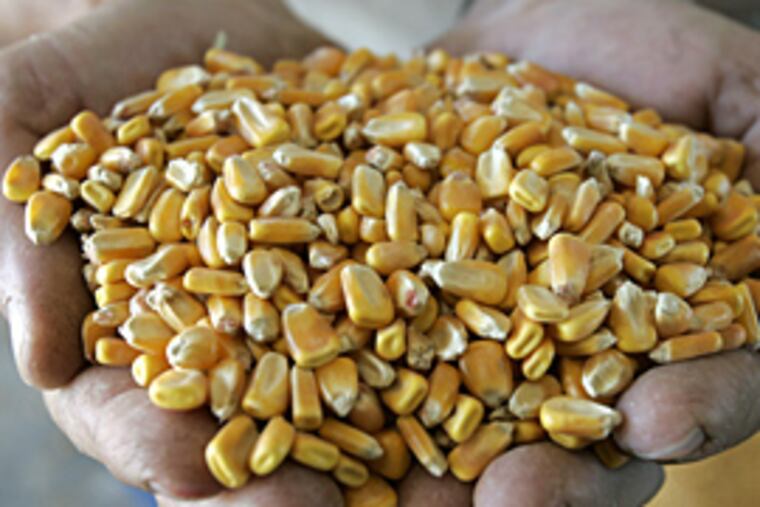
DES MOINES, Iowa - As spring planting nears, farmers are making a choice that could affect what Americans pay for car fuel, chicken wings and many other consumer products.
If farmers choose to plant as much corn as possible, prices that have soared to record highs above $5 a bushel could stabilize after climbing from about $3.60 a bushel last summer.
But if many farmers rotate their plantings to other crops such as soybeans, or if the season is disrupted by bad weather or drought, the price of this key ingredient could soar further.
That would leave other food producers - especially at poultry, beef and pork companies, for which corn feed accounts for up to three-quarters of their operating costs - with little choice but to raise their prices as well.
Livestock producers typically blame higher corn prices on demand for the crop from ethanol plants, saying the alternative fuel drives up costs for everyone. But ethanol makers say rising corn prices hurt them also.
Against all those factors is one fixed point: Farmers are running out of new land to plant crops.
How they use the land this year is the focus of the planting report due Monday from the U.S. Department of Agriculture, which will offer the first detailed look at farmers' planting intentions for 2008 and give the first indication of this year's corn crop.
"Everybody is looking to see what that report is going to look like," said Bob Dinneen, a spokesman for the Renewable Fuels Association. "Everybody is anxious, us included."
Last year, American farmers produced more corn than ever before, 13.1 billion bushels, as they put more land into corn production, and most of the Corn Belt saw ideal weather.
"It's kind of hard to believe we'll even be able to hit that mark again," said Richard Lobb, a spokesman for the National Chicken Council. "The amount of land in this country is not infinite, [and] some people think it's entirely possible a bad drought is coming."
The surge in corn prices came despite the increased production. If the values hold, the average yearly price per bushel in 2008 will be higher than ever before, according to the Agriculture Department.
Dave Moody, president of the Iowa Pork Producers Association, said the result is obvious: "If corn prices stay high or increase, in the long term prices [for users of corn products] are definitely going to come up."
Even at current prices, meat producers are hurting.
Last month, Pilgrim's Pride, the nation's largest poultry company, closed a processing plant in North Carolina and distribution centers in five other states, putting 1,100 people out of work. The company blamed its move on high corn prices caused by the heavily subsidized ethanol industry.
Corn prices are also affecting boutique products. Maple Leaf Farms, a leading U.S. producer of duck meat, recently announced it would close a meat processing plant in Wisconsin that employs about 200 people because of increased feed costs.
Ethanol-plant owners acknowledge they have increased demand for corn. The number of ethanol plants has increased from 50 in 1999 to 134 now with more being built, according to the Renewable Fuels Association. Most rely completely on corn as the key ingredient.
An average, 100-million-gallon-per-year ethanol plant consumes about 33 million bushels of corn, about the amount grown in some Iowa counties.
While ethanol is highly subsidized by the federal government, wiping out some of the industry's overhead, ethanol proponents say they, too, will have to pay more for corn, which could push the price of ethanol fuel higher.
There is a side effect as well - strong demand for the corn to make ethanol might sway farmers to produce more corn instead of soybeans. That would cut the soybean supply, likely increasing its price. Soybean prices already are up because of demand from foreign markets, particularly in Asia.
Mindy Williamson, a spokeswoman for the Iowa Corn Growers Association, said the ethanol-fueled demand for corn had changed the dynamic for farmers.
"Before we weren't in a demand-driven market," she said. "Now, it's all about demand, and you have a choice about where we want to sell [corn] and who you want to sell it to. There are still other things beyond farmers' control, like weather, but it's a good time."
Making Ethanol
U.S. ethanol production has increased sharply, requiring a growing share of corn crops.
In millions of barrels.
Year Production
1998 33.5
1999 34.9
2000 38.6
2001 42.0
2002 51.0
2003 66.8
2004 81.1
2005 93.0
2006 116.3
2007 154.4
SOURCE: Bloomberg NewsEndText