Winging It: 'A la carte' pricing is stirring up disputes
Whew! As we wrapped up a raft of grim, pessimistic reports last month on the airlines' second-quarter losses, I thought the flow of news might slow down.
Whew! As we wrapped up a raft of grim, pessimistic reports last month on the airlines' second-quarter losses, I thought the flow of news might slow down.
But just as many of you were packing to fly off on vacation, last week produced a succession of events - some bad, some not so bad - for travelers to contemplate. So today, I'm going to round up some of the most recent developments and put a hopeful spin on them where I can.
My favorite good news-bad news story is about US Airways' charging a dollar or two for non-alcoholic beverages in flight, one of the many ways the airline is trying to cope with the huge rise in fuel costs that's hurting all of us. Philadelphia's biggest carrier began collecting the money on Friday.
This is considered good news at US Airways, of course. When combined with other charges in the new world of airline "al a carte" pricing, the carrier says it can generate an extra $500 million a year in revenue. It may also be good for vendors selling coffee and soft drinks on airport concourses - some passengers may think they can avoid the in-flight charge by carrying on their own (legal) liquids. I can't find anything to drink in an airport that costs less than $2 anymore, so good luck.
The bad news is what US Airways' flight attendants think of this new revenue-enhancement scheme. They expect some resistance from customers already grumpy about rising ticket prices, and may not collect the charges if they think it's the best way to keep order in the cabin.
Flight attendants and other employees at many airlines already have been beaten up enough in recent years by falling wages and reduced benefits. As airline losses mount, many workers are likely to be asked to sacrifice even more. US Airways managers shouldn't make their lives any harder by calling them on the carpet if they don't extract another buck or two from every passenger's pocket.
Management-labor relations for other groups of airline employees are pretty dismal already.
United Airlines sued its pilots' union last week, accusing some of them of forcing flight cancellations by abusing sick leave. The pilots and United's unionized flight attendants responded that the lawsuit was another effort to distract attention from bad decisions by overpaid executives.
In Congress, union leaders at Northwest Airlines told a hearing that the pending merger with Delta Air Lines could be harmful to their pensions.
In the continuing-drama department, US Airways and its pilots can't seem to find any common ground on a new contract.
And American employees are angry about bonuses given to senior managers after they made concessions five years ago to keep the airline out of bankruptcy.
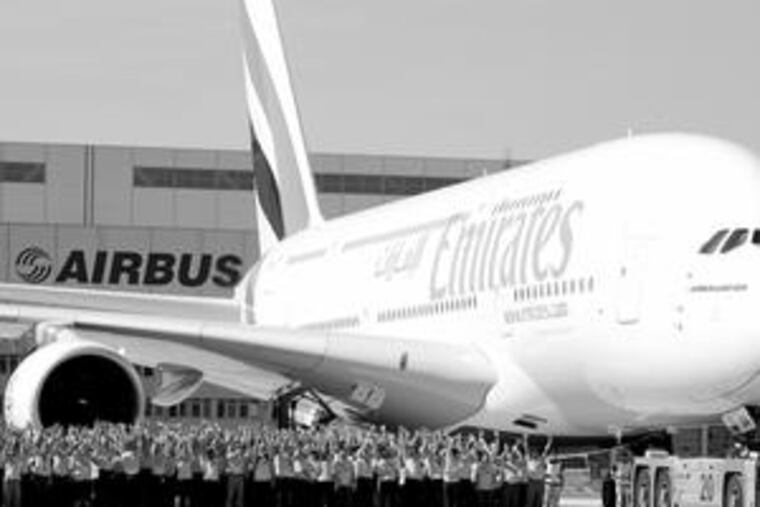
Another big story, at least to those who can still afford to make long international trips, was the first arrival in this country of a scheduled flight of an Airbus A380 jumbo jet. The plane, owned by Emirates Airlines, flew nonstop from Dubai to New York's JFK airport on Friday. The luxurious 600-seat behemoth, replete with private cabins and showers for first-class passengers, is one of 58 ordered by the airline, owned by the oil-rich government of Dubai.
New technology is wonderful, and I hope to be able to fly on an A380 someday. The jet is going to save fuel when compared with flying an equal number of passengers on other aircraft. But it appears that the best way to afford the big marvels is to be pumping your own oil, and selling most of it at ever-higher prices to the rest of the world.
Speaking of oil prices, to no one's surprise, they continued to be high - around $125 a barrel - while Democrats and Republicans in Congress bickered about ways to try to keep them in check. No one in Washington seemed to notice the call from a long list of companies and organizations for lawmakers to set aside their differences and work through their normal summer recess on developing a national energy policy.
Unfortunately, with elections looming in a few months, the odds appear slim that the two sides will take any meaningful steps to help the situation. With every passing day, the new era in air travel we've heard so much about - fewer flights, on fewer airlines, at much higher fares - creeps closer.
Then there was the story of a breakdown in baggage-handling equipment used by American at JFK. I'm sure the experience was a nightmare for travelers, but I'm probably not the only one who thought: At least it didn't happen in Philadelphia, the scene of so many baggage disasters.