DuPont CEO Holliday quits; new chief named
DuPont Co. yesterday announced the appointment of Wilmington native Ellen Kullman as chief executive officer to replace Charles Holliday Jr. and continue the company's shift from traditional chemicals to science and biotechnology.
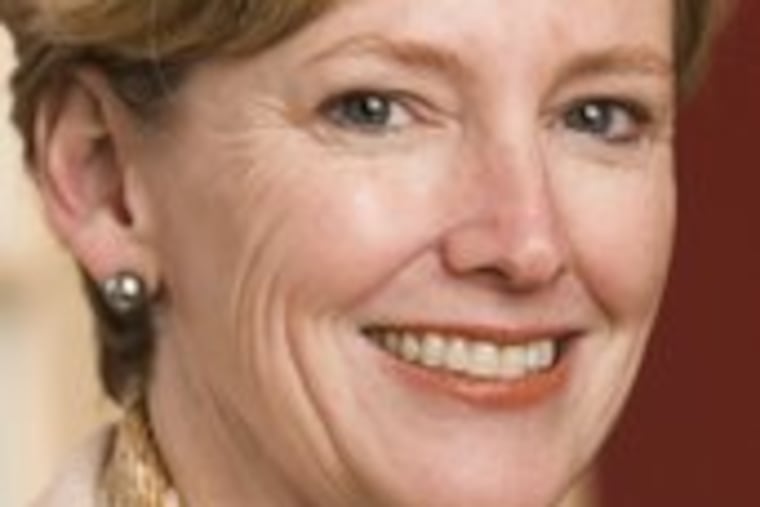
DuPont Co. yesterday announced the appointment of Wilmington native Ellen Kullman as chief executive officer to replace Charles Holliday Jr. and continue the company's shift from traditional chemicals to science and biotechnology.
The company said Holliday was stepping down at the end of 2008 after 10 years as CEO. Kullman, 52, is an executive vice president who has spent 20 years with the Wilmington company and formerly led the unit that makes the material for body armor.
Kullman, who once described DuPont's focus on internal research as being too insular and arrogant, said yesterday that she would work to make its commitment to science-based innovation pay off.
"Without the science, we won't have the differentiation in the marketplace . . . It is what makes us who we are," she said.
Under Holliday, 60, DuPont has sought an edge over its competitors in the chemical industry by breaking from its past and embracing new technologies.
A key milestone came when DuPont, which gave the world Nylon, announced the sale of its synthetic-fibers business to Koch Industries Inc. in 2003.
Having completed the divestiture of its Conoco oil holdings in 1999, shortly after Holliday took over as CEO, DuPont repositioned itself as a science-based company focusing on agriculture and nutrition, performance materials, and safety and protection.
The 1999 acquisition of Pioneer Hi-Bred International Inc. - one of $60 billion worth of purchases under Holliday - paved the way for genetically engineered seeds and other biotechnology initiatives that combine agriculture with chemistry to produce materials such as biofuels.
Despite high raw-material prices, DuPont set an earnings record for the first half of 2008 on the strength of its agriculture and nutrition segment and growth in emerging markets.
In a conference call yesterday, Holliday said the decision to step down was voluntary. Kullman and Holliday said the timing was linked to the company's 2009 planning.
"I need to own it, and I need to drive it," said Kullman, who has degrees in mechanical engineering and business management.