Philadelphia program an alternative to check-cashing firms
Darnell Deans Sr. spends $21 every other week to cash his paycheck because he does not have a bank account.
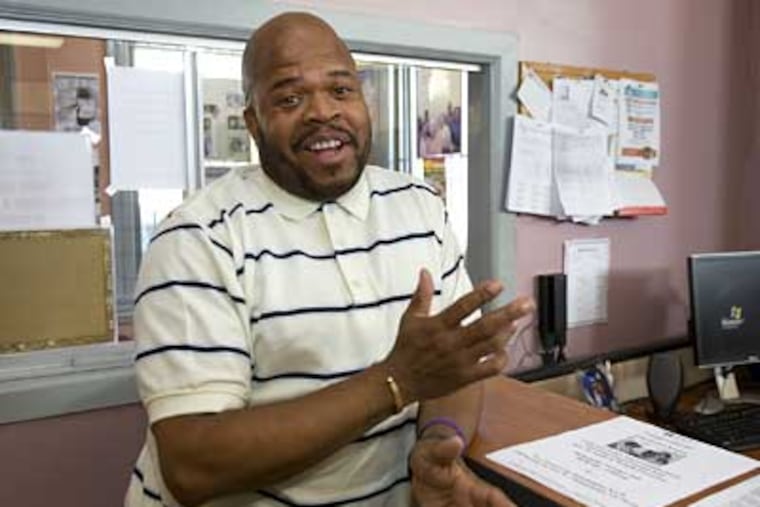
Darnell Deans Sr. spends $21 every other week to cash his paycheck because he does not have a bank account.
The 52-year-old North Philadelphia resident says he thinks banks are a hassle. "When you open up an account, you have to have a certain kind of money to put in there. There's always so many kinds of stipulations," Deans said.
Even so, spending $546 a year to access his paycheck pains him. "I could have used that money," he said, referring to the thousands he has spent over the years.
Deans is among the estimated 81,000 Philadelphians with no bank accounts, known in the financial industry as "unbanked." All Philadelphians spent $12.6 million at check-cashing services on $503 million worth of checks, the Brookings Institution said.
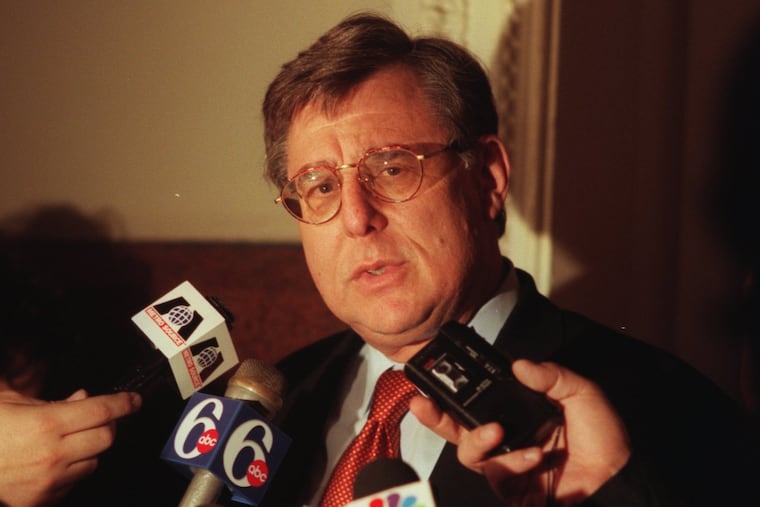
To combat that drain on neighborhood wealth, federal and city officials yesterday launched Bank on Philadelphia, a program modeled on an effort in San Francisco to get low- and moderate-income residents into the mainstream banking system.
Having a bank account not only saves money, but it also acts as a "shield against the financial predators that are out there in the market," said Laurie Magid, acting U.S. attorney for the Eastern District of Pennsylvania.
Philadelphia's program, spearheaded by city controller Alan Butkovitz, is one of seven nationwide in a pilot by the U.S. Department of Treasury to boost access to financial services and financial education for low- and moderate-income people.
One goal is signing up banks to offer fresh-start checking accounts for people blocked from opening new accounts because of past problems, no- or low-cost starter accounts, and loan programs as alternatives to costly payday loans, Butkovitz said.
Several banks in the region already have such product offerings.
Wachovia Corp., for example, offers low-cost starter accounts and has participated in past efforts here to give consumers a second chance at a checking account, spokeswoman Barbara Nate said.
Wachovia agreed last month to be a national partner in the Treasury Department's Community Financial Access Pilot, which joins many efforts to bring the unbanked into the main stream.
Wilmington Trust Corp. has a program in Wilmington designed as an alternative to costly short-term payday loans. Launched a year ago, it made $98,650 loans to 236 clients through September, spokesman Bill Benintende said.
Fifteen banks and credit unions are participating in the Bank on San Francisco program, which started two years ago and has been copied in Houston and Seattle.
Organizers estimated then that 50,000 households in San Francisco were unbanked, spokeswoman Leigh Phillips said. As of June, 18,558 accounts were open under the program. "We think it's pretty significant," she said.
Valerie Klein, director of program quality at the nonprofit Consumer Credit Counseling Service of the Delaware Valley, said her research found that some people without bank accounts were efficient at working mainstream and alternative financial systems. They cashed their paycheck at the issuing bank and took the money to a check casher to pay bills with money orders.
Others preferred the convenience of check cashers, where they can cash their check, get a money order and buy a stamp. "They could do everything at one place and do it after work when the bank wasn't open," Klein said.
There is no clear link between the lack of bank branches in an area and residents' use of check cashers. Of course, no one is limited to their neighborhood for those services.
Bank and credit-union branches outnumber check cashers in Philadelphia 2-1.
Based on a breakdown by zip code, the city's Kingsessing neighborhood has the largest number of unbanked residents, 13,652, according to the U.S. Treasury. There are no bank branches there, but also only one check casher.
Olney has the second-highest number of residents without a bank account, but it has six bank branches and no check cashers.
Even though Deans, who works as a case manager for State Sen. Shirley Kitchen, has no bank account, he makes regulars visits to a Citizens Bank branch to deposit money in his 20-year-old son's account.
He said he had had the opportunity to get direct deposit of his paycheck, but does not like that because he would have to wait longer to get his money, so he keeps going to the check casher. "I've been doing this for quite some time. I'm just so used to it," he said.