Industry reaction to Obama plan lukewarm
Because several months of hugely expensive government effort has done little to fix the broken economy, the reaction to President Obama's $75 billion foreclosure-prevention program yesterday was mixed.
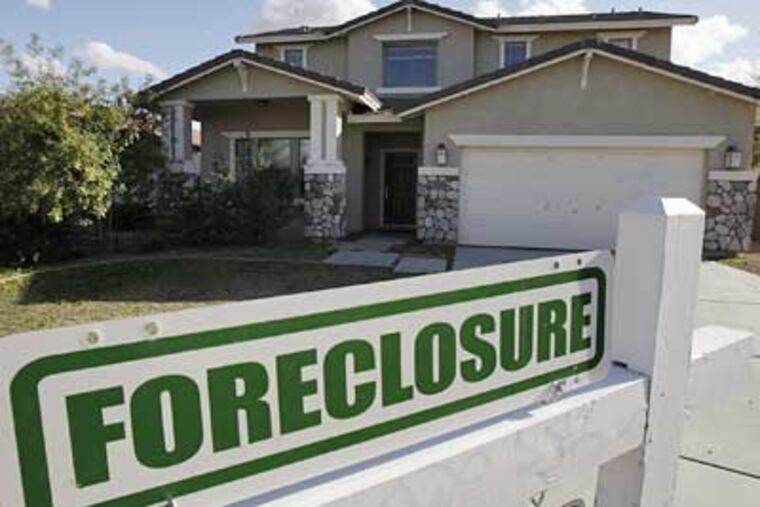
Because several months of hugely expensive government effort has done little to fix the broken economy, the reaction to President Obama's $75 billion foreclosure-prevention program yesterday was mixed.
"Doing nothing is not an option," said Philadelphia economist Kevin Gillen. "But doing anything and everything isn't necessarily better than doing nothing."
TD Bank N.A. chief economist Joel L. Naroff said Obama's plan was a "real good start" that should help cut costs and reduce foreclosures.
"We can all debate the fairness of this, but ultimately, we have to stabilize the housing market, and this is one part of the process," said Naroff, who is based in Cherry Hill.
Philadelphia mortgage broker Fred Glick is a bit uneasy.
Glick cannot see incentivizing bad behavior by riding to the rescue of the people who caused the problems: bankers who made bad loans, and borrowers who borrowed more than they could afford.
Obama's initiative is designed to help up to five million borrowers refinance to lower rates, if their mortgages are owned by Fannie Mae and Freddie Mac.
It also provides incentive payments to lenders to encourage them to modify existing mortgages for about four million Americans who will face foreclosure if nothing is done.
If the program targets homeowners whose mortgages now exceed the value of their houses - referred to as "under water" - "then simply let Fannie Mae and Freddie Mac refinance these loans without requiring an appraisal," Glick said.
Bruce M. Sattin, a Lawrenceville, N.J., lawyer, said that plan had "possibilities" for the troubled borrowers he represents because it makes modifications mandatory for Fannie/Freddie loans.
Sattin also cited as a positive step Obama's willingness to change the law to permit bankruptcy judges to modify home loans.
Still, "the devil is in the details, and we have not yet seen the details," said Sattin, of Szaferman, Lakind, Blumstein & Blader.
"Right now, the plan looks like it might make it easier for housing counselors to negotiate favorable loan modifications for struggling clients," said Farah Jiminez, executive director of the Philadelphia counseling agency Mount Airy USA.
"But push conventional lenders too hard into a defensive posture, and we may find that we've only opened the door wider for subprime lenders to victimize a new community of buyers," she said.
The Obama plan focuses on rewarding lenders for efforts to rid the market of these troubled assets quickly.
Peter Buchsbaum, of Arlington Capital Mortgage of Jenkintown, said he believed that changing bankruptcy laws would have a greater impact than offering a $1,000 incentive to mortgage servicers for every loan modified.
The fact that the government would require modification makes Buchsbaum uncomfortable. "But if my tax dollars are being spent to help the balance sheet of a bank that made a poor decision to lend money," he said, then the government should be allowed to require it.
Even when mortgages are modified, the end result in many cases is a higher payment. Government surveys show that more than half of the loans modified in the first six months of 2008 slipped back into problems before year's end.
Brian F. Duross, who lives in the Pennsylvania suburbs, modified his 8.5 percent adjustable-rate loan in July to an 8.5 percent fixed rate, but after his mortgage servicer tacked on late payments and fees to the balance, his monthly payment was the same.
"The problem is people like me who legitimately try, are not helped by that," said Duross, who contacted the lender in January for a further modification, but has not heard back.
"I guess they are waiting for a bailout," he said.
Because the Treasury Department will establish guidelines for mortgage modifications, Patricia Hasson, president of the Consumer Credit Counseling Service of the Delaware Valley in Philadelphia, believes that the results will be better than letting lenders go their own way.
"I think that would cover the major players, if not all" of them, she said.
Economist Gillen maintains that both mortgages and the homes that securitize them must be marked to market, meaning "that the values of both need to drop, but not by too much."
Second, the government needs to distinguish between deserving households and undeserving households, not just between flippers and primary buyers.
"My biggest concern remains the long-term moral hazard this will impose," Gillen said. "The administration runs the very real risk of signaling to the public that making stupid decisions is OK, provided that enough people make them."
Helping Out Homeowners
The Homeowner Stability Initiative is meant to reduce the amount homeowners owe per month to sustainable levels. Read more about the plan at go.philly.com/homeowner.
Highlights include:
A Shared Effort to Reduce Monthly Payments: The lender would first be responsible for bringing down interest rates so that the borrower's monthly mortgage payment is no more than 38 percent of his or her income. Next, the initiative would match further reductions in interest payments dollar- for-dollar with the lender to bring that ratio down to 31 percent. On a $220,000 mortgage, that could mean a reduction in monthly payments by more than $400. That lower interest rate must be kept in place for five years, after which it could gradually be stepped up.
Incentives to Help Borrowers Stay Current: To provide an extra incentive for borrowers to keep paying on time, the initiative will provide a monthly balance reduction payment that goes straight toward reducing the principal balance of the mortgage. Borrowers could get up to $1,000 each year for five years.
Home Price Decline Reserve Payments: An insurance fund of up to $10 billion - to be created by the Treasury Department - will be designed to discourage lenders from opting to foreclose on mortgages that could be viable now out of fear that home prices will fall even further later on. Holders of mortgages modified under the program would be provided with an additional insurance payment on each modified loan, linked to declines in the home price index.
SOURCE: Homeowner Affordability and Stability PlanEndText