PhillyDeals: Software sales show trading going strong
Some people are making money from the financial meltdown, says Cristobal Conde, chief executive officer of the Wayne-based software-maker SunGard Data Systems.
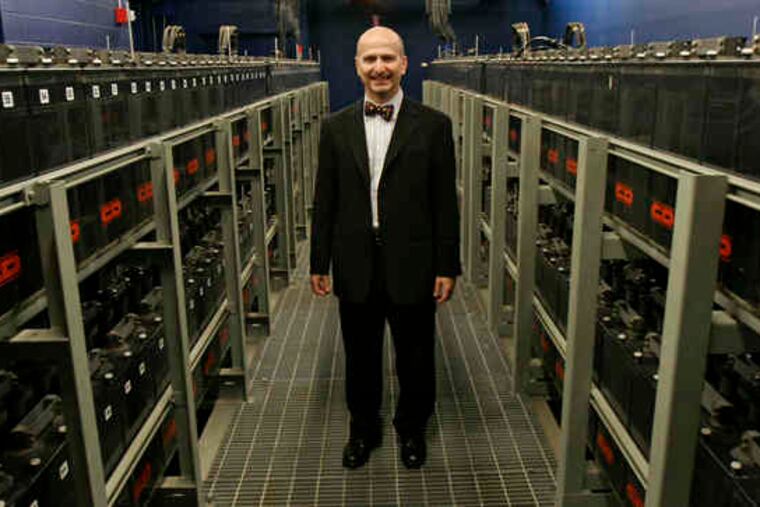
Some people are making money from the financial meltdown, says Cristobal Conde,
chief executive officer of the Wayne-based software-maker SunGard Data Systems.
He knows, because SunGard's broker-dealer software sales rose during the first quarter compared with a year before, despite the collapse of stock prices.
"High volatility scares a lot of individuals and institutions. But the high-frequency traders make money under these conditions. And we've always focused on that part of the market," Conde told me after reporting first-quarter numbers Friday.
"The high-frequency traders are having a great year," as big proprietary-trading operations from Goldman Sachs in New York to Susquehanna Investment Group in Bala Cynwyd make fast-changing bets on bank and automaker securities.
Anything else growing? The government's stimulus spending has boosted hopes for school and police software-system sales. But private-sector info-tech purchasing is still slow, though Conde said, "We've seen an upward tick in the tone of business since mid-March or so."
SunGard, with sales of $5.6 billion last year, says it's the third-largest business-application software maker, after Oracle Corp. ($22.4 billion) and SAP AG ($11.6 billion).
SunGard, spun off by Sunoco in the early 1980s, employs 3,000 locally. Germany-based SAP's Americas headquarters is in Newtown Square, and employs around 2,000 in the region. California-based Oracle bought three Philadelphia firms - Primavera Software Inc., of Bala Cynwyd; Global Knowledge Software L.L.C., of King of Prussia; and Adminserver, of Chester - in separate transactions last year.
Oracle, SAP, and SunGard each reported nearly flat overall sales and profits in the most recent quarter; revenues at Oracle and SunGard were boosted by acquisitions, including SunGard's $600 million purchase of European-trading software maker GL Trade from Euronext Paris S.A. last fall, and its purchase of the ICE Risk (Atlanta-based) commodity-trading system from IntercontinentalExchange for an undisclosed sum.
It's a good time to be shopping, said Conde: "We're looking for acquisitions in all of our businesses." The company has grown to 21,000 employees worldwide, from 13,000 when it was taken private by a group of big private-equity firms four years ago. Conde says half of the new jobs arrived in acquisitions, and the rest followed "organic" sales growth. "And we didn't put them all in India," he said. "Half the increase is in the U.S. and Europe, half in India and China."
Conde thinks there are bargain deals ahead as the economy weakens. "I still see a disconnect between the price expectations of sellers and what I think is the market price, given today's conditions," he said. "We'd rather not do any deals" than pay too much.
Selling SAP
Bill McDermott, head of global field operations for SAP, was in Orlando yesterday getting ready to address 18,000 SAP customers at the company's yearly client show.
Nearly half tuned in online. There were more people live, and fewer virtual, at least year's conference.
SAP's in classic recession mode, telling clients how its products might help cut costs and save money.
McDermott says Bank of America and JPMorgan Chase & Co., after recent government-backed mergers, have consolidated their multiple software systems onto SAP platforms, while troubled insurer AIG is using SAP to track and report funding from the government.
Locally, Tasty Baking's new automated factory at the old Navy Yard, Wawa's in-house food-prep contractors, Comcast's field-service fleet, and both newly acquired Rohm & Haas Corp. and acquirer Dow Chemical run SAP systems designed to save on labor, storage, and other expenses, according to McDermott.
He's telling clients they need better software to cope with collapsing markets.
"You can't grow when markets are shrinking," McDermott says, unless you can cut delivery costs or find "new entry points" to reach customers more cheaply. Can less be more?