Consumer index offers 'a ray of hope' for recovery
The Great Recession may be over, but one of the great unknowns still facing the U.S. economy is how much battered consumers will be willing to spend to help fuel a recovery.
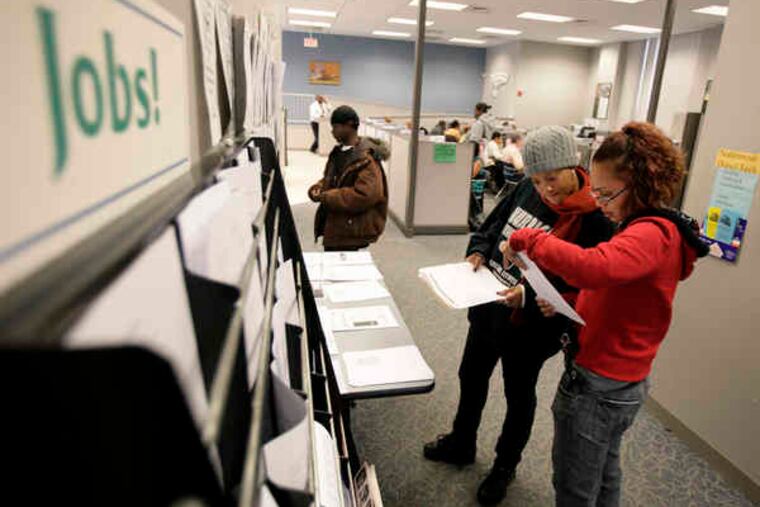
The Great Recession may be over, but one of the great unknowns still facing the U.S. economy is how much battered consumers will be willing to spend to help fuel a recovery.
A small hint of optimism came yesterday from the Consumer Reports Index, a new snapshot of consumer experience and sentiment developed by the nonprofit Consumers Union that is designed to compete with better-known indexes published by the Conference Board and Reuters.
By most key measures, the Consumer Reports Index stayed steady or ticked up slightly in November compared with the previous month - a sign "that we're finally beginning to see consumer sentiment level out," said survey director Ed Farrell.
With the holidays approaching, there was good news for some retailers - particularly that one in four consumers said they planned to purchase a personal-electronics item, such as a digital camera or smart phone, in the next 30 days.
Farrell said such plans could mean "a ray of hope" for consumer spending, which accounts for about 70 percent of the U.S. gross domestic product.
"It's really the first sign of vitality we've seen in months in the retail numbers," Farrell said. "So it could be an omen that maybe, just maybe, a mini-rally is forming for the holiday season."
The Consumer Reports survey began collecting data last fall but has been published only since April. It's one of a variety of measures that analysts use to track the complex U.S. economy - a challenge in ordinary times that has been especially vexing since last year's financial crisis.
For the last few months, the more established consumer-sentiment indexes have appeared jumpy, reflecting widespread uncertainty over economic prospects. Consumers have been understandably confused as a rising unemployment rate has coincided with stock-market gains.
The Conference Board's Consumer Confidence Index dropped in September and October after climbing in August. Its "Present Situation" index, a measure of how consumers see their current circumstances, dipped last month to a 26-year low.
The Reuters survey, conducted by the University of Michigan, also dipped last month, when a majority of consumers reported for the 13th straight month that their finances had worsened - "the longest and deepest decline" in the survey's 60-year history, Reuters said.
One criticism of confidence surveys is that they measure sentiments too removed from day-to-day experience, such as by asking people to predict how the overall employment situation will look in six months.
Farrell said the Consumer Reports Index aims to distinguish itself by focusing on "the actual behavior and events that have affected consumers' lives" or may affect them within a relatively short period - the previous 30 days and the next 30 days.
To that end, its "Trouble Tracker" asks whether consumers have experienced particular negative events in the last month, such as a job loss or inability to pay a mortgage or medical bill. Overall, 35.6 percent of 1,250 respondents experienced at least one such event over the last month, up slightly from October but down substantially from September's 39.9 percent.
Of course, consumers' overall sentiments remain fairly bleak. About 18 percent of participants said they were better off than a year ago, and 33.5 percent said they were worse off.
"What I think we're seeing here is that things have stabilized and there are glimmers of hope on the horizon," Farrell said. "The danger would be in saying the storm is passed."