Joseph Forte's financial pyramid scheme
For years, Joseph S. Forte acted like a wealthy man. The money manager gave $1.8 million to schools, invested $800,000 in private firms, even helped a brother-in-law buy a $580,000 house near his own in Sea Isle City.
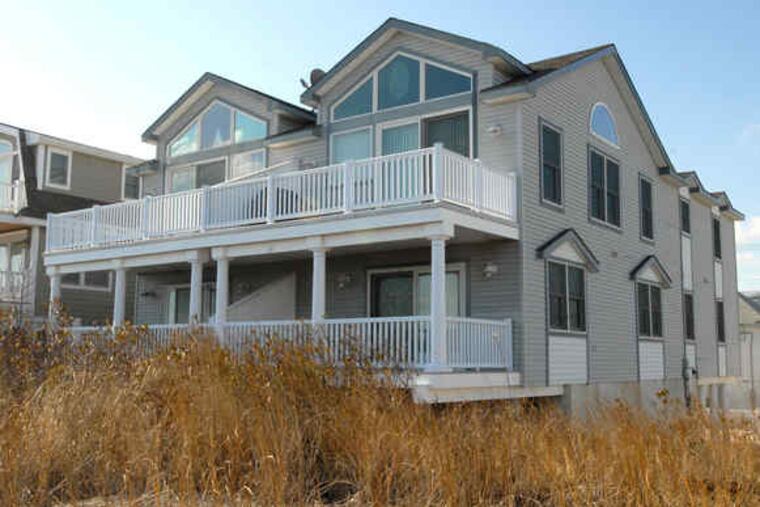
For years, Joseph S. Forte acted like a wealthy man. The money manager gave $1.8 million to schools, invested $800,000 in private firms, even helped a brother-in-law buy a $580,000 house near his own in Sea Isle City.
But last fall, as the Bernard L. Madoff scandal unnerved wealthy Americans, Forte's world - built on lies to 100 investors who had entrusted him with $79 million since 1995 - crumbled. He could no longer keep up with investors' demands for redemptions by bringing new money into his fraudulent fund.
After first contemplating suicide, according to a court filing, Forte, 53, of Broomall, turned himself in in late December, confessing he had fabricated investment results - ranging from 18 percent to 37 percent - from the start.
On Tuesday, when he is to be sentenced in federal court in Philadelphia, Forte's victims will learn what price he will pay for wrecking their lives. Prosecutors have argued that Forte should go to prison for at least 14 years.
But his investors, including dozens of individuals and such institutions as the Thornton D. & Elizabeth S. Hooper Foundation in St. Davids, Hill Top Preparatory School in Rosemont, and Wayne United Methodist Church, stand little chance of ever recouping much of their estimated $34 million in losses.
The official appointed to sell assets and raise money for Forte's investors has little to work with - unlike the receiver in the case of the Chester County Ponzi artist Tony Young, who allegedly defrauded investors of $23 million and paid cash for houses worth millions.
The receiver in the Forte case has already started demanding money back from investors who made money, and from schools and organizations that received donations from Forte.
His houses in Broomall and Sea Isle City were heavily mortgaged, according to a court document. The former computer salesman and Haverford gym owner owed more on a 30-foot motorboat - he paid $164,000 for it in 2003 - than it was worth. The sale of five cars brought in $42,375. The value of Bernadette Forte's jewelry was estimated at $13,000.
"There is no evidence that Mr. Forte accumulated a fortune," his attorney, Joseph M. Fioravanti of Media, said in a filing. Between $6 million and $7 million of the $12 million Forte took for himself was used to pay federal and state taxes, the filing said.
But Forte appears to have been trying to get rich with investments in his own name in 15 private companies, the best-known being Real Entertainment Group Inc., the operator of World Cafe Live. A third of them are worthless.
The court-appointed receiver, Marion A. Hecht of Goodman & Co. L.L.C., of Washington, is trying to force 41 investors who took, in aggregate, $8.56 million more out of the fund than they put in to return the fictitious profits.
Two have agreed to return the full amount, said Hecht's attorney in Philadelphia, Arlene Fickler, of Hoyle, Fickler, Herschel & Mathes L.L.P.
"She is putting people through hoops of fire. I'm one of them," said an investor who declined to be quoted by name because he is still too embarrassed by the situation.
The receiver's first report to the court, filed in August, provided details on $2.1 million in charitable donations by Forte.
They included $814,079 to Malvern Preparatory School, where Forte was on the board and where he was the football team's volunteer strength coach. Forte's son graduated from the school in 2008.
Malvern Prep president Jim Stewart confirmed that the school's "board of trustees is in discussions with the receiver about her demands." He would not say what the money was used for.
Cardinal O'Hara High School, Monsignor Bonner High School, and St. Anastasia parish in Newtown Square, where Forte was a member and an assistant football coach, received $1.13 million in donations from Forte.
The money was spent on classroom renovations and auditorium upgrades at O'Hara, a new school at St. Anastasia, and on athletic facilities among other things at Bonner, said Donna Farrell, director of communications for the Archdiocese of Philadelphia.
The archdiocese "is cooperating fully with the receiver, but being asked to return these funds is a tremendous hardship for the church," Farrell said in a statement. "At this time, the schools and the parish do not know how they would raise the funds for repayment."
Hill Top Prep, for children with learning difficulties, is facing a double whammy: Not only did it lose nearly $1 million to the fraud by Forte, who was on the school's board, the receiver is seeking the return of $149,492 Forte donated to the school.
"There's a very real possibility that we'll lose this school," reads a comment in the government's sentencing memo.
Hill Top's attorney, Thomas Harty of Cozen & O'Connor, of Philadelphia, did not respond to a request for comment.
An even bigger institutional investor in Forte's fund was the Hooper Foundation, which listed $15.22 million under management by Joe Forte L.P. in a public filing.
Hooper used proceeds from the Forte fund to make donations, such as the $1.55 million given to the U.S. Naval Academy Foundation in the three years ended June 30, 2007. The Naval Academy Foundation has not been contacted by the receiver, spokesman Lawrence Heyworth III said last week.
A link between Forte, the Hooper Foundation, Hill Top, and at least three of the private companies that received Forte investments was John N. Irwin, a Main Line accountant and venture capitalist who regularly sat with Forte at Haverford Township Rotary Club meetings, helped Forte start the fund, and was one of his original investors.
Irwin also played a bigger role. He sent unaudited reports to investors based on data Forte provided. He told some investors to send checks to Irwin's company.
Hecht, the receiver, concluded that the fund has claims against Irwin, including "claims for malpractice, negligence, breach of fiduciary duty, and unjust enrichment," and has demanded $34 million from him.
Irwin's attorney, Ellen C. Brotman of Montgomery, McCracken, Walker & Rhoads L.L.P., of Philadelphia, disputed the receiver's allegations.
"Like the other victims, many of whom were lawyers and experienced businesspeople, Mr. Irwin was taken in by Forte's elaborate deception," Brotman said.
Forte has maintained that Irwin was a victim, just like all the other investors.