On front lines, aid caseworkers at risk
For those living on the edge, waits are long; tempers are short.
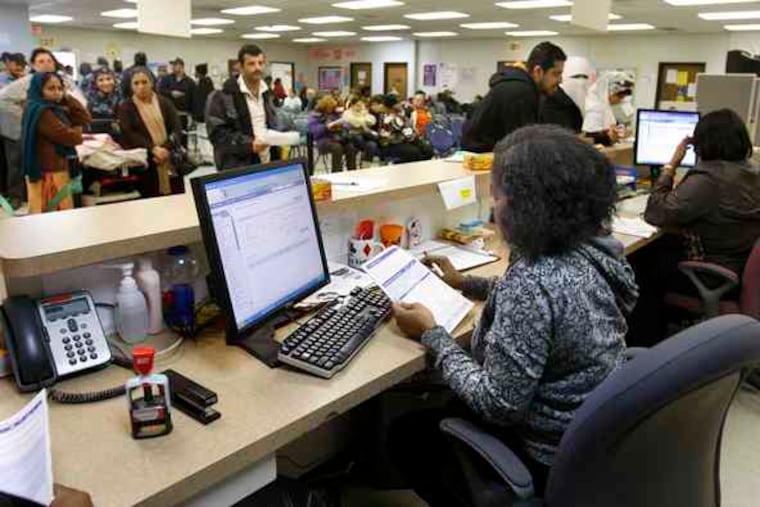
LANSING, Mich. - One client hurled a piece of concrete through the window of a welfare agency. Another threw her car keys at a welfare worker before being escorted away. At one point, a woman on public assistance even took a swing at a worker.
As Michigan struggles with the nation's highest jobless rate, state workers who deal with unemployment, welfare, and other aid programs say they have never been so overwhelmed - or so worried about their safety.
"We are seeing it more and more as a dangerous situation," said Amy Harrison, a caseworker who used to work for the state prison system, where she says she never felt as insecure as she does now.
More than 15 percent of Michigan workers do not have a job. Demand for food stamps and public health care is up, forcing clients to wait hours for help in crowded office buildings. And a troublesome new computer system is causing delays.
"What is it going to take? Is it going to take one of us getting seriously injured or killed? I hope not," said Laurie Massie, a Department of Human Services worker.
Massie grew fearful when a 6-foot-4, 250-pound man walked into in her office in the Upper Peninsula demanding that his application for emergency assistance be processed. She was helping a client who had an appointment.
"He stood there. He stared me down," said Massie, whose job is to determine whether people are eligible for public assistance.
He eventually left. Workers learned later that he had a history of armed robberies and aggravated assaults.
At the DHS office in Macomb County, north of Detroit, lines have snaked out the door, and workers worry what will happen in winter.
About two out of every 10 Michigan residents receive some kind of state assistance. That's 400,000 more than a year ago, and staffing levels at public-aid agencies are only slightly higher than before the recession.
Earlier this month, seven caseworkers pleaded with lawmakers for better security, more staff, and help with the computer system.
One lawmaker suggested they consider carrying handguns, which did not sit well with caseworkers - not to mention that having a pistol in an agency that oversees child welfare is illegal.
Stephen and Christina Saunders of Grand Rapids started receiving $335 in monthly food assistance in September to help feed their four children ages 6 and under. He lost his job when his company closed his factory, and his new job gives him less than 20 hours a week.
Christina Saunders spent 90 minutes recently waiting to see a caseworker.
"Having that many people together, once one person starts crabbing, then another person starts crabbing, and it gets harder to calm things down," her husband said.
Said Jan Brown, a Berrien County caseworker: "I think I'm tough, and it's frightening me. These people are angry."