Drexel opens walk-in clinic at Liberty Place
The first walk-in, convenient-care clinic in Center City has opened at the Shops at Liberty Place. It is a joint project of the Drexel University School of Medicine and the Drexel College of Nursing & Health Professions, an unusual combination in this region, where this burgeoning approach to quick, simple health care has been the province of clinic companies that typically set up small outposts in drug, grocery, or big-box stores.
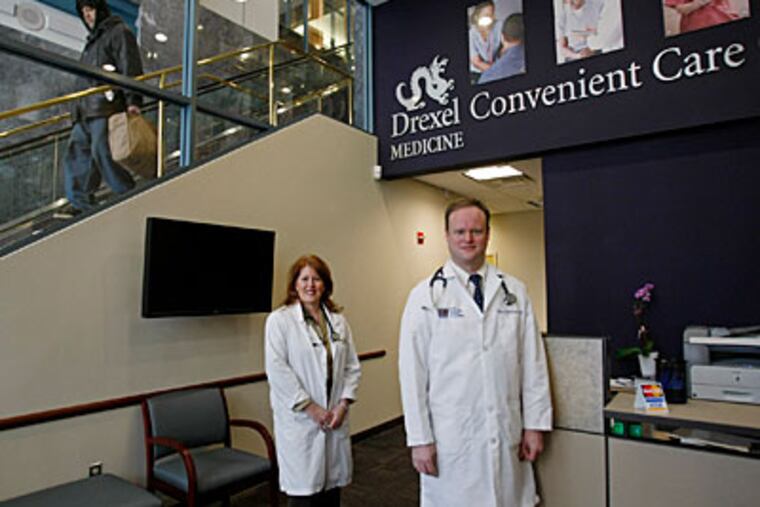
The first walk-in, convenient-care clinic in Center City has opened at the Shops at Liberty Place.
It is a joint project of the Drexel University School of Medicine and the Drexel College of Nursing & Health Professions, an unusual combination in this region, where this burgeoning approach to quick, simple health care has been the province of clinic companies that typically set up small outposts in drug, grocery, or big-box stores.
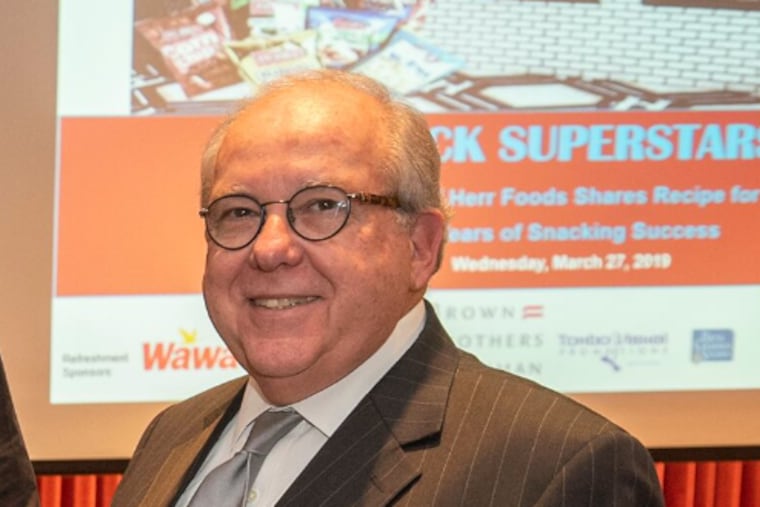
Howard Miller, chief executive officer of the medical school's practice plan or group medical practice, had three goals when he conceived the clinic: Give people who work or visit downtown easy access to routine medical care, raise Drexel's visibility, and increase referrals to Drexel's doctors.
"We've not been as visible in the city as we would like," Miller said of Drexel's 274 doctors. "I don't have Penn's money to advertise."
Tine Hansen-Turton, executive director of the Philadelphia-based Convenient Care Association, said Drexel was on the leading edge of a wave of health-system-owned retail clinics in the area. She said five health systems in the region, which she declined to name, were considering opening similar centers in the next few months.
Nationally, the Mayo and Geisinger health systems and the Cleveland Clinic already operate retail clinics, she said. "Some of the star health systems are already in this business," she said.
Retail clinics, which typically use nurse practitioners to treat minor problems such as colds, bladder infections, and rashes, have gained increasing acceptance in recent years. Nurses also give physicals and shots. Nationwide, the number of retail clinics has grown from 62 in 2006 to 1,250 today, according to the association. Hampered by the recession, they have not, however, expanded as rapidly as many enthusiasts predicted in their early days.
Hansen-Turton said many health leaders, like Miller, see the clinics as a way to market their systems and gain new patients. The clinics also can relieve the strain on emergency rooms. If a health-care overhaul passes, the clinics likely will thrive, she said, because an increase in people with insurance will spur demand for primary-care services beyond what doctors can provide.
Drexel's center opened its doors earlier this month with no fanfare so the staff could work out any bugs. The grand opening is Monday.
The walk-in center, which has three exam rooms, is staffed primarily by nurse practitioners on Drexel's faculty who will work from 7 a.m. to 7 p.m. Primary-care doctors will sometimes be on site, and Tom McAndrew, an internal medicine doctor, will serve as medical director.
The center does not yet have agreements with insurance companies, so insured patients will have to pay for care themselves and hope for some reimbursement. A standard visit is $65.
Miller thinks patients will prefer Drexel's freestanding center in a former Verizon store to clinics in drug or grocery stores. "It's a bit avant-garde for these kinds of places," he said. "It looks like a doctor's office. It's just better" than what competitors offer.
Miller sees opportunity in the area's density. Fifteen thousand people work within three blocks of the center and he thinks many of them will be willing to pay for convenience. He's also promoting his services to the convention center and hotel concierges.
He also thinks the fact that only 4 percent of medical students choose to go into primary care demands a new model for medicine, one that makes better use of nurse practitioners.
Many younger people don't have primary-care doctors and it's hard to find one quickly when you're sick. Drexel's new program offers another key benefit: expedited appointments with primary-care and specialist doctors in Drexel's group for people who need long-term or more sophisticated care.
Miller said the center would help patients see a specialist within a week. "There's nobody in the world that's going to do that but me," he said.
Those referrals are important for Drexel's doctors, most of whom work near Hahnemann University Hospital and send their sick patients there. (The medical school has a relationship with the hospital.) While more people are moving into the city, that area is still largely commercial. Miller's practice, for example, is across the street from Hahnemann, an easy walk north of City Hall on Broad Street.
McAndrew, a former Air Force flight physician who finished his residency in 2007, also works there. He said he had already gotten one new patient he met at the center.
"There is no indigenous population around this area," Miller said of the blocks around Hahnemann. "I definitely want to expand the base of people that come to this place. I view the people that work there as the neighborhood."