PhillyDeals: Endo makes third acquisition since May
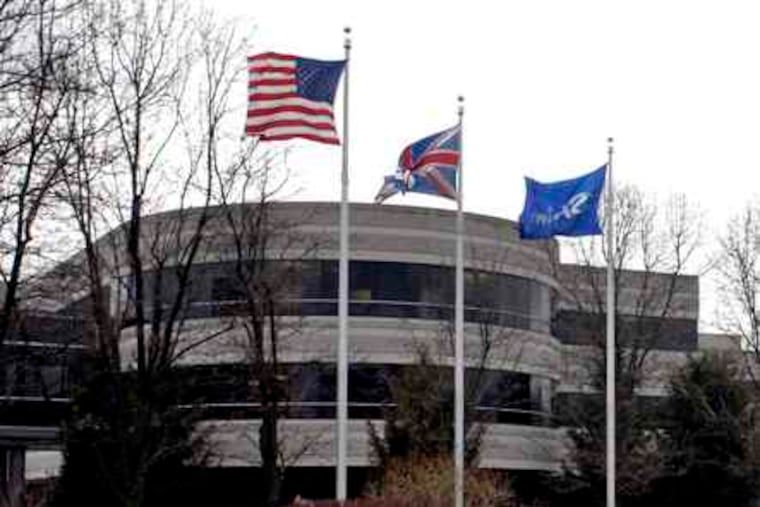
Big Pharma's next generation is bulking up. Endo Pharmaceuticals Holdings, of Chadds Ford, spent $1.2 billion Tuesday to buy generic drugmaker Qualitest Pharmaceuticals, of Huntsville, Ala., from Apax Partners, of London. It was Endo's third acquisition since May, and the latest and one of the biggest in a string of deals by midsize drugmakers.
Big Pharma's next generation is bulking up.
Endo Pharmaceuticals Holdings, of Chadds Ford, spent $1.2 billion Tuesday to buy generic drugmaker Qualitest Pharmaceuticals, of Huntsville, Ala., from Apax Partners, of London. It was Endo's third acquisition since May, and the latest and one of the biggest in a string of deals by midsize drugmakers.
Instead of trying to market small firms to giants like Pfizer, Merck, GlaxoSmithKline and AstraZeneca, "We spend more time now with companies like Cephalon, Endo, Shire, and Celgene," ambitious companies that are buying specialized businesses and promising new drugs, P. Sherrill Neff, founding partner at $700 million biotech investor Quaker BioVentures, of Philadelphia, told me.
"Those are much more likely to be meaningful partners for our firms than the large guys are."
"Our firms," for Quaker, include Philadelphia-area drug, device, or therapy developers such as Celator Pharmaceuticals, of Princeton (leukemia); TetraLogic Pharmaceuticals, of Malvern (cancer); NeuroNet, also of Malvern (depression), and more than two dozen other companies throughout the Northeast.
For investors such as Neff and his partners, success means selling these firms, within a few years, at a profit, either in the uncertain stock market, or to bigger drugmakers willing to take the risk of buying small and specialized therapies - despite regulatory uncertainty and changes in insurer and government payments - in hopes of a bigger payout down the road.
Neff calls Endo boss David Holveck an ideal buyer: A veteran of GE Healthcare who headed Centocor and stayed for a time at its buyer, Johnson & Johnson. "He realized he was more of a small-company guy," Neff describes Holveck, who wanted to run his own shop and build it opportunistically as his cash rises and businesses become available.
"He's able to move [at Endo] with a speed and intensity and a focus that the big guys," swollen by past mergers, "just can't do right now," Neff said of Holveck.
'Very slack'
At a dinner for bank investors in New York Monday,
Gerry Cuddy
and
Tom Cestare
, chief executive and chief financial officer, respectively, of
Beneficial Mutual Bancorp Inc.
, the biggest bank still based in Philadelphia, described a fairly bleak economic environment locally.
"They are not seeing much in the way of improvement and no strong signs of a recovery" in the Philadelphia area, Frank Schiraldi, analyst for Sandler O'Neill + Partners, told clients in a report Tuesday.
"Good loan-growth opportunity is very slack, and there is not a lot of strong loan demand to be had," Schiraldi wrote, so Beneficial is thinking about buying smaller banks, especially at the Jersey Shore.
Loan 'scheme'
A federal grand jury in Philadelphia Tuesday indicted Newtown Square mortgage broker Bernadette Nicholas, bank loan officer Kevin D. McAllister, of Drexel Hill, and Philadelphia-area landlord Wayne Rosen on fraud charges for misrepresenting borrowers in bank loan documents.
According to the indictment, McAllister, a commercial loan officer at Wilmington Trust Co. who earned over $200,000 a year, set up a "scheme" with Nicholas to prepare "false and fraudulent mortgage applications" for 55 mortgage loans worth over $30 million from 2003-06. Basically, McAllister falsified loan documents in a way that allowed Nicholas' mortgage-applicant clients, many of them high-risk applicants, to get loans.
McAllister "ignored" the bank's loan criteria and approved the loans, in exchange for "bribes and kickbacks ranging from 1/2 percent to 1 percent of each loan" from Nicholas. The kickbacks totaled more than $350,000, the indictment alleges.
Many of the loans later "went into mortgage foreclosure, causing losses to Wilmington Trust in excess of $2.6 million," according to the indictment. Unrelatedly, larger loan losses from failed projects at the Delaware Shore and elsewhere forced the replacement of the bank's chief executive, Ted T. Cecala, earlier this year.
Wilmington Trust issued this statement: "We have been assisting law-enforcement officials with their investigation and continue to do so. We appreciate their efforts in this matter."
The indictment also accuses broker Nicholas and landlord Rosen of using "fraudulent" documents to persuade Malvern Federal Savings Bank to help finance the purchases of a business building in Folcroft and a medical-office building in Philadelphia's Art Museum area.
McAllister, Nicholas, Rosen and their lawyers did not return calls seeking comment.