Urban Outfitters keeps on growing
Bands were performing out behind an Urban Outfitters store near the University of Texas as Dryw (pronounced "Drew") Scully explained what some might consider unusual duties for a guy in retail.
Bands were performing out behind an Urban Outfitters store near the University of Texas as Dryw (pronounced "Drew") Scully explained what some might consider unusual duties for a guy in retail.
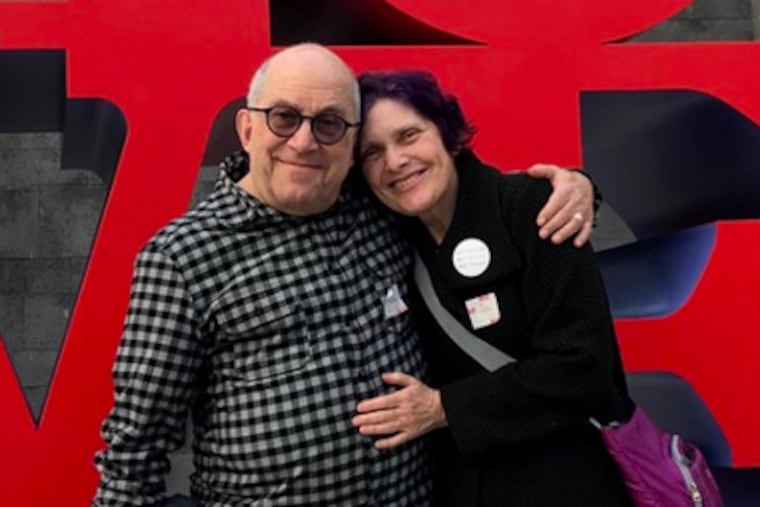
"My job," said Scully, a 33-year-old Mayfair native and Father Judge graduate, "was just specifically created to play music on overhead."
In other words, if you have ever grooved to a tune in an Urban Outfitters store, or happened to catch the bands playing at its annual four-day free-concert series in Austin during the hipster-hotbed city's South by Southwest festival, Scully was the man actually paid - yes, paid - to pick them all.
His unorthodox job embodies the kind of free-flowing investment and creative culture that, despite an economy especially harsh to retailers, has continued to flourish at Urban Outfitters Inc., a company whose success is so propulsive that it plans to add 1,000 jobs to its home base at the Philadelphia Navy Yard in the next three years.
Over the last five years, global sales have more than doubled as Urban has opened new stores for its varied brands: Urban Outfitters, Anthropologie, Terrain, and Free People.
And the $2.3 billion corporation has birthed even more homegrown brands, further diversifying its portfolio of retail and wholesale divisions. In February, it launched a bridal business, BHLDN (pronounced "Beholden"). Leifsdottir, a wholesale designer-apparel label, debuted in 2009.
In the last year, the company - which began as a single store near the University of Pennsylvania in 1970 - opened 46 stores worldwide. It plans to open 50 to 55 more this year, including its first BHLDN, 14 Free People stores, and the rest a split between Urban Outfitters and Anthropologie locations.
By contrast, fellow area-based retailer Charming Shoppes Inc. has closed hundreds of Fashion Bug and Lane Bryant stores and imposed layoffs in recent years.
Urban also is pouring money into extending its mastery of hipster and urban-chic retailing to a sphere that continues to vex store-only retailers: the Internet.
The company is heavily engaged with its tech-savvy customers through Facebook (1.5 million fans), Twitter, in-house blogs, and websites, and some of its newly acquired buildings at the Navy Yard will be making room for expanded Urban Outfitters and Anthropologie online initiatives. Urban drew 35 million website visits between November and the end of January, the ever-critical holiday-shopping season.
Selling goods is not the only online focus, though. Employees assigned to Internet work blog and Tweet on various topics, so that loyalists have other reasons to hang around even if they are not shopping. They shoot out free downloadable songs (chosen by Scully), share photos of new fashions, even advertise new job openings at Urban's headquarters.
One such Tweet, transmitted Thursday from the urbn_scout Twitter account, went like this: Dream of working around photoshoots, stylists & amazing clothes? We're looking for a Studio Coord @Anthropologie. Apply!
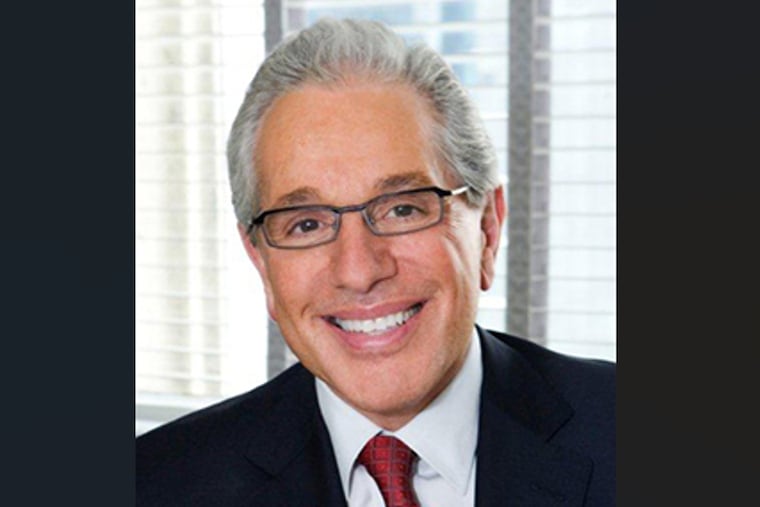
"We had more than 100,000 people apply to work in our home office" last year, chief executive officer Glen T. Senk said in a March call with investment analysts. "We interviewed some 15,000 people and hired 500 of some of the most talented, dynamic people I've ever met."
Urban's home-office workforce has doubled since it moved its operations from disparate locations in Center City to the Navy Yard in 2006.
In February, it completed efforts to acquire and control what is now 11 properties within walking distance of a drydocked, decommissioned aircraft carrier - a move that earned high praise from Michael Nutter, mayor of a postindustrial city generally more accustomed to job attrition than job creation.
"We've grown 23 percent a year since we've been public," said Senk, a onetime competitive equestrian who joined the company a year after its initial public offering in 1993. He was hired by Richard A. Hayne, who founded that first Urban Outfitters store in 1970 and is today chairman of the board. Hayne groomed Senk to succeed him in 2007 and created the CEO position for him.
"We've grown earns [earnings] 36 percent a year for the last 10 years," Senk told an auditorium of Wharton students during a March 31 appearance there.
As a result, there is money to invest in such things as foreign travel, for the creative team to gather new ideas for products and design.
One Anthropologie employee - Senk's own domestic partner, Keith Johnson - recently immersed himself so deeply in the far reaches of Tanzania, Senk said, that he didn't shower for a week before returning home.
"When you have that kind of growth," Senk said, "there's enough for everybody. There's opportunity for everyone."
The year it went public, 1993, the company was much smaller, generating $59 million in sales from a batch of Urban Outfitters and Anthropologie stores and its own Free People apparel line, which it had launched in 1984.
Over the next decade, Urban grew steadily across North America, expanding to Europe and introducing Free People stores in 2002.
It was during that period that Scully was spotted working as a manager at a boutique on Philadelphia's then-edgy South Street.
Songs he played at the store caught the ear of a customer who happened to work at Urban, and Scully was offered a job created just for him - the post he holds to this day.
"I love this store," raved Austin resident Wayne Bruce Dean Jr., 20, who had popped into the Urban Outfitters there to hear the free concerts offered last month during South by Southwest. "I like that it's cheap, they always have good sales upstairs. And the music is always amazing in the store."
His pants, he admitted with a grin, were Urban Outfitters corduroys that he had bought down the street at a consignment shop.
January was a tricky month for Urban Outfitters stores and brand sales, and that contributed to a dicey earnings call and a head-turning stock-price dip in March.
Net sales for the quarter that ended Jan. 31 were high overall, and the company, as usual, was profitable. But unbeknownst to investors, sales flattened owing, in part, to a shift in fashion trends that left some merchandise unsold and forced markdowns, executives said, without elaborating on which styles were falling flat.
As investors awaited the holiday-earnings release, they drove the stock price high in February, to more than $38 at one point. After the earnings release, however, shares tumbled 17 percent.
One investor has filed suit against Urban in federal court in Philadelphia over the matter. For their part, company officials say that, even after that sharp decline, shares were trading only a few dollars below where they were when the quarter ended in late January. Investment analysts have since urged caution as the company works to readjust its inventory in the months ahead.
Since 2004, Urban has grown at a fast clip. Sales at the start of that year were $548 million; by the end, they hit $828 million. Senk hopes today's $2.3 billion will become $10 billion by 2020.
The growth will not come from simply opening more of the same stores, he said, because those would then lose their unique qualities and become less successful. Rather, it will come from opening overseas and creating new brands, such as BHLDN, that sell to a customer type not already served by Urban Outfitters, which targets 18- to 28-year-olds; Anthropologie, which targets women up to age 45; and Terrain, an upscale garden and lifestyle home store.
"Hopefully," Senk said, "one, two, or three of those will be the next big thing."
And by 2020, he said, "we'll probably be comprised of six to eight brands that are $500 million plus at that point."