A drug in limbo, Catch-22 for FDA
The normal tug-of-war between a pharmaceutical company and the U.S. Food and Drug Administration over approval for a drug has been turned on its side with midodrine, a medicine that helps about 100,000 patients a year avoid the potential dangers of low blood pressure.
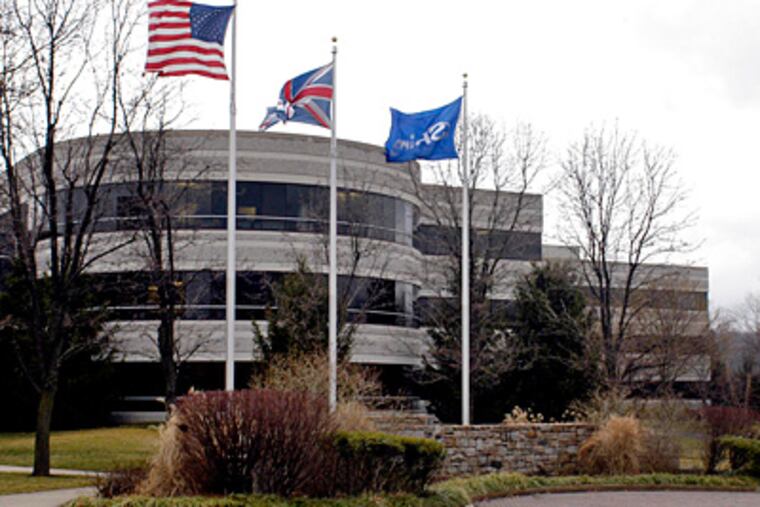
The normal tug-of-war between a pharmaceutical company and the U.S. Food and Drug Administration over approval for a drug has been turned on its side with midodrine, a medicine that helps about 100,000 patients a year avoid the potential dangers of low blood pressure.
Shire Pharmaceuticals Inc., with U.S. headquarters in Wayne, no longer makes the drug, but it wants the FDA to give final approval of midodrine to lift a regulatory cloud. Barring that, it wants the FDA to approve Shire's plan for new trials or hold a hearing that might kill the drug.
Though it has been on the market for 15 years under a temporary approval, midodrine never passed its final clinical trials. Now, the FDA is in a bind no matter how it acts, including doing nothing.
"It is a Catch-22," said cardiologist John Harold of the Cedars-Sinai Heart Institute in Los Angeles and the vice president of the American College of Cardiology. The cardiologists' group does not want the drug pulled from the market and filed a letter to that effect with the FDA. "There is a tension there. You have patient safety on one hand, and innovation and patient access on the other."
ProAmatine is the brand name for midodrine, which treats a low blood pressure condition called symptomatic orthostatic hypotension, in which patients pass out if they stand up. Midodrine is often taken by elderly patients, including those with Parkinson's disease.
Shire got midodrine via its 1999 acquisition of Roberts Pharmaceuticals Ltd. But the drug averaged only $21.5 million in sales per year through 2008, so Shire no longer makes or sells it. Shire says it gets no royalties from the five generic manufacturers who do. Shire says it loses money because, as the original applicant for the drug's approval, its staff must file reports for the FDA, including notices of adverse reports by doctors or patients.
The FDA's role is to ensure safety and effectiveness of drugs. But some applications for new drugs get accelerated approval if there is a clear sign of lifesaving potential, with "final" approval dependent on satisfactory clinical testing after it is on the market.
Midodrine was one of those drugs, but it has never received final approval, despite being allowed on the market since 1996. The FDA has said that Shire never completed trials that meet FDA standards for final approval.
In 2010, the FDA threatened to withdraw the initial-but-temporary approval. Shire responded by saying last fall that it would withdraw the application.
Since then, Shire's stance has changed, thereby giving the FDA a different dilemma.
Shire's first preference is for the FDA to give final approval based on the previous trials and 15 years of use by patients.
"We hope the drug continues to be available to patients who need it," said Scott Applebaum of Shire's regulatory division.
Absent such approval, Shire wants its trials plan approved or a public hearing that the FDA would be required to conduct before killing the drug, but Shire would not say which avenue it preferred.
Shire officials say they respectfully disagree with the FDA about the conclusions of the earlier trials but will conduct - and bear the cost of - new trials if the FDA will simply sign off on its plan. Shire says the FDA wants trials completed sooner than the norm, which is several years. Under either timetable, there will be a distinct hurdle.
Normal trials have a control group of patients, who receive a placebo instead of the medicine under study. But that presents a practical and ethical challenge. Aside from money, people usually only participate in trials because they hope it eventually leads to availability of a treatment.
Midodrine is already available. It's not 100 percent effective in every patient and it has side effects. Harold and other doctors say it has to be prescribed carefully. But why would someone participate in a study, knowing they might get the placebo, when a doctor down the street can legally prescribe the generic form of the real drug?
"The ethics of doing a clinical trial with a placebo, a lot of people would debate that," Harold said. "I don't have an easy answer."
An FDA representative said that Shire's hearing request was being reviewed and that "as the regulatory process moves forward, continued patient access to midodrine is a key agency priority."
A 2009 report from the federal government's General Accounting Office criticized the FDA for not resolving accelerated-approval cases more quickly, singling out the midodrine case as the longest one without a final decision.
The FDA probably would have preferred Shire withdraw the application, which almost certainly would have taken the drug off the market.
The FDA has to be worried about setting an unwanted precedent by giving Shire final approval based on the prior studies. If it gives Shire a pass, the next manufacturer in a similar situation will want the same treatment.
The public hearing - with the idea of withdrawing approval of the drug - could be problematic for the FDA. Despite not having satisfied the clinical trial requirements, Shire and the makers of the generic have 15 years of use by patients to help their case and they would be heard at the hearing.
"If the FDA goes through with this plan, hundreds of our patients and thousands of other patients will risk serious health deterioration," four Mayo Clinic doctors wrote in a 2010 letter to the FDA. "We understand that the pharmaceutical companies marketing midodrine did not meet the requirements of the FDA in terms of subsequent demonstration of unequivocal patient benefit.
"Nonetheless, given that there are no similar treatment options for many patients and that a wealth of scientific evidence and clinical experience supports the effectiveness of this product, we would like to exhaust every possible avenue to preserve the availability of midodrine."
The FDA took a lot of heat in June at a public hearing when an agency panel voted to recommend pulling its approval of Avastin for the treatment of breast cancer. FDA chief Margaret Hamburg has not announced a final decision on Avastin. Avastin would still be approved for use in other cancers, so it will remain on the market and doctors could prescribe it if they see fit.
The midodrine case has some differences, but if the FDA pulls approval for Shire's application, it would almost certainly do so for the generic versions. The result could be its disappearance from the market.
The five generic manufacturers are Mylan Pharmaceuticals Inc., Impax Laboratories Inc., Upsher-Smith Laboratories Inc., Sandoz Ltd., and Apotex Inc. Spokesmen for Impax and Sandoz said the companies were monitoring the situation, but they declined other comment. The other companies could not be reached for comment.
Drug-industry supporters are pressing the FDA to allow more anecdotal evidence in the normal drug-approval process, lessening the need for costly and time-consuming clinical trials. Consumer-safety advocates fret that drug companies will use their cash to load up any witness list with people advocating for the drug.
Harold suggested that already existing computerized records of patient experiences, including the network created by his group, can address some of that concern, and as electronic medical records become more prevalent, bigger databases could lend further credence, especially for cases like this.
"When you don't have another treatment option," Harold said, "there has to be another way."