AstraZeneca cutting 400 jobs, mostly in Wilmington
AstraZeneca P.L.C., the global pharmaceutical giant that makes well-known medicines such as Prilosec, Nexium, and Seroquel, said Thursday it would cut about 400 U.S. jobs, with most of the layoffs at its headquarters in Wilmington.
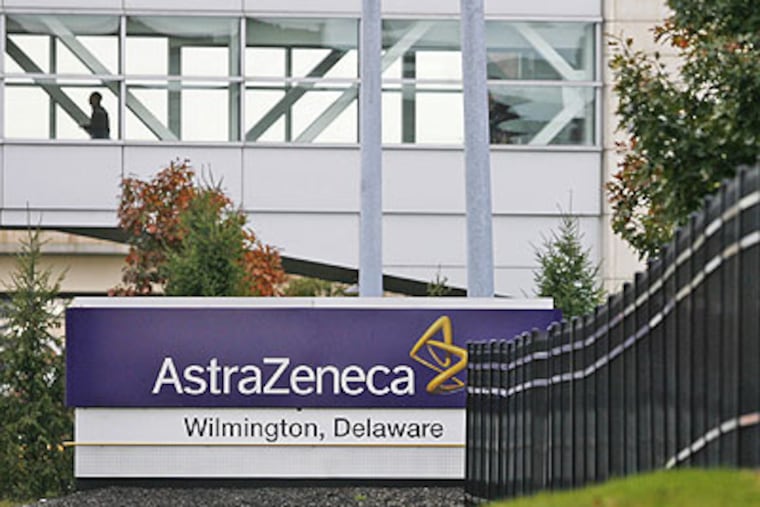
AstraZeneca P.L.C., the global pharmaceutical giant that makes well-known medicines such as Prilosec, Nexium, and Seroquel, said Thursday it would cut about 400 U.S. jobs, with most of the layoffs at its headquarters in Wilmington.
About 330 people will lose jobs and 70 vacant positions will be eliminated as the company continues to pare its costs to sustain profits. The company said the job cuts would come from headquarters staff and "some field-based, non-sales roles," elsewhere in the country. These cuts won't come from the company's manufacturing facility in Newark, Del., nor from the ranks of sales representatives.
London-based AstraZeneca has about 14,400 employees in North America, of which about 3,500 are in Delaware.
AstraZeneca moved much of its operations in the Pennsylvania suburbs of Philadelphia to Wilmington in 1999, in part because the Delaware Economic Development Office gave it a package of grants and tax credits totaling $40.7 million.
Richard Fante, chief executive for AstraZeneca in North America, called the cuts difficult but said they were "necessary to build a leaner, more efficient organization."
The Philadelphia region has pharmaceutical businesses of all sorts and sizes, including those that make brand-name drugs and their generic competitors. Other big companies, including Merck & Co. Inc. and Pfizer Inc., have also announced layoffs in recent months.
Some big brand-name companies, including AstraZeneca, face steep revenue declines because blockbuster drugs are losing patent protection, which allows generic manufacturers to sell their versions for a fraction of the cost.
Generic drugs already make up about 70 percent of the market. Patients, businesses offering employees health benefits, and insurance companies - private and governmental (Medicare, Medicaid) - are drawn to generic drugs because they cost less.
These are not the first and won't be the last of the job cuts for AstraZeneca. It announced in March 2010 that it would cut 10,400 jobs by 2014. Employment was about 63,000 at the end of 2009 and is down to about 61,000 currently.