Exelon CEO: Ready for give and take in Constellation merger
John W. Rowe, the head of energy giant Exelon Corp., said the company was ready to make concessions to seal a proposed $7.9 billion merger with Baltimore's Constellation Energy Group Inc., but it's also prepared to walk away if the deal gets costly.
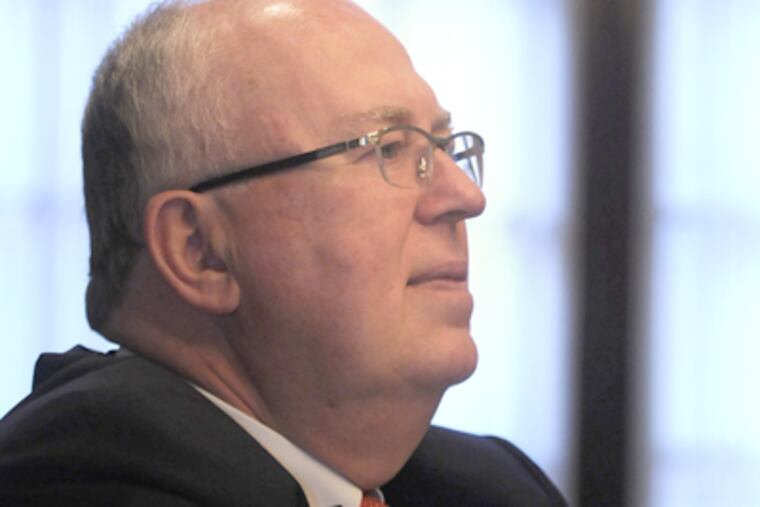
John W. Rowe, the head of energy giant Exelon Corp., said the company was ready to make concessions to seal a proposed $7.9 billion merger with Baltimore's Constellation Energy Group Inc., but it's also prepared to walk away if the deal gets costly.
Rowe, chief executive of Exelon, which owns Philadelphia's Peco Energy Co., said on the eve of a two-week hearing by Maryland regulators that Exelon is trying to negotiate a settlement to buy Constellation, which owns Baltimore Gas & Electric Co.
"This is the state's largest utility," he said Friday in an interview. "We know we're going to have to do something more to make the governor and the mayor and the others really want it."
Rowe described the Maryland merger proposal as going through "puberty."
"The joys of the initial announcement are over, and the deal isn't done yet," he said.
The Maryland Public Service Commission, which plans to make a decision by Jan. 5, wants Exelon to build more generation capacity. Maryland Gov. Martin O'Malley has demanded the merged company invest more in renewable energy than the 25 megawatts of capacity Exelon has promised.
"I think in the end they'll pull a little bit more in the governor's direction," Rowe said.
Rowe engineered the 2000 merger of Chicago's UniCom with Philadelphia's Peco Energy Co. to form Exelon, but three other mergers in the last eight years were scuttled because of complications. Exelon's proposed $18 billion merger in 2006 with New Jersey's Public Service Enterprise Group fell apart after Gov. Jon S. Corzine intervened.
Rowe, who is retiring early next year, said analysts need not worry that Exelon will pay too much. "The shareholders are nagging just a little to make sure I haven't gone soft in my old age," he said.
"They're concerned that an egotistical CEO will pay more to get a bunch of good articles in newspapers and magazines than a deal was worth," he said. "Well I've walked three times. If there's anything they know, they know I won't overpay."
Exelon's proposed merger has raised apprehension in Maryland, where Constellation is Baltimore's only Fortune 500 company.
Exelon said its offer was fashioned on similar terms that Maryland officials accepted in the merger of FirstEnergy and Allegheny Power. Exelon will give each BGE customer a $100 credit and promised not to reduce the Baltimore utility's workforce for two years. The company would also build a new BGE headquarters in Baltimore.
"Every state that's going to allow a major utility acquisition is going to want concessions if it's losing control of its hometown utility," said Rowe. "We have to show that we're going to be a good neighbor."
Federal regulators, including Department of Justice antitrust investigators, are focusing on how the company's ownership of 25 percent of the region's generation capacity would affect wholesale electricity markets.
Exelon agreed to divest three coal-fired power plants in Maryland to alleviate concerns, but consumer advocates, including Pennsylvania's Consumer Advocate, Irwin A. "Sonny" Popowsky, say it's not enough.
Another obstacle awaits in the EDF Group, the French energy company that owns 7.2 percent of Constellation's stock and is a partner in Constellation's three nuclear stations. EDF has threatened to vote against the merger, and has filed objections with the Maryland commission.