Competitor Group buys Philadelphia Insurance Triathlon from its founders
Thousands of athletes will compete Saturday and Sunday for prizes and bragging rights at Philadelphia Insurance Triathlon along the Schuylkill.
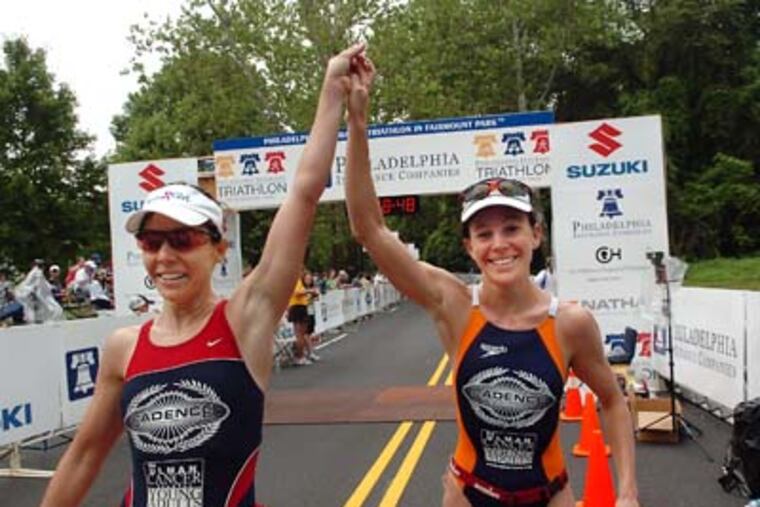
Thousands of athletes will compete Saturday and Sunday for prizes and bragging rights at Philadelphia Insurance Triathlon along the Schuylkill.
But the big prize was already bagged by a California sports event company that paid millions of dollars last week to buy the race from the Philadelphia entrepreneurs, both triathletes, who started it in 2005.
The Competitor Group Inc. would not disclose how much it paid Philadelphia Triathlon L.L.C. cofounders Jon Reichlin, owner of a sporting-goods company, and Alan Morrison, a health-care financier, for the Philadelphia Insurance Triathlon and also the Toyota SheRox Triathlon series.
But CGI's company's website provides the rationale. The draw is the so-called "endurance lifestyle audience" — rich, youngish, and presumably in need of lots of gear since they work out at least four times a week. "They are loyal to the brands that help them achieve these [performance] goals," said the website.
With household incomes of $102,000, "endurance lifestyle" participants can afford the $115 to $380 registration fee for events like this weekend's Philadelphia Insurance Triathlon.
More important, said Kenneth Shropshire, a University of Pennsylvania Wharton School professor specializing in the business of sports, they attract sponsors promoting pricey gear who want more than a name on a water bottle.
Shropshire said that sponsorships typically account for 75 to 90 percent of an event's revenues. Doing the math, that means that this race alone could be worth between $2.1 million to $5.3 million, assuming that the 3,500 participants paid $150 each to register.
Part of Falconhead Capital in New York, CGI, of San Diego, produces September's popular 20,000-runner Rock 'n' Roll Philadelphia Half Marathon. CGI says seven million athletes are enrolled in its 71 events worldwide.