Weak job report the latest sign economy is slowing
The U.S. Department of Labor's weaker-than-expected jobs report Friday fed fears the economy was slowing. The gain of just 88,000 jobs for March, down by more than half from January and February, sent stock prices lower, with the Standard & Poor's 500 big-company stock index ending down 0.43 percent for the day.
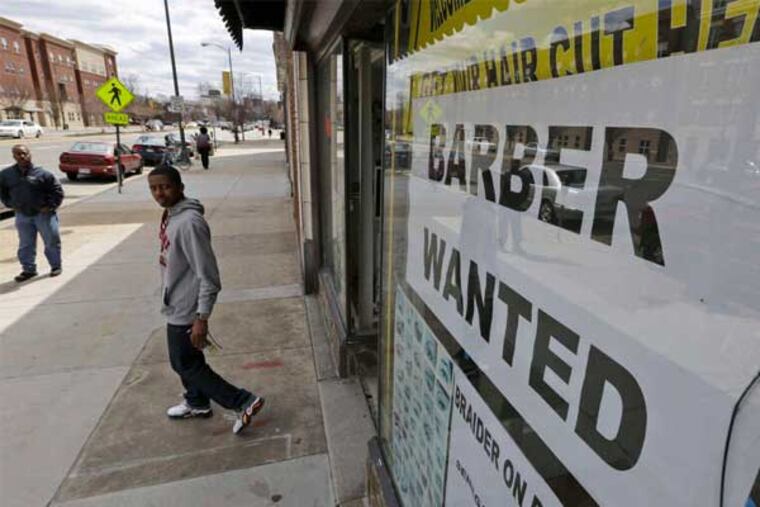
The U.S. Department of Labor's weaker-than-expected jobs report Friday fed fears the economy was slowing. The gain of just 88,000 jobs for March, down by more than half from January and February, sent stock prices lower, with the Standard & Poor's 500 big-company stock index ending down 0.43 percent for the day.
But the weak jobs report shouldn't have surprised investors, because the economy had already been facing higher labor costs, weak durable-goods demand, and slow factory orders, factory analyst John Baliotti told clients at Janney Capital Market of Philadelphia on Friday morning. Employers have little need to hire, he noted.
To be sure, the housing market keeps strengthening, which "argues against a slowdown," James M. Meyer, chief investment officer at $1 billion-asset Tower Bridge Advisors, wrote in a report to clients of brokerage Boenning & Scattergood.
But higher Social Security payroll taxes, a drop in government war spending, and the across-the-board federal "sequester" program cuts that follow Congress' failure to agree on more targeted deficit reduction all threaten consumer spending - even as small businesses are being careful to "keep their headcount below the magic 50 number" if they want to avoid having to pay medical benefits under next year's "Obamacare" rule, Meyer added.
On Thursday, PNC Financial Services Group, the biggest bank based in Pennsylvania, said its new survey of owners of small and midsized businesses showed most "plan to delay hiring new employees" or borrowing to expand. Companies blamed "continued uncertainty about federal spending, tax, and deficit actions; hiring freezes and ongoing layoffs" by the U.S. government and other large employers; and weak export demand from Europe, PNC said.
Also, in a sign of pending inflation, six times as many employers told PNC they planned to raise prices, compared with the ones that said they were likely to cut prices this year.