A Show of Secrets
ATLANTA - Coca-Cola keeps the recipe for its 127-year-old soda inside an imposing steel vault bathed in red security lights. Several cameras monitor the area to make sure the fizzy formula stays a secret.
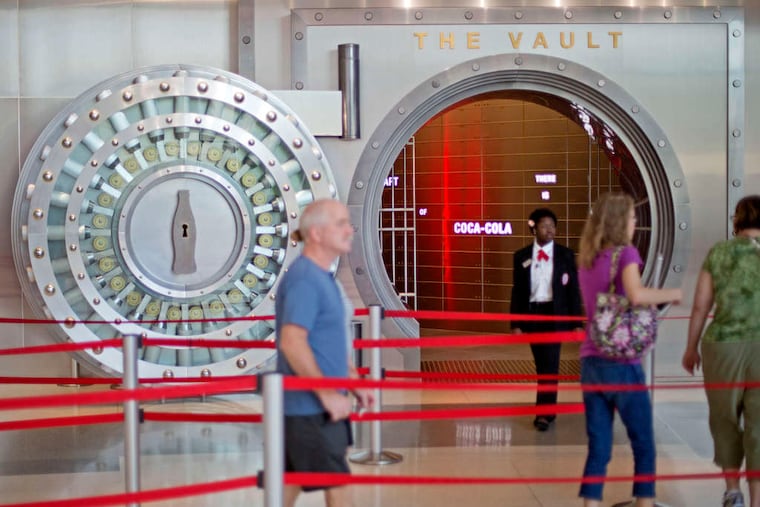
ATLANTA - Coca-Cola keeps the recipe for its 127-year-old soda inside an imposing steel vault bathed in red security lights. Several cameras monitor the area to make sure the fizzy formula stays a secret.
"It's a little bit for show," concedes a guard at the World of Coca-Cola museum in downtown Atlanta, where the vault is revealed at the end of an exhibit in a puff of smoke.
The ability to push a quaint narrative about a product's origins and fuel a sense of nostalgia can help drive billions of dollars in sales.
Companies such as Coca-Cola and Twinkies owner Hostess play up the notion that their recipes are sacred, unchanging documents that need to be closely guarded. As it turns out, some recipes have changed over time, while others may not have. Either way, they all stick to the same script that their formulas have remained the same.
John Ruff, who formerly headed research and development at Kraft Foods, said companies often recalibrate ingredients for various reasons, including new regulations, and fluctuations in commodity costs.
"It's almost this mythological thing, the secret formula," said the president of the Institute of Food Technologists, which studies the science of food. "I would be amazed if formulas [for big brands] haven't changed."
This summer, the Twinkies cream-filled cakes many Americans grew up snacking on made a comeback after being off shelves for about nine months following the bankruptcy of Hostess Brands. At the time, the new owners promised the spongy yellow cakes would taste just like people remember.
A representative for Hostess, Hannah Arnold, said in an e-mail that Twinkies today are "remarkably close to the original recipe," saying that the first three ingredients are still enriched flour, water, and sugar.
Yet a box of Twinkies now lists more than 25 ingredients and has a shelf life of 45 days, almost three weeks longer than the 26 days from just a year ago. That suggests the ingredients have been tinkered with, to say the least, since they were created in 1930.
KFC says it still strictly follows the recipe created in 1940 by its famously bearded founder, Colonel Harland Sanders. The chain understood the power of marketing early on, with Sanders originally dying his beard white to achieve a more grandfatherly look.
Fast forward to 2009, when KFC decided the security for the handwritten copy of the recipe needed a flashy upgrade. It installed a 770-pound safe that is under constant video and motion-detection surveillance and surrounded by two feet of concrete on every side - just in case any would-be thieves try to dig a tunnel to get it.
KFC may very well be following the basic instructions of the recipe encased in the vault. But the fanfare around its founder's instructions persists despite his disapproval of the new owners of the chain after he sold his stake in the company in 1964. In his book, for example, Wendy's founder Dave Thomas, a friend of Sanders', recounts that Sanders was afraid the new owners would ruin the chicken because he said they "didn't know a drumstick from a pig's ear."
In an e-mailed statement, Coca-Cola said its secret formula had remained the same since it was invented in 1886.
It's a line that's familiar to Terry Parham, a retired special agent for the Drug Enforcement Agency. After the agency opened its museum in Arlington, Va. in the late 1990s, Parham, who was working in the press office at the time, recalled in a recent interview with the Associated Press that a Coca-Cola representative called to complain about an exhibit that noted the soda once contained cocaine. The exhibit stayed, and Parham said the DEA did not hear back from the company.