For Comcast, independent networks will be a merger issue
Comcast Corp. executive and chief lobbyist David Cohen testified in Washington in April and May that the cable giant was a friend to independent cable networks, saying that Xfinity customers have access to more than 160 small or independent channels.
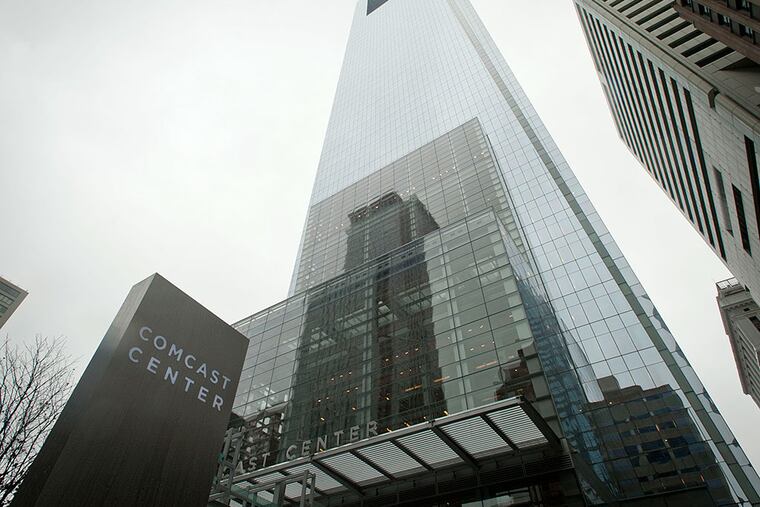
Comcast Corp. executive and chief lobbyist David Cohen testified in Washington in April and May that the cable giant was a friend to independent cable networks, saying that Xfinity customers have access to more than 160 small or independent channels.
The founder and chairman of one of those channels, Patrick Gottsch, of the rural network RFD-TV, in Omaha, Neb., has a different take on it.
"It sounds wonderful. But when you peel back the onion . . . it's really nothing at all," Gottsch said. "Very few [independent] channels have full distribution, other than BBC World News and Al Jazeera."
Other independent networks that Comcast cites as supporting on its cable systems cost extra monthly fees that subscribers have to pay, Gottsch said. These extra fees of $8 a month or more limit their popularity and audience.
The fate of independent networks - a hot-button political topic in Washington for decades - has arisen as one of many issues in the federal government's sweeping regulatory review of Comcast's proposed $45.2 billion acquisition of Time Warner Cable Inc.
Independents can range from regional news channels to lifestyle and foreign-language networks. Some of these independents warn that a combined Comcast/Time Warner Cable could act as a giant TV gatekeeper, keeping them from a critical mass of viewers and protecting Comcast-owned cable channels.
The Tennis Channel, an independent, has battled Comcast for years at the Federal Communications Commission and the federal appeals courts. Courts have granted cable companies broad editorial discretion to decide which channels to place on their systems.
Comcast says it treats independent channels fairly and gives them a ride on its cable systems if they deserve it, adding that the independents are inappropriately clamoring now for the attention of regulators during the Comcast/Time Warner Cable review.
Comcast and other cablecasters have finite capacities in their systems as regards televising channels, whether large and well-watched ones or smaller independents.
Comcast's Cohen said the cable company has expanded carriage of independent networks by more than 50 million subscribers through new channel launches and adding independent channels to new TV markets since 2011, calling it a stellar record.
Comcast spokesman John Demming said Friday that many independent channels had regional or targeted audiences - thus it made sense that they're distributed only regionally or to specific TV markets.
In April, Comcast submitted to the Senate Judiciary Committee a list of 179 independent networks available on its cable systems as part of the Time Warner Cable merger review. According to an Inquirer analysis of the list:
Roughly half, or more than 80, were foreign-language or ethnic cable channels. These include the networks Latele Novela, Playboy en Espanol, CTI Zhong Tian, TV Polonia, and Deutsche Welle. They typically cost an extra monthly fee.
Roughly 15 independents were niche sports networks, such as those for horse racing (HRTV), rugby (Six News Now), international cricket (Willow Plus), basketball (NBA TV), and tennis (Tennis Channel). These also can cost extra.
Many regional news channels and lifestyle channels were distributed in specific geographic areas. BlueHighways TV, a Tennessee independent that televises bluegrass music and dramas, can be watched by 1 percent of Comcast's TV subscribers, or about 210,000 homes, according to an official at BlueHighways TV.
Prominent and widely distributed independents include the Home Shopping Network, QVC, Bloomberg TV, BBC World News, and the EWTN Catholic channel.
The federal government has decreed the need for diverse voices on independent networks, and the FCC generally defines independent networks as those not owned by entertainment conglomerates. Those conglomerates are Comcast/NBCUniversal, the Walt Disney Co., Hearst Corp., Twenty-First Century Fox Inc., Time Warner Inc., Discovery Communications Inc., and Scripps Network Interactive Inc., according to industry experts.
As an FCC condition on the NBCUniversal deal in 2011, Comcast agreed to launch 10 independent networks. Five have already launched: BBC World News, Aspire, BabyFirst Americas, Revolt, and El Rey. Aspire, BabyFirst Americas, Revolt, and El Rey are minority-owned networks.
BlueHighways TV is one of those independents that would dearly like to expand the number of Comcast subscribers that see its channel. But so far, with no luck.
The network won an honorable mention for its Dry Creek drama series at the 2012 Cablefax program awards and offers its channel free to cable systems, said Denise Hitchcock, part-owner of the network and its head of marketing.
It's difficult to expand its distribution on the Comcast system, she said, because the channel bundles offered by the entertainment conglomerates "use all the space" on cable systems.
In addition to the 210,000 Comcast subscribers that can watch BlueHighways, the network is available to 1.5 million Time Warner Cable subscribers.
"Comcast has been open to talking with us," Hitchcock said. "They have been friendly. They have not been rude to us, or any of our people."