Fretting the decline of the traditional pension plan
Retirement. It used to be that workers looked forward to the day they could take their job and chuck it. Now, people worry they might have to work until they are too old to enjoy their "golden years."
Retirement. It used to be that workers looked forward to the day they could take their job and chuck it. Now, people worry they might have to work until they are too old to enjoy their "golden years."
Some of the insecurity can be tied to the changes in pension plans. The consequence of a decline in retirement security could be a rise in government responsibilities.
The retirement landscape has been altered dramatically over the last 50 years. The biggest change has come in the transformation from defined benefit to defined contribution plans.
Defined benefit plans provide a given level of payments after retirement: Think Social Security. Retirement plans were initially used to attract the best workers and they became very popular.
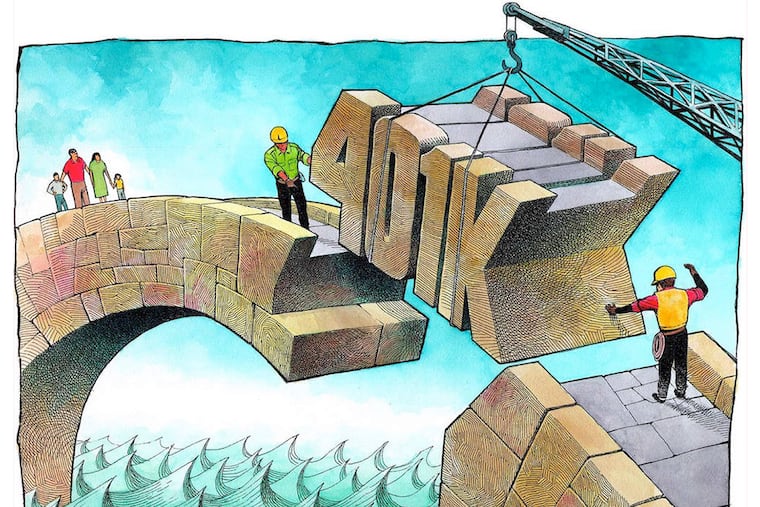
In contrast, defined contribution plans allow people to save for the future but don't ensure any future payments. These are our 401(k) plans, which are now the standard.
The problem with defined benefit plans is they require a projection of future outlays so the employer can adequately fund those expenses. That entails forecasting life expectancy, returns on investments, and increases in salaries and pension benefits.
Though hardly an impossible task, maintaining an adequately funded pension plan is daunting. Consequently, first companies and now governments have decided that the difficulties create excessive risks and costs.
The unraveling of the private-sector defined benefit pension plans began in earnest in the 1980s, but not for the reasons just listed. Companies worked diligently to fund their pensions, and because of high interest rates and solid stock returns, many operated overfunded plans. While that would seem like the best of all worlds, it actually turned out to be the worst thing possible for management.
Corporate raiders viewed companies with overfunded plans as takeover targets. The concept was simple: Buy the company and capture the excess funds in the pension. Pension plan fiscal responsibility became an operational risk factor since insuring the pension was secure meant that the company became a takeover target. Some investors made lots of money, but management's view of defined pension plans was irrevocably harmed.
Over the next two decades, stock-market volatility and lengthening life expectancy made private-sector defined benefit plans largely a thing of the past. According to the Employee Benefits Research Institute, about 45 percent of the private-sector workforce had retirement plans in 1979. Of those, more than 60 percent were in defined benefit plans, while only about 15 percent of workers had just defined contribution plans. The rest had a combination of the two.
Fast-forward to 2013, and the retirement percentages have been flipped. The share of all private-sector workers with pension plans was still 45 percent, but only about 10 percent of those workers were enrolled in defined benefit plans. In contrast, roughly 60 percent were in defined contribution plans.
So, is that switch from defined benefits to defined contribution plans a problem? The answer, as it is with all economic questions, is: It Depends! Income and age matter. A study by the Social Security Administration found that a switch to defined contribution plans causes a loss in retirement income for younger and especially middle-aged households, as well as lower-income workers. As incomes increase, the chances of a greater return increase. But in all age and income groups, more workers lose than gain from the switch.
The uncertainty about retirement funds, especially for lower-income households, has become a major concern. A recent CBS News report found that only about half of those surveyed expect to be able to retire by age 65. In 2005, about two-thirds believed they would retire at that age. Half of all Americans and 63 percent of those making less than $50,000 are not confident they will have enough money for retirement. For families making more than $50,000, saving for retirement is now their biggest worry. If you earn less than $50,000, retirement is now the second-biggest concern - after paying bills.
Let me be clear: The migration to defined contribution plans alone cannot be blamed for the retirement insecurity. Most workers don't even have pension plans of any kind other than Social Security. But the move to defined contribution plans was supposed to provide the possibility of greater returns and more security. Instead, as people watched their 401(k)'s turn into 101(k)'s, the result was angst.
Defined contribution plans might make more financial sense for firms and governments, but that doesn't mean they provide more security, either financial or psychic, for the average worker.
And what happens if the defined contribution money runs out? The pension plan of last resort is the government. So the less people have for retirement, the greater the potential demand for government services. What makes financial sense for the private sector may not necessarily be good for public-sector budgets.