Bustling West Coast ports fall quiet amid labor dispute
LOS ANGELES - Seaports in major West Coast cities that normally are abuzz with the sound of commerce fell unusually quiet Thursday.
LOS ANGELES - Seaports in major West Coast cities that normally are abuzz with the sound of commerce fell unusually quiet Thursday.
Companies that operate marine terminals didn't call workers to unload ships that carry car parts, furniture, clothing, electronics - just about anything made in Asia and destined for U.S. consumers. Containers of U.S. exports weren't getting loaded either.
The partial lockout is the result of an increasingly damaging labor dispute between dockworkers and their employers.
The two sides have been negotiating a new contract, and stalled talks have all but paralyzed 29 ports that handle about one-quarter of U.S. international trade - about $1 trillion worth of cargo annually.
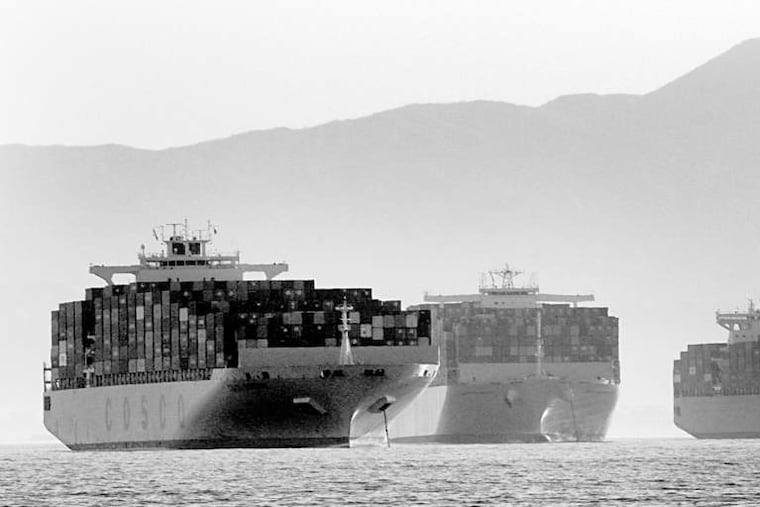
The 15 ships scheduled to arrive Thursday at the ports of Los Angeles and Long Beach, by far the nation's largest complex, join a line of about 20 others anchored off the coast, waiting for berths at the docks to clear. There are clusters of ships outside the ports of Oakland, and Seattle and Tacoma in Washington.
The Southern California slots weren't opening Thursday - a holiday for Lincoln's Birthday. The ships occupying them were idle because companies that operate marine terminals did not call dockworkers to operate the towering cranes that hoist containers of cargo on and off ships.
The berths won't clear Saturday, Sunday, or Monday either. On each of the days, dockworkers would get bonus pay for the weekend or Presidents' Day holiday.
Employers refuse to pay extra to longshoremen who have slowed their work rate as a pressure tactic, said Steve Getzug, a spokesman for the Pacific Maritime Association, which is bargaining on behalf of terminal operators and shipping companies.
Friday is a normal workday and would see normal operations.
Dockworkers deny slowing down and say cargo is moving slowly for reasons they do not control, including a shortage of truck beds to take containers to retailers' distribution warehouses.
Employers could still hire smaller crews that would focus on moving containers already clogging dockside yards onto trucks or trains in an effort to free space amid historically bad levels of congestion. Full crews would still service military and cruise ships, and any cargo ships bound for Hawaii.
But both are small operations compared with working container ships that are as long as some skyscrapers are tall.