For the record, vinyl is making a comeback
You know how the spouse keeps bugging you to get rid of those "worthless old record albums" and record player?
You know how the spouse keeps bugging you to get rid of those "worthless old record albums" and record player?
Time to say you're not the one out of touch. Your collection (if well-curated and preserved) is rising in value and prestige, and your teen-to-thirtysomething kids will be thrilled you've saved the last vinyl-disc dances for them.
And even if your record player still works, consider splurging on a new one. That old breed of dog has been learning new tricks!
What a Comeback
While most physical media (such as CDs and DVDs) are going down for the count in this stream-everything age, vinyl records have been making a Rocky-style comeback.
At aka music, 120 N. Third St. (near Arch), vinyl albums now constitute half the sales, "and we need to be clearing out more CDs so we can bring more vinyl in," said weekday manager Isaac Williams.
At Repo Records, 538 South St., vinyl has soared to "80 percent of our sales," said veteran proprietor Dan Matherson. "We never gave up on vinyl, because older music collectors wanted it. But now it's young people buying the vinyl, even though it costs more than CDs." (An album on CD for $13 to $15 might cost $20 to $25 on vinyl.)
Supercool in a steampunk way, Urban Outfitters' wall of vinyl offerings is as much a fashion statement as its clothes. The chain's vinyl fetish "really helped jump-start the revival three years ago," Williams said.
Take It or Leave It?
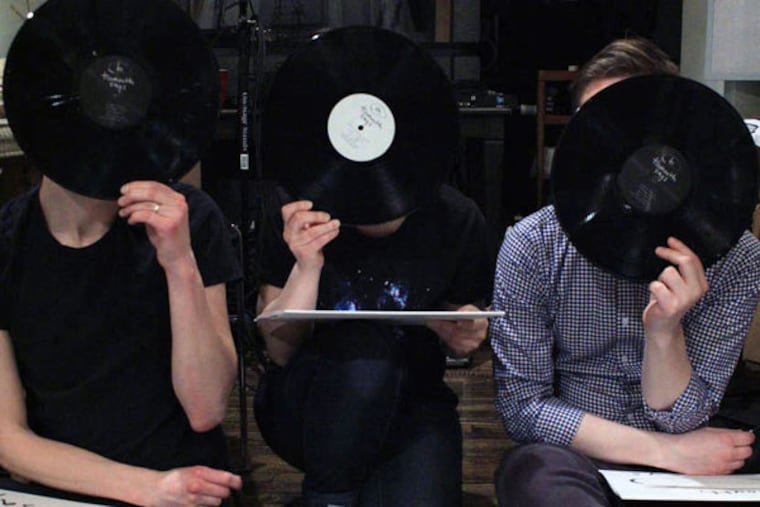
To a degree, music buffs are buying into the format from necessity. Yeah, CDs offer more accurate (at high/low frequency extremes) sound, and rarely show signs of wear. But these days, some new albums are only being served in physical form on vinyl platters - like the recent double LP Live at a Flamingo Hotel from Philly's whine-chilled Dr. Dog, and the just-dished debut Say from the frisky (and subtly retro) alt-rock locals Tinmouth.
Shoppers will be hard-pressed (sorry) to find any of the special releases landing at indie shops next Saturday for the eighth annual Record Store Day that aren't vinyl exclusives - be it Elvis Presley's long-lost record-booth demo for Mom (coming out on Jack White's Third Man label) or Resonance Records' limited-edition, 10-inch vinyl concert discs featuring jazz greats Wes Montgomery, Getz/Gilberto, and Larry Young.
In this old and new world, artistic discipline and listener commitment are demanded, to wrap ears and arms around that classic vinyl sound, with album sides (21 minutes max) structured more carefully (less indulgently), like the dramatic acts of a play.
"You don't skip around like on CDs. You focus more seriously on the music and take it all in, often in social gatherings with friends," noted Roger LaMay, general manager of WXPN. His radio station has embraced the credo "Vinyl at Heart."
To Tinmouth's thoughtful drummer, Alyssa Shea, 27, a vinyl pressing (with handcrafted silk-screen cover) represents "quality and engagement" that "doesn't get lost under the car seat."
"We really value what could be called the ceremony of vinyl," she said.
Disc-o-Rama
So what's happening with record players (because now maybe you're thinking you want one)?
They're still running in circles and still require that needle planted in the vinyl grooves, with speed selected to 331/3, 45, or (rarely) 78 revolutions per minute.
But all three models on our workbench - the new Ion Max LP ($99), best-selling Audio Technica AT-LP60 USB ($129), and new Pioneer PL-30-K ($299) - offer extra features and easier setup, starting with an included phono cartridge affixed to the tone arm at the factory (Ion, AT) or pre-mounted in a simply attached cartridge shell (Pioneer).
Both the Ion and AT boast a USB port connector and digitizing software, for uploading an LP's content to a computer as an MP3 file. That feature has been around for years.
Newer and equally practical, all three turntables carry a built-in preamplifier. That lets you plug the record player into any "audio in" jacks found on a receiver, table radio, or powered speaker. Old-school record players demand a special "phono" input missing on most new gear today.
The Ion also offers a rare headphone jack for private listening, plus an auxiliary input for connecting, say, a cassette player and then converting its tapes to MP3. Plus, this puppy has deck-mounted speakers that put out an OK sound without making the needle jump. Great for the playroom!
On the downside, the $99 Ion has a less-than-full-sized platter and cheaper ceramic cartridge with a thinner sound. And the tone arm must be manually positioned/removed.
The Technica offers a sweet, full-bodied listening experience and reliable automatic play at a bargain price.
Pioneer's return to turntables bears some kinship to the AT, with a similar belt-driven aluminum platter and AT-branded cartridge. But the Pioneer is a bigger and weightier piece, offering better isolation, antistatic rubber mat, and serious tone arm. (The cartridge is upgradable.) Tighter bass notes and extra vocal "bite" were the most obvious sonic improvements when listening to rocking blues, Brazilian jazz, and the aforementioned Tinmouth.
215-854-5960 @JTakiff