DreamIt Demo Day works to match developers, money
A discrete and low-cost pregnancy tester ("Lia"), spawned as the thesis project of two University of Pennsylvania students (liadiagnostics.com). A social media-tracking system ("Forecastr") for predicting the popularity of TV shows (getforecastr.com).
A discrete and low-cost pregnancy tester ("Lia"), spawned as the thesis project of two University of Pennsylvania students (liadiagnostics.com).
A social media-tracking system ("Forecastr") for predicting the popularity of TV shows (getforecastr.com).
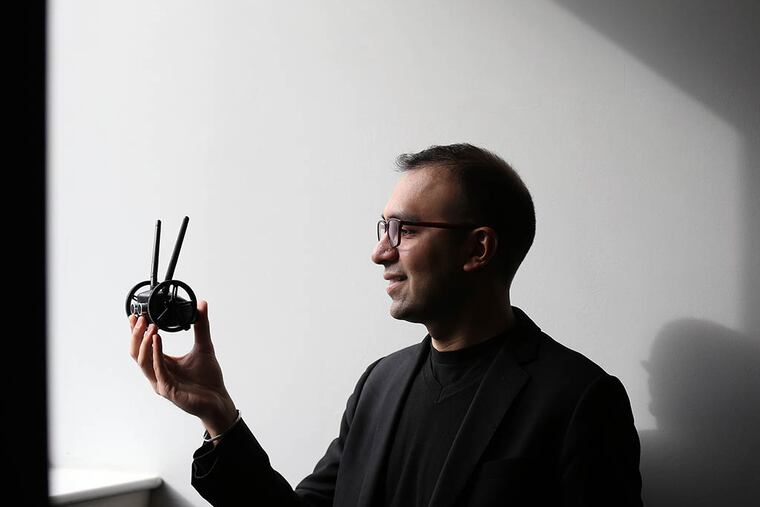
A child-oriented robot, dubbed LocoRobo, that can teach kids programming skills. "When they click on the app, using simple directions to 'spin' or 'stop' the robot, they'll also see computer code they can vary to change the moves and learn by doing," said product developer Pramod Abichandani, a Drexel University professor and Penn lecturer (locorobo.co).
Those were just a few of the products and services unveiled Monday at DreamIt Philly 2015 Demo Day, a snappy, snazzy, Philly Tech Week show-and-tell courting venture capitalists.
And what a change from the weekend's StartUp Crawl, ostensibly another "major" opportunity for product unveilings, but mostly just a cocktail party.
On the first stop of a multicity tour, DreamIt took over the offices of First Round Capital in University City. Warm-up speaker Mayor Nutter worked the crowd, sharing his early ambitions to make medical products as a Penn engineering student and his recent work with StartUp PHL, a project nurturer backed by the city and First Round.
Nutter also connected to the capitalists with talk about his "running a $7.3 billion public service corporation with 27,000 employees" that's been enjoying "a growing market share since 2008, reversing a 60-year decline of the business model."
A model of efficiency, DreamIt delivers rapid-fire product pitches pumped with "call before midnight tonight" urgency. Other ideas of what will be the "next big thing":
A variation on Yelp, Whose Your Landlord, for finding good places to live (wylandlord.com), and an automated home insurance agent called Bungalow that secures your worldly possessions with just three questions in three minutes (bungalowinsurance.com).
Commit Analytics aims to use "machine learning analytics" to optimize athletes' performance. Swimming coaches are diving in first for this stats-crunching product, said presenter Nico Gimenez, a swimmer as well as a neuroscience major (commitswimming.com).
For a hotel operator, Stay Wanderful might eliminate a big hunk of the 25 percent commission paid to a booking intermediary like Priceline.com and Expedia. When shoppers click on a hotel through one of those discount sites, they will be lured to buy directly from the hotel, incentivized with "up to $200 in free perks." Stay Wanderful's "white label engine" only claims a 10 percent fee (info@staywanderful.com).
Want to turn your spare bedroom into an AirBnB moneymaker? Igloohome.co aims to maximize your profit. Smartphone-steered software and on-site automation hardware tracks guests coming and going, and makes sure they don't leave the air-conditioning and lights on. The short-term rental business is exploding worldwide, said cofounder Anthony Chow, worth $60 billion this year and targeted to grow to $150 billion in 2020.
There have been many pitches for compact, bright-light and hydroponic-fed "flower and herb growing" systems for indoor use, notably AeroGarden. But Brielle Pettinelli, the Philadelphia based codeveloper of Root, honestly touts her $300 product's skills in nurturing pot, a growth market as many states legalize or normalize use. Root also has smartphone controls and social media hookups. Dig in at growwithroot.com.