Sixty years of matchmaking - lawyers with experts, that is
It was 1956, and two Temple University graduates with master's degrees in psychology started a business in Philadelphia offering psychological testing for employment.
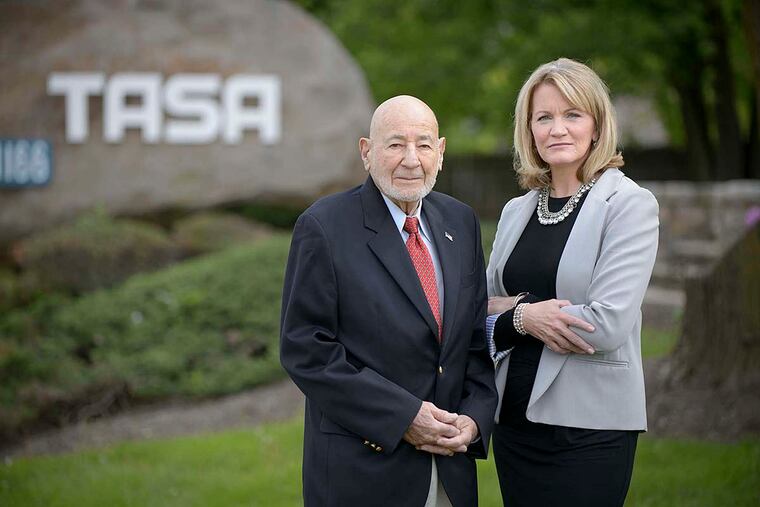
It was 1956, and two Temple University graduates with master's degrees in psychology started a business in Philadelphia offering psychological testing for employment.
Within a year, Ed Sherman and Jay Rosen had demonstrated a skill that's essential to entrepreneurial success: the pivot.
A Navy lieutenant commander overseeing shipping on the Delaware had come to them for testing to see what he could do after retirement. Sherman had a friend practicing maritime law who wasn't looking for an employee but did need an expert to testify in a case that involved someone injured on a gangplank.
The naval officer earned a couple hundred dollars for his testimony; Sherman and Rosen, about $20 for their referral. As Rosen recalled recently, they "didn't think much of it" until about five months later, when they learned at a business lunch that lawyers were looking for all sorts of experts.
Sherman and Rosen hit the phone book, sending letters to 300 lawyers, offering to help them find experts through their new company, Lawyers Technical Advisory Service. Their go-to: academia, here in a city rich with institutions of higher learning.
Renamed the TASA Group, for Technical Advisory Service for Attorneys, the company is celebrating 60 years of matching lawyers with professionals in more than 10,000 technical and medical specialties.
Cases have involved some of the highest-profile incidents in the United States, including the BP Deepwater Horizon oil spill in the Gulf of Mexico and the Sept. 11, 2001, terror attacks at the World Trade Center in Manhattan - as well as some well-known experts, such as daredevil Evel Knievel, whom TASA recruited for a motorcycle-accident case.
TASconsulting, a division of TASA Group, provides experts for non-litigation work, such as whether a company's second floor had enough support to hold a two-ton press.
"I pinch myself frequently. Sixty years to me is incredible," Rosen, 88, of Audubon, Montgomery County, said on a visit this month to the distinctive round building on DeKalb Pike in Blue Bell that has been TASA headquarters since 1989.
Sherman died seven years ago. As Rosen celebrates TASA's decades of accomplishments, someone whose hire he initially opposed is charged with ensuring the company's continuity and relevance.
Melinda "Mindy" Sungenis is TASA's CEO, hired 32 years ago as a clerk. What gave Rosen pause at the time was her single motherhood.
"Who's going to take care of the baby when the baby is sick?" is what went through his mind when Sungenis applied for a job at 21, Rosen said. Of the ultimate decision to bring her on, he added: "It worked out very well."
Then again, TASA's expertise is supposed to include recognizing talent.
Its current database has 25,000 active experts, variety that helps distinguish TASA from expert-referral firms more focused on a single subject, Sungenis said.
There is no fee to be included in TASA's database, but there is a thorough vetting by staff to get there, and continued monitoring to keep track of credentials and continuing-education credits, as well as qualifications challenges raised in court appearances.
TASA's specialty-rich database is indicative of how the industry has evolved since TASA's inception, when the Rolodex was in vogue and generalists were the standard.
In the early days, low-level cases were their staple: fender-benders, slip-and-falls, Rosen said.
"Today, the cases have become more complicated, much more technical," he added, requiring experts as niche-oriented as "a specialist in repairing the left index finger."
Once TASA was established in Philadelphia, its founders looked for growth opportunity in another lawyer-laden location: New York City, which remains one of TASA's biggest markets. Another is California. TASA-referred experts have worked on cases in all 50 states, Sungenis said, and in Canada, Australia, New Zealand, Guam, and Israel.
A London office opened in the early 1990s never flourished and has since been closed, though TASA maintains a local phone number there.
"Their desire to sue is 100 years behind our desire to sue," Rosen said.
Another problem was a legal system that controlled what experts could charge, Sungenis said. In the United States, experts set their own fees.
To that, TASA, which has 37 employees, adds a mark-up of 20 percent to 30 percent to cover its referral services, the largest source of revenue, Sungenis said. Other income is from the sale of reports on how experts have withstood challenges to their certifications, as well as profiles of the experts and professional-sanction searches.
Annual revenue is in the "multimillion-dollar range," with 10,000 to 15,000 referrals a year, Rosen said.
Among those is Robert Illo, an architect and engineer near Lancaster, who said he has worked on more than 100 cases through TASA since 1997, many through testimony in depositions or in court. His expertise has been sought in cases as serious as fatal falls from high-rise buildings - through a window or resulting from the collapse of a balcony or other platform, he said.
"You really get the most satisfaction in helping bring clarity to a case where there's so much confusion about aspects to the built environment," Illo said.
TASA's middleman role "helps to manage the complexities of working in a business situation," he said.
Steven Kursh, who teaches business and engineering at Northeastern University in Boston, said TASA has provided him access he likely couldn't achieve on his own "to work with some very well-known organizations, including Instagram, Bank of America, and major car companies."
Kursh said he was further impressed that his inclusion in the database wasn't a shoo-in.
"They evaluated me and made sure I was who I said I was," said the Wilmington native and executive professor at Northeastern's D'Amore-McKim School of Business, who typically provides technical assessment of litigation issues involving intellectual property, software and e-commerce. "It's not like anybody has an inside track."
In an industry where competitors have been bought out or transitioned to more of an automated online database, TASA plans to remain independent, Sungenis said, in part by emphasizing its personal service, and by keeping its experts aligned with changing legal trends.
Current hot topics include medical-device failure, accident reconstruction, concussions in youth sports, and cyber-security. In the past, they have included spontaneously combusting coffeemakers and lighters.
About 60 percent of TASA's work is for plaintiffs. The company never knowingly provides experts for both sides of the same case.
Said Rosen: "We never wanted to appear as ambulance chasers."
215-854-2466@dmastrull