A rundown of what key Philly software makers are doing for customers
As consumers force business onto smartphones, made-in-Philadelphia software plays a robust part: QVC-Curalate. QVC, the West Chester TV-shopping group, moved further online when it bought Web-shopping pioneer Zulily for $2.4 billion last summer.
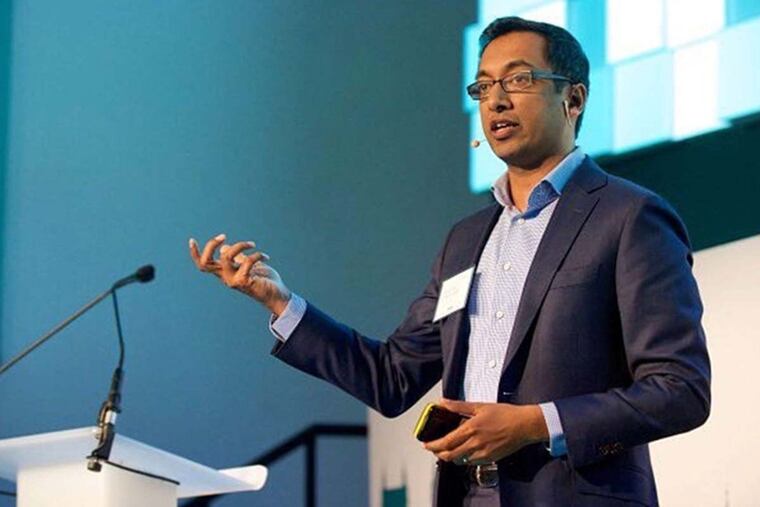
As consumers force business onto smartphones, made-in-Philadelphia software plays a robust part:
QVC-Curalate. QVC, the West Chester TV-shopping group, moved further online when it bought Web-shopping pioneer Zulily for $2.4 billion last summer.
But to boost its reach among customers who bypass TVs and laptops to spend more time on Facebook, Twitter, Instagram, or Snapchat from handheld devices, QVC hired a Philadelphia firm, Curalate, and its "visual commerce platform."
"We are in seven countries. The quality of the Curalate platform is so good, we'd use it anywhere," QVC senior VP Alex Miller told me. "The fact they are nearby does make it easier."
Curalate links consumers' images and social-media posts to product info and purchasing, enabling the firm to connect to brand advocates and likely buyers. "What used to be just nice images shot by your friends are now becoming programmatic ads," linked by Curalate to product and purchasing locations, CEO Apu Gupta told me.
"Just as [newspaper stories] are now being consumed as instant articles on Facebook or Apple News, outside the entity for which they were created, the same thing is happening to commerce. It is disaggregating [from stores] and moving closer to where consumers now live."
Consumers give permission for images to be tracked and used when they sign up for online services, Gupta notes. "It's a really large undertaking. Done right, it helps consumers. It makes the brand better. It makes discovery pleasure." He is building Curalate to go public, Gupta says.
Lincoln-iPipeline. Lincoln National Corp. is best known locally as sponsor of the Eagles' Lincoln Financial Field. But the Radnor-based, $220 billion-asset firm's real focus is selling life insurance and investments. Largely to rich people, until now.
This spring, Lincoln began using systems from Exton-based insurance automation developer iPipeline, says Heather Milligan, Lincoln's senior VP for underwriting and new business.
"The traditional way of purchasing life insurance has been very paper-driven," Milligan told me. "You sit with your agent. You fill out papers.
"We did a ton of research on how Millennials and GenX people want to do business," she said. "They are very mobile, very adept at tech." So Lincoln had iPipeline, a pioneer in online insurance applications, build an automated underwriting system - TermAccel Level Term Insurance.
That makes it faster and cheaper for Lincoln to sell to more people, says Milligan: "This allows us to go into the mass market for millennials and GenX."
iPipeline employs 500, nearly half at its Exton and Center City offices. The firm considered an IPO last summer. Instead, owners, including Radnor-based NewSpring Capital, sold it to Chicago-based private-equity firm Thoma Bravo.
Hershey/SAP. Drivers and marketers for Hershey Foods know a lot about who buys Dark Special, Kisses, and peanut-butter cups, at what stores, in which seasons.
But food manufacturers still have a tough time juggling production and expiration. Much still goes to waste.
"We have to have the right product, in the right packaging, at the right price point, where people want it. That takes coordination across marketing, sales, finance, supply chain, and customer networks," says Hershey spokeswoman Jennifer Sniderman.
Linked right, smartphones make it possible to share inside information, and more. Hershey went to its software suppliers, including SAP America, the Newtown Square-based arm of German software maker SAP SE.
SAP sold Hershey its S/4 HANA platform, which the company says joins internal data, social media, outside weather and traffic reports, and other predictive and analytical info, in clear mobile formats.
"They are really early on the launch of this," says Dave Spencer, senior vice president and managing director at SAP. "We are working on strategy that helps them get the big data into the supply chain. It transforms their company."
Relay/Citizens. America "is in a customer-service crisis," says Matt Gillin. To speed users past voicemail hell and portal password amnesia, Gillin's Relay Network, of Radnor, offers "secure customer messaging."
Independence Blue Cross uses Relay. Last week, the dominant Philly-area health insurer also joined previous Relay investors Michael DiPiano's NewSpring Capital and Josh Kopelman's First Round Capital in pumping $12 million into Relay. (Kopelman is board chairman of Philadelphia Media Network, which operates the Inquirer, Daily News, and Philly.com.) Gillin says the new cash will help double sales this year.
Two decades after the internet and email became ubiquitous, "80 to 90 percent of communication is still by phone," says Gillin, who founded Relay after he and his partners sold their Conshohocken payment card company, Ecount, to Citigroup for $220 million in 2008.
"Customer expectations have changed a lot in five years," Gillin told me. "Because of Facebook chat, LinkedIn, and other social media, they have much higher expectations of how companies will service them."
When a customer signs up for a client's service, "we send notices via text to get them started. The key is that in the message we have a parallel system, a secure system, going into that private, Twitter-like feed. It has the customer's brand on it, with all the customer communications together."
Relay claims more than 40 corporate clients. Citizens Bank uses Relay for its fast-growing, $1.5 billion student-loan refinancing program.
Gillin notes that his staff, funding, and initial customers all came from Philadelphia. "What NewSpring has done, what Josh [Kopelman] has been able to do, they all invest in Philadelphia companies when they get a good idea in front of them."
215-854-5194@PhillyJoeD