Philly bar association head seeks to revive group amid convulsive change for lawyers
When Gaetan Alfano took over as Philadelphia bar chancellor Jan. 1, he inherited a legal trade association that was treading water.
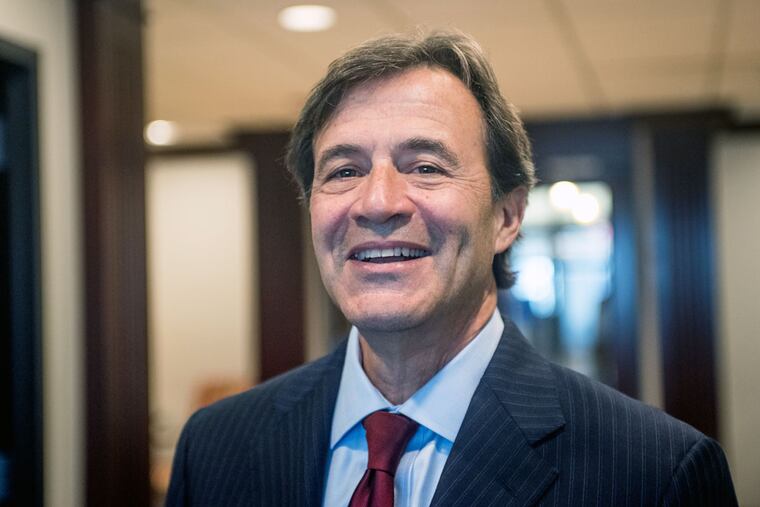
When Gaetan Alfano took over as Philadelphia bar chancellor Jan. 1, he inherited a legal trade association that was treading water.
Membership had fallen, and growing numbers of lawyers questioned its relevance. The profession, meanwhile, had gone through convulsive changes, but the bar group, not so much.
Alfano made it clear he intended to shake things up, and now, six months into his yearlong term, he's on his way.
Within weeks of the start of his term, Alfano took on American Bar Association president Paulette Brown for promoting a cut-rate legal service he said undermined lawyers' livelihoods. Brown touted the service as a way for people of limited means to get the legal help they needed, but was forced to back down after Alfano and other bar leaders around the nation voiced opposition.
Alfano also cut the travel and dining perks enjoyed by past bar leaders in an effort to plug a hole in the association's budget. He plans to pay his own way on a trip to California in August to represent the group at the ABA annual meeting. After those cutbacks and some staff cuts through attrition, what looked to be a projected $300,000 year-end deficit in its $4.3 million budget is well on its way to being erased, Alfano says.
Shortly after taking office, he insisted the association come clean about its membership decline. Membership had dropped from about 13,000 at the start of the 2008-09 recession to 12,000, but was officially acknowledged only after Alfano took office.
And he hasn't shied away from taking positions on thorny issues.
Typical was Alfano's commentary on assertions by Bill Cosby's lawyers that the comedian had won a commitment years earlier from former Montgomery County District Attorney Bruce L. Castor Jr. that there would be no prosecution of Cosby in the Andrea Constand sexual-assault case. Alfano questioned whether there could even be such an agreement, since both Castor and Cosby said it was a handshake arrangement that was not formalized in court or written down.
He's also emphasizing the bar association's role as a traditional trade association willing to mix it up in the legislative arena on issues of pocketbook importance to members.
The association joined with other professional groups to argue successfully against passage of a bill in the General Assembly that would have established a tax on professional services. The money was to have been used to reduce property taxes around the state, but the tax would have been paid by law firms' clients.
"I think the first thing we've accomplished is that there has been an increase in advocacy for the bar association, particularly for the bar association as a trade association," Alfano says.
It's all part of an effort to modernize the association and make it more relevant to practicing lawyers, said Deborah Gross, who is chancellor-elect and will succeed Alfano on Jan. 1.
"We are focused now on the bar association, not who runs it," said Gross, who is part of Alfano's leadership team. "We want to make sure that we are representing our members and listening to them, and one way of doing that is by being relevant."
That the bar association is having to adjust should come as no surprise. The legal marketplace has gone through tumultuous change in the last decade, and that only accelerated with the advent of the recession.
Law firms in Philadelphia that once saw themselves as serving the city and perhaps the Mid-Atlantic region within a short period became global businesses and were just as likely to be doing the legal work for transactions in London and Moscow as they were in Philadelphia or Radnor. Many no longer see themselves as regional institutions but rather global enterprises, weakening local ties.
That may have affected membership in local bar associations, but so, too, did the recession, which caused many firms to reduce head count, further reducing bar association membership. The way back to a growing membership, Alfano said, is focusing more directly on pocketbook issues and taking high-profile positions on issues of public importance.
"The legal landscape has changed; it is not static, there are new challenges every day, and we need to work harder and smarter to remain relevant," Alfano said. "Sometimes that is easy, sometimes I feel like I am dragging the association kicking and screaming to get there, but we are going to get there."
215-854-5957@cmondics