David L. Richter on fighting off the Bulldogs
What a year it was - and will be for - David L. Richter, 49, chief executive of Hill International Inc., the Philadelphia-based construction project and claims management company. (It had the contract for the first Comcast tower and is now overseeing construction at the new state prison in Graterford.)
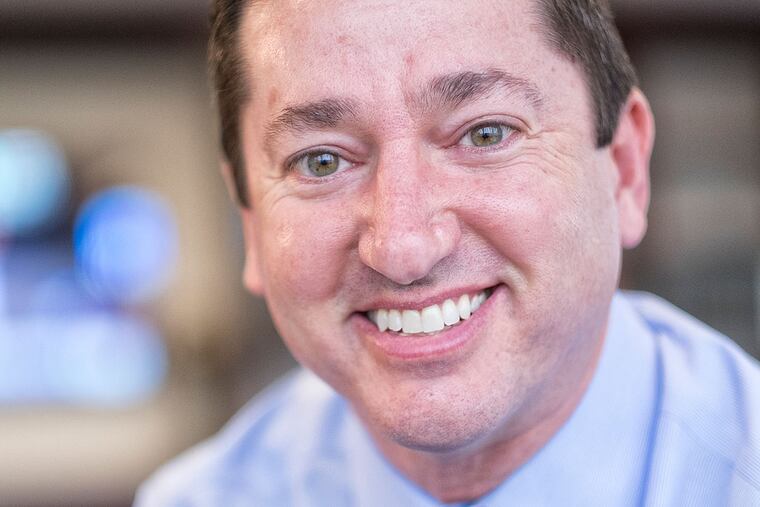
What a year it was - and will be for - David L. Richter, 49, chief executive of Hill International Inc., the Philadelphia-based construction project and claims management company. (It had the contract for the first Comcast tower and is now overseeing construction at the new state prison in Graterford.)
Hill reported record 2015 revenues of $720.6 million, up 12.3 percent. Profits rose to $6.9 million, up from a $6.1 million loss.
Yet they would have been higher had not the depression in oil prices sliced $3.4 million from the net in bad debt expenses from clients in the Middle East, where Hill gets about 45 percent of its revenues.
These days, Richter is involved in a replay of what happened in 2015, when Bulldog Investors, a group of recent investors, tried to force the sale of the company.
Hill beat the Bulldogs, but the proxy fight cost the company $1.4 million last year. Now Richter is gearing up for the next round at Hill's annual meeting, set for Aug. 11.
What's going on here?
Bulldog wants to make money and I think they are doing it in a pretty stupid way. You can target any company, buy a bunch of stock, and say, 'Sell the company.' You'll make a nice premium and move on.
Why did they pick you?
I don't know. We agree on one thing, which is the stock market right now is not fairly valuing our stock. We have a $3.40 stock price [range] and it's absurd, because we have built what we think is a very valuable company that's trending in the right direction. Bulldog wants to take advantage of that. We want to improve the company, get the stock price up to where it should be, and then, if the board wants to sell the company some day, we'll get a very nice premium.
If shares have been trading around $3.40, what would be a sale price?
We had an offer at $4.75 that we just rejected. That would be a nice profit. They'll move on to the next company, but this is the only company we have. We've had shareholders who have had the stock a long time, many of whom have paid a lot higher than $4.75.
Your father started this company. What's it like to fight to keep it?
It's a little bit frustrating, but it's the reality when you go public. What I don't like is what Bulldog is doing. They have a script. The script is throw as much mud at the existing board and management as you can, hope some of it sticks and that you can beat them to [woo] shareholders who don't understand the truth.
What would happen to the company if it were sold?
The throwing of the mud doesn't help. When people read on Yahoo Finance that the board stinks, management stinks, and the company should be sold because it can't succeed, it's very damaging to our existing business whether we win or lose the proxy fight. All we are is the people who work here, [so it's a risk] if we lose and the company's sold and people start leaving or don't join us because it's a company in turmoil.
You do lots of work in the Middle East. Is that risky?
Sometimes, especially by Wall Street's standards. But we're in the United Arab Emirates. We're in Saudi Arabia. We're in Qatar. We're in Oman. Those four countries are 90 percent of our revenues in the Middle East. Those are the four richest and four most secure. So I don't view that as risky. But we're global. One of the downsides is sometimes you're going to be in a country that the economy goes in the tank. There's social unrest, political unrest. In a U.S. state, are we reckless [when the party of governor changes]? That's just as much risk for us as far as the work we can win, than a change in Egypt.
How do you do business across so many cultures?
The first couple times I went to the Middle East - you're American and there are Arabs in long, white robes, and all you want to do is connect.
So how do you do it?
College basketball. People over there, whether their background is engineering or architecture, the vast majority went to college or grad school in the U.S. I was talking to a client and found out he went to Louisiana State University, so I mentioned Shaquille O'Neal, and all of a sudden we're talking for 25 minutes about college basketball and Shaq.
Interview questions and answers have been edited for space.
215-854-2769
@JaneVonBergen