FDA panel recommends approval of Egalet abuse-deterrent opioid
SILVER SPRING, Md. - U.S. advisers voted overwhelmingly Thursday to recommend approval of a Wayne company's opioid prescription painkiller formulated to make it harder to tamper with to get a quick high.
SILVER SPRING, Md. - U.S. advisers voted overwhelmingly Thursday to recommend approval of a Wayne company's opioid prescription painkiller formulated to make it harder to tamper with to get a quick high.
Arymo ER, a pill made by Egalet Corp., is one of more than a dozen abuse-deterrent formulations being developed by companies for oxycodone, hydrocodone, and morphine, which is now a top priority of the U.S. Food and Drug Administration.
Shares of Egalet rose 8 percent on the news to close at $7.62.
"I'm excited for patients, the legitimate pain patients who will have access to these medications," Egalet president and CEO Robert Radie said after the meeting.
"This is a product that, if approved, could be a real incremental improvement over what's available today and hopefully stop people from being able to so easily abuse and misuse" opioids.
Members of two FDA advisory committees also approved labeling that describes the drug as abuse-deterrent if taken orally, nasally, or intravenously.
The FDA experts voted 18-1 to approve Arymo ER to manage "pain severe enough to require daily, around the clock, long-term opioid treatment and for which alternative treatment options are inadequate."
The FDA usually follows its advisory panels' recommendations.
"There are a limited number of ways to intervene in the current crisis," said FDA meeting chairman, Raeford Brown, University of Kentucky professor of anesthesiology and pediatrics, after the vote.
"The replacement of long-acting morphine with this drug, or other drugs like it, will be a step forward."
A final decision by the agency is expected in mid-October. If approved, Arymo could be available by the end of the year, the company said.
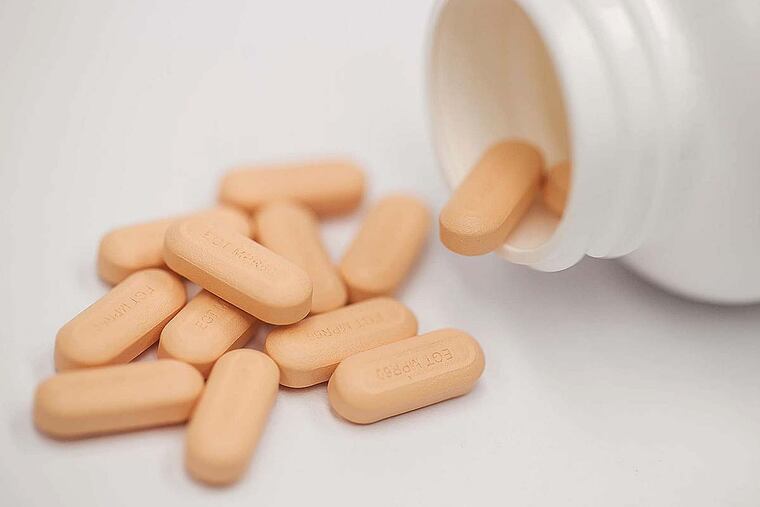
Egalet has developed a plastic-like injection molding technology, similar to what is used to manufacture bottle caps and car bumpers. The company says its polymer matrix tablets cannot be broken into small particles to chew, crush, or dissolve.
Eaglet's Radie told the panel: "In the first four months this year, 98 percent of the extended-release morphine products dispensed had no abuse-deterrent properties.
"That means these morphine medications can be easily abused by chewing, crushing, snorting, or injecting.
"We're not here advocating for just another morphine pain medication to add to the 98 percent. Rather, we believe that Arymo can be an important part of the effort to replace these products."
Attempts to melt the Arymo pills result in a goopy gel - too thick to get into a syringe to inject. But if swallowed normally, the pills erode gradually in the gastrointestinal tract.
Arymo, an extended-release, long-acting morphine tablet in 15mg, 30mg, and 60mg doses, was accepted for review by the FDA in February. The FDA said in briefing documents on its website that about 300 people were treated with Arymo in seven studies, and "no new safety" issues were identified beyond what is already known for morphine.
There was some push-back from the FDA on Arymo's effectiveness with one form of abuse.
James Tolliver, a pharmacologist with the FDA, said in the category of oral opioid abuse – manipulated oral (crushing and then swallowing) - Egalet's drug did not reach "statistical significance" when compared with MS Contin, an existing morphine product. The numerical difference or outcome in the data was less than 5 percent, raising a question about Arymo's "clinical relevance." Egalet could not conduct an oral study using chewing due to the hardness of the tablet.
Since 2013, the FDA has approved abuse-deterrent labeling for six opioids. FDA commissioner Robert Califf said in March: "The FDA looks forward to the day, hopefully soon, when the majority of opioids in the United States are marketed in effective abuse-deterrent forms."
Prescription painkillers have come under intense scrutiny because addiction and overdose deaths have reached epidemic levels, according to the Centers for Disease Control and Prevention.
"The vote of the FDA suggests Arymo is on a path to what we expect will be FDA approval on October 14, 2016. Once approved, we hope the FDA and third-party payers will give Arymo, and the other abuse-deterrent opioids, the support they need to actually deliver the benefits of the abuse-deterrent characteristics of these products to patients in the United States," said specialty pharmaceuticals analyst Ken Trbovichof Janney Montgomery Scott L.L.C.
The FDA staff said in briefing papers ahead of Egalet's meeting that the abuse-deterrent technologies to date have not been successful against the most common form of abuse - swallowing multiple pills to achieve a feeling of euphoria.
Making opioids harder to crush, snort, or inject may help, but "there is still risk of a abuse," the agency said. As long as pills can deliver the opioid, "the risk for addiction will remain."
215-854-2831
@LoydLinda