On the fixer-upper trail
When first-time home buyers Meghan Starr and Andrew Boerckel told their real estate agent that they were interested only in fixer-uppers, Amanda Turske of Prudential Fox & Roach was skeptical.
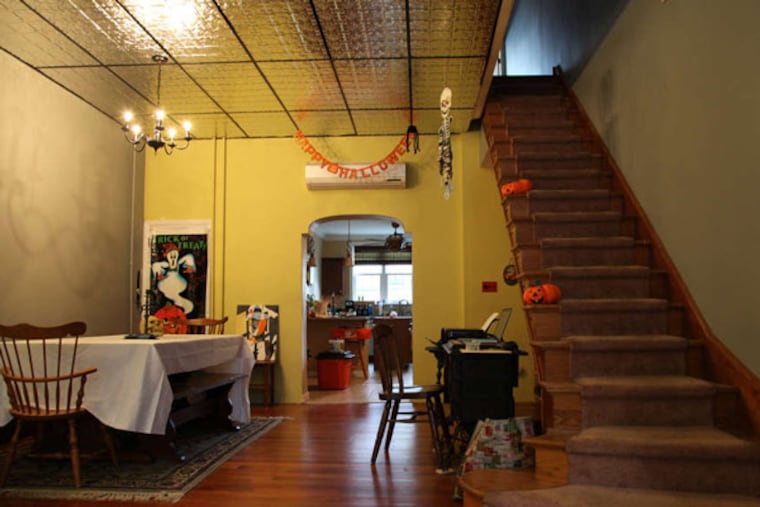
When first-time home buyers Meghan Starr and Andrew Boerckel told their real estate agent that they were interested only in fixer-uppers, Amanda Turske of Prudential Fox & Roach was skeptical.
Typically, clients buying their first houses these days want move-in-ready properties, said Turske, who gets about half her business from first-timers.
"Meghan was my first home buyer that wanted something that was a complete fixer-upper," she said.
But Starr, a 28-year-old school psychologist, and her boyfriend, 32, recognized the potential in the approximately 1,080-square-foot East Passyunk Square "grandmom home," which had wood-paneled walls and orange shag carpeting in the master bedroom.
"Don't look at the present-day picture," Starr said. "Visualize what it can be."
Visualization didn't come quite as easily for 29-year-old Alexander Zola.
When he and his wife, Stephanie, 30, began house-hunting in January, they wanted a turnkey property, Zola said. But finding a house that required no renovations and met their criteria - 1,400 square feet, three bedrooms, two bathrooms, and some outdoor space - pushed prices $170,000 higher than the couple originally intended to spend.
"I'm not going to find a wonderful 100-year-old house that is completely modern but still has a touch of character within my price range," Zola said. "So the only other option is to do it yourself."
The East Passyunk Square area where they searched is historically known as an Italian American enclave, an influence sometimes reflected indoors.
At one house, the decor included colonnades, shag carpeting, and thick wallpaper, Zola said.
"It was like you were transported to Olive Garden," he said. "We couldn't imagine ourselves in it."
But after visiting more than 30 properties, the couple reconsidered the four-bedroom, three-story house.
"It had the bones we were looking for," Zola said. "And it had character; it was just hidden."
They closed on the house in May and, after spending about $45,000 to renovate, moved in July, he said.
They converted the third floor into a master suite, replaced drop ceilings, removed wallpaper, installed hardwood floors, and opened up the first floor by knocking down a few walls, Zola said.
Since Starr and Boerckel moved into their new house in August, they have torn down walls to expose the brick, ripped up rugs to expose the hardwood floors, and begun turning the middle of the three bedrooms into a walk-in closet.
They expect to spend about $15,000 on renovations by doing the work themselves, which presents other challenges.
"We are living in a construction zone," Starr said.
Lauren Acker Kratz, an associate agent with Prudential Fox & Roach's McCann Team, warns interested buyers to consider the timing of the remodeling before taking on fixer-uppers.
"Are you going to be able to live through rehabs?" she asked. "How much time can you allow?"
Acker Kratz also urges buyers to get estimates on desired upgrades, so the renovations don't push typically cheaper fixer-upper homes beyond their budget constraints.
In Philadelphia, 845 fixer-uppers are available, according to a report by real estate information company RealtyTrac, which defines the category as any bank-owned (foreclosed) home built before 1960 with an estimated market value below $100,000.
"But certainly there could be other fixer-uppers that don't fit into that definition," said Daren Blomquist, RealtyTrac vice president.
In Pennsport and East Passyunk Square, and to a lesser extent Fishtown, many families stayed in the same houses for decades, Acker Kratz said.
Even though interiors are out of date, she said, the families maintained the structures, making those neighborhoods ripe for buyers interested in fixer-uppers.