Cool-roof concept can have a drawback
Despite environmentalists' and government agencies' overwhelming support of cool roofs - those specially coated with materials that reflect solar heat and emit absorbed heat - one Pennsylvania roofing manufacturer and supplier wants to steer the conversation away from the widely accepted energy-saving measure.
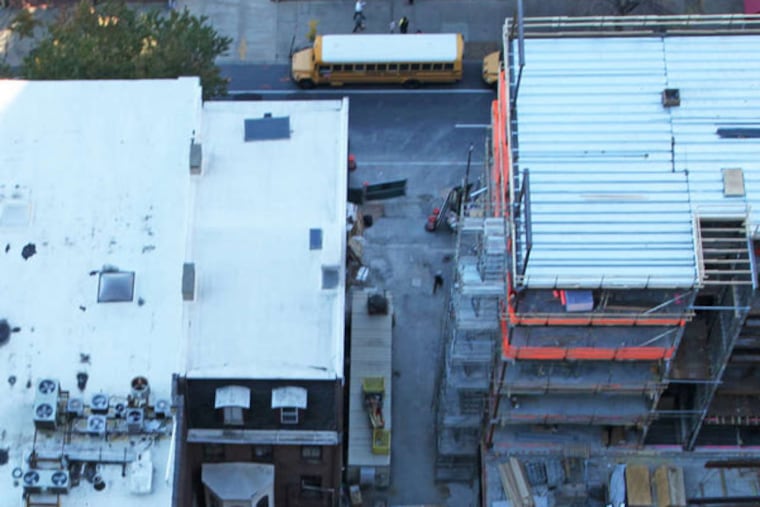
Despite environmentalists' and government agencies' overwhelming support of cool roofs - those specially coated with materials that reflect solar heat and emit absorbed heat - one Pennsylvania roofing manufacturer and supplier wants to steer the conversation away from the widely accepted energy-saving measure.
"We are not saying cool roofs are bad," said Robert Reale, a spokesman for Carlisle SynTec, based in Carlisle. "We are saying insulation is the best answer."
Without proper insulation, Reale said, moisture can accumulate in a cool-roofed house during the winter as hot air from the heating system rises and meets the cooler underside of the roof.
As part of the recent 2013 GreenBuild International Conference and Expo at the Convention Center, a Carlisle SynTec representative led a presentation, "Cool Roofs - Uncool Consequences," on the validity of cool roofs as the universal method for creating an energy-efficient topper to a house.
Liz Robinson, executive director of the Energy Coordinating Agency of Philadelphia, said she had never heard of any leaks related to this phenomenon in Philadelphia, where her firm has been installing white roof coatings on existing black tar roofs for more than 10 years.
Poor design can create issues related to moisture, but installing a cool roof that avoids any moisture accumulation is a reasonable expectation today, said Jeffrey Steuben, executive director of the Cool Roof Rating Council in Oakland, Calif.
"If you have a properly constructed roof system, then you are not going to be faced with problems," Steuben said.
Even though there is agreement that improper design can be the culprit in such cases, Reale said the importance of insulation gets lost amid the predominant rhetoric promoting cool roofs. Agencies should shift the message from the "one-size-fits-all" cool-roof model to better-designed and better-insulated roofs, regardless of color, he said.
The impact on home energy efficiency is likely the same whether one adds insulation or a cool roof, said Steuben, who favors lots of insulation because it helps save energy all year.
But simply promoting more insulation, which helps lower energy bills, overlooks the larger issues that cool roofs address, he said.
"You are combating global warming and smog . . . creating a benefit to the city and the world that you don't necessarily get with insulation," Steuben said.
Studies show cool roofs help reduce local air temperatures, which helps offset energy consumption in summer and alleviates effects, such as pollution, associated with urban heat islands.
Critics of cool roofs suggest the extra heat needed in winter cancels out any saving.
Though experts agree there is a "winter heat penalty," the impact on energy efficiency is minimal, Steuben said.
In 2010, Mayor Nutter signed into law a measure requiring cool roofs on all new construction in the city.
That same year, each house on the 1200 block of Wolf Street received a white roof and insulation, and was air-sealed when the city named the winner of its Coolest Block Contest.
215-854-2980 @newsburd