Being near the ballpark helps home values, or does it?
It's spring, and though it's been a cold one, it's still the season when a young person's fancy might turn to thoughts of baseball.
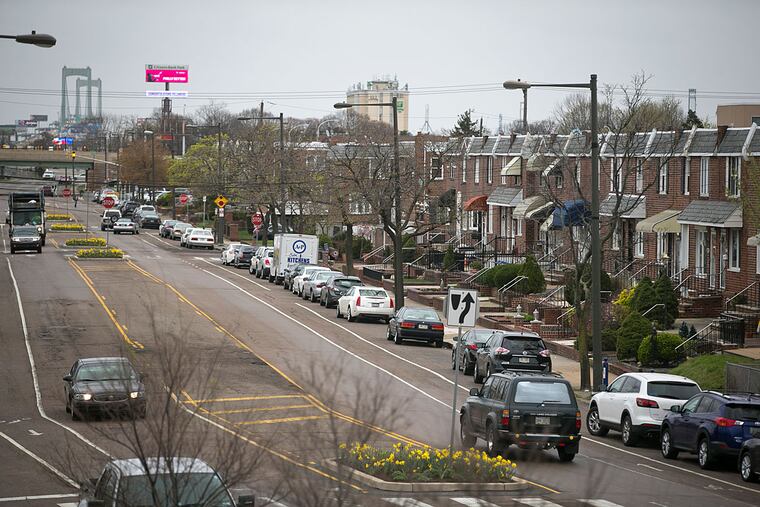
It's spring, and though it's been a cold one, it's still the season when a young person's fancy might turn to thoughts of baseball.
And, perhaps, to residential real estate.
In another of its periodic looks at cities with major-league baseball teams, Trulia, the real estate search engine, again maintains that neighborhoods around ballparks have higher home values, although those values vary widely based on stadium location within the cities.
Trulia's most recent glimpse into property values found that the areas within a mile of 18 of the 29 U.S. ballparks had higher median home values than the cities in which they are located overall.
Rents in those 18 neighborhoods were either higher than or equal to those in the home cities overall, Trulia adds.
Urban or downtown stadiums tend to have higher nearby home values than surrounding metro areas, as well. Newer stadiums including Citizens Bank Park and Nationals Park in Washington were in the Top 10 on Trulia's list, ranked eighth and 10th, respectively.
For Citizens Bank Park's South Philadelphia environs, the median sale price was $176,572 (half the houses sold for more, half for less) versus $138,670 for "the rest of the metro area," Trulia says, although recent data show $207,500 as the median sale price for the eight-county Philadelphia region and $150,400 for the city.
For the ballpark's zip code, 19148, the median sale price was $167,500 based on 193 transactions for the fourth quarter, but a mile in each direction takes in a lot of developing neighborhoods experiencing rising prices.
There are two problems with reports such as Trulia's, said Kevin Gillen, chief economist for Meyers Research and senior research fellow at Drexel University's Lindy Institute for Urban Innovation.
"The results are often highly dependent on how you define 'near to' the stadium," Gillen said. "Something can be an amenity or a 'dis-amenity,' depending on how close you are to it."
For example, he said, it's good to be within walking distance of a transit stop or a supermarket, "but you probably wouldn't want to live right next to a stop on the Market-Frankford El or the parking lot entrance at Whole Foods."
The other problem is confusing "correlation with causation," Gillen said: "The same stadium can have either a positive or negative effect on home values, depending upon the neighborhood it is built in."
What Trulia should be looking at, he said, are home values before and after a stadium is built, not "values near versus far to the finished stadium."
Veteran Realtor Barbara Capozzi, a lawyer and civic leader whose father and uncle built Packer Park in the 1950s and 1960s - long before Citizens Bank Park and before it Veterans Stadium were built nearby - called the Trulia study "bogus, in my humble opinion."
"A stadium is a huge investment of taxpayers' and team money, so that investment is going where it will be safest," she said.
The team or city "will select an area that in their minds will justify the investment and not jeopardize it in any way," Capozzi said. "The site-selection choice is always safest in an establishing and already-thriving area.
"Plopping an arena into a traditionally 'better-than-average' area also assures the team of a lifetime supply of part-time workers willing to do those hundreds of jobs that pay so little, but are ideal for a retired person who lives within walking distance," she said.
A positive for the ballpark's neighborhood, Capozzi said, is the 13-year-old special services district, funded by sports teams, that provides "many benefits that our tax dollars should be but are not."
Developer John Westrum, who built the 230-home Reserve at Packer Park with Capozzi about the same time the stadiums opened, said Citizens Bank Park and Lincoln Financial Field had no impact on sales. His market turned out to be the South Philadelphia natives who had migrated to South Jersey for new construction and schools.
They returned because they could finally buy newly built homes, with secure off-street parking, and "knowing that their neighbor's house was at the same price point as theirs" reassured that blight would not affect their investment, Westrum said.
Buyers in the stadium areas are "ones dying to be within walking distance of the fountain in Passyunk Square but [who] can't pay in the mid-$400,000s for a renovated two-story," said Mickey Pascarella, of Keller Williams Real Estate.
Near the stadiums, he said, "they spend $300,000 for new with garage."
215-854-2472@alheavens