Sardine: It's not exactly a fishy business
Owner of this clothing company recycles old T-shirts and sweaters into new skirts and fingerless gloves
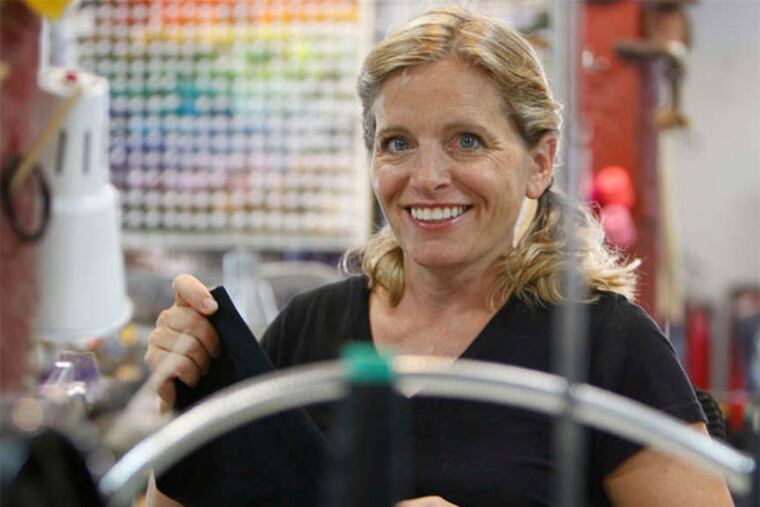
MARYANNE Petrus-Gilbert, 42, of Roxborough, started Sardine Clothing Co. in 2008. She scours thrift stores for old T-shirts and sweaters and then repurposes them into applique skirts and cashmere fingerless gloves. She sells the wares at arts-and-crafts fairs, select boutiques, the online marketplace Etsy and by appointment at her 1,200-square-foot sewing studio in Roxborough. In her spare time, she produces jewelry.
Q: How did you start Sardine?
A: I started making my kids' clothes. I was making pants for my son out of T-shirts . . . I went to a thrift store and it had all the colors I could possibly ask for. I love to recycle, use every little bit, and I made the first skirt. Then, my girlfriend was having her 40th birthday party and I made a bunch [of skirts] for them and it eventually became a full-time job.
Q: How about startup money?
A: It was very "seat of my pants." I had one sewing machine, a serger, and I just started making [skirts] in a room in my house. T-shirts are relatively cheap, and I just kept using what I had. Whenever I sold a skirt, I reinvested money back into the business.
Q: How's the biz model work?
A: I'm taking something that's been discarded and recycling it into something new. We use almost every single scrap of fabric so it's not going into a landfill.
Q: What's the backstory behind the company name?
A: My [late] husband said dressing our baby [in 2001] was like stuffing a sardine in a can. The clothes are small and tight-fitted, and babies are squirmy, like little fish.
Q: Who are your customers?
A: Most are women, between 30 and 48, and I'd say 80 percent are teachers. [The skirts] are comfortable, have a pocket, can be worn to school and they engage the kids.
Q: How many items of clothing do you sell each year?
A: Last year, we sold over 1,000, and about 800 were skirts. And the next-best seller are gloves.
Q: What differentiates Sardine from similar businesses?
A: My price point is perfect. The skirts sell for $55 and the gloves are $32. Eco-friendly shouldn't be expensive.
Q: What's been the biggest challenge to growing the business?
A: Growing smartly. It'd be easy for me to take out a loan, hire a bunch of people and just say "do it." Every January, I assess how we did the last year, see what can be improved and then figure out how to make it happen.
Q: How big a business is this?
A: One full-time girl, two girls that are barely part-time and me.
Q: What about revenues?
A: This year, $120,000, that's my goal; I think we're going to hit it. Every year I'm up 25 percent, which is what I'm after.
Q: What's next?
A: I would like to see three or four full-time people working here. I'd like to double the retail stores I'm in. Ideally, I'd like to have my own storefront, and hopefully that's going to happen soon.
Online: ph.ly/YourBusiness