Underwriters Labs: Wired for safety since 1893
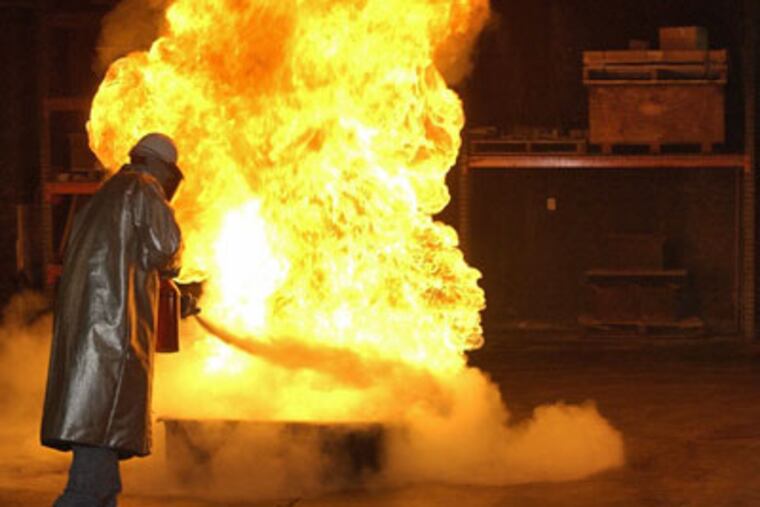
CHICAGO - As an expert lock picker and safecracker, Frank Mullozzi could make a formidable criminal. Add in the fact that he talks tough, tests bank vaults and drives a Ferrari - license plate "SF-CRKR" - and Mullozzi almost appears a Bond villain.
"We joke that the police keep my fingerprints on file," said Mullozzi, moments after using a cutting torch to gain entry to a safe.
Mullozzi, despite the qualifications, works not in crime though but in security testing for Underwriters Laboratories, the company responsible for the little "UL" symbol seen on 21 billion products around the globe.
For 115 years, the company has tested U.S. products and written safety standards, promoting a trademark so commonplace that many people assume "UL" comes from a government agency - not one of the Chicago-area's oldest firms.
This year, UL is paying particular attention to expanding its brand overseas, as globalization necessitates international standards.
"We've acquired one company in Denmark, two in Italy, one in Japan, one in New Zealand - a lot of it has been hiring people and engineers overseas and training them," said Keith Williams, UL's president and CEO. "That's really been the big emphasis for us - globalizing our operation."
At its heart, though, UL will remain a safety testing organization for the U.S. market, said John Drengenberg, consumer safety director at UL's Northbrook, Ill., headquarters. "From life jackets to roofing shingles, our (team of) inspectors tested more than 20,000 different categories of products last year."
That includes alarm systems, safes and locks that Mullozzi tests to determine how long they can resist criminals' attempts.
UL's story begins, like so many Chicago tales, at 1893's World's Columbian Exposition, where the electricity exhibit employed and captivated William Henry Merrill, a Boston electrical engineer. There at the fair, Merrill saw first-hand the growing need for fire-safety standards - one "White City" blaze killed 17 people - and so, he decided to stay in Chicago and set up shop in a South Side fire station.
Less than a year later, Merrill created Underwriters Laboratories, and business grew as electricity's everyday uses expanded. Within five years, Merrill had written 1,000 test reports; and in 1903, his team wrote its first safety standard: "Specification for Construction: Tin Clad Fire Doors and Shutters." (The booklet proved popular, despite its title.)
In the years since, UL has grown to 6,800 employees who test products just as Merrill did, although most of UL's inspectors are now based abroad because the consumer goods they're testing are mostly made overseas.
"When I first started here, I was testing TVs and clock radios galore. But that has changed," said Drengenberg, who's worked at UL since 1966.
With globalization comes piracy and, of course, piracy of the UL logo, which is another company concern. (Counterfeiters know that while the mark is not government mandated, most distributors won't ship a product without one.) Because of this, UL unveiled a new holographic mark last June, which will soon appear on 32 common consumer goods, including power supply cords, night lights and ceiling fans.
The new mark features a gold background, color shifting ink and several "floating UL symbols."
It's technology that Merrill, if he were alive today, surely wouldn't be familiar with, although he'd still recognize the mark's mission - it's been the same for 115 years.
(c) 2009, Chicago Tribune.
Distributed by McClatchy-Tribune Information Services.