NTSB lists injuries from Amtrak derailment in Philly
The list is impersonal: 164 people identified just by age and sex, followed by an inventory of damage to human bodies.
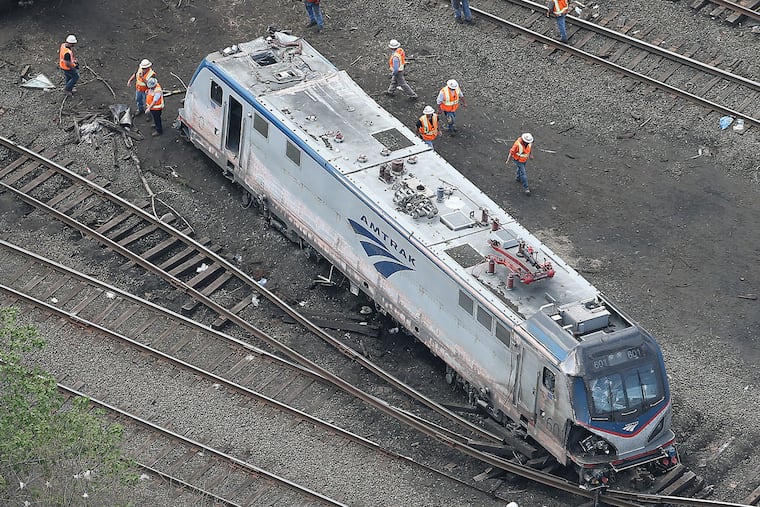
The list is impersonal: 164 people identified just by age and sex, followed by an inventory of damage to human bodies.
Fractures. Lacerations. A ruptured bladder. A liver contusion. Three people who suffered flail chests - catastrophic harm to their rib cages.
The list, released Wednesday by the National Transportation Safety Board, catalogs injuries inflicted when Amtrak Train 188 derailed in Philadelphia last spring.
Of 253 passengers on the seven-car train, eight died. Half of those were in or near the first car; the others were in or near the third. An additional 43 people, according to the report, suffered serious injuries. The May 12 crash also caused minor injuries to 113 others.
"The detailed medical information added to the docket today underscores the horror and magnitude of this senseless tragedy," Thomas Kline, who is among the lawyers representing dozens of survivors from the derailment, said in an emailed statement.
Those who died, and many who lived, were battered. Most had multiple fractured bones. One 57-year-old man who survived had eight fractures, from his ribs to his left thumb.
The fatalities and serious injuries included case after case of hemorrhaging and contusions. One person who died lost her left arm. The report said most of the injuries were to the victims' torsos.
"The majority of serious injuries in the survivors in this accident were to the chest," according to the report.
The data were added to more than 2,000 pages of documents the NTSB compiled to determine a probable cause for the crash and make recommendations to improve safety.
The train accelerated up to 106 mph as it approached a 50-mph curve in the city's Frankford neighborhood and derailed, NTSB documents have reported. Investigators have found no evidence of mechanical, track, or signal problems that might have caused the derailment. The engineer, Brandon Bostian, has told investigators he does not remember what happened.
The documents released this week also give details of how hospitals responded to the crash. Most of the injured passengers got to the hospital in police vehicles or SEPTA buses, the report said. Ten area hospitals received victims, with Temple University Hospital receiving the most: 43. Among them were 15 seriously injured and one fatality.
The accident happened at 9:21 p.m., and the injured began arriving at hospitals at 9:57 p.m., the NTSB report stated. They did not stop arriving until 1:02 a.m.
215-854-4587
@jasmlaughlin