A tragedy on a grand scale
How is it possible the Philadelphia Orchestra finds itself in such dire financial trouble?
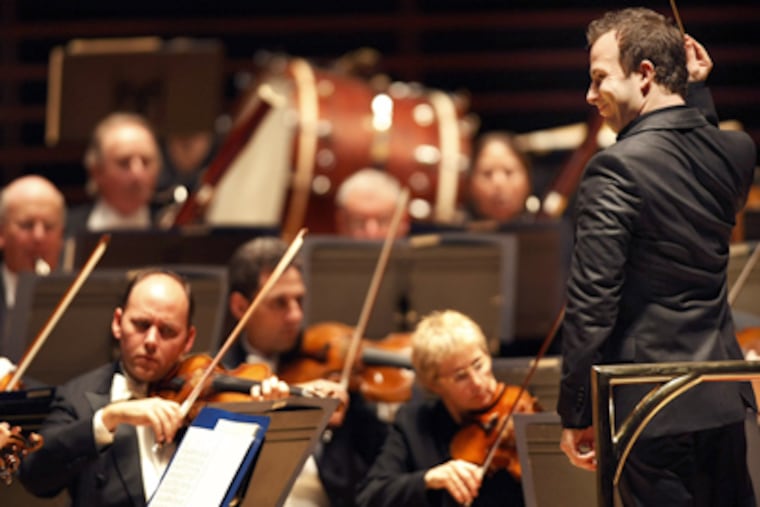
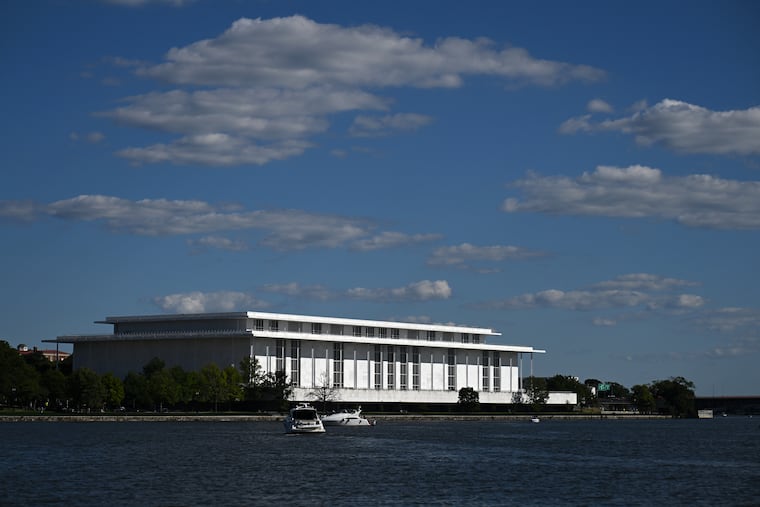
The Kimmel Center was packed last Sunday evening, the lobby a joyful noise. Verizon Hall was filled to near-capacity with a diverse crowd, economically, racially, children and grandparents, a festive patchwork quilt of the region.
It was the Kimmel of its founders' dreams.
The crowd wasn't there for the Philadelphia Orchestra, but for the Roots' Ahmir "?uestlove" Thompson and his classical-jazz mashup, Philly-Paris Lockdown, part of the Philadelphia International Festival of the Arts.
Meanwhile, the orchestra, one of our region's crown jewels, had declared bankruptcy the previous day.
This is a travesty, a very big deal. The Phillies may be the city's great national ambassador, among the very best at what they do, but the Philadelphia Orchestra is among the very best at what it does while achieving global acclaim. It is the only Big Five orchestra to face such financial hardship. Indeed, many orchestras, like those in Los Angeles and New York, even San Francisco, are thriving.
"Every musician feels this is a tragedy that things came to this," says cellist John Koen, chairman of the players committee. "Some people are angry. Some are just really upset. But the perception is troubling." The orchestra, founded in 1900, is in the worst trouble in its illustrious history, while, Koen says, "honestly, we're playing better than we ever have before."
The musicians' mandate, like that of the Phillies, is to play superbly, to give audiences the excellence they've long come to expect. Management's task is to support, develop, and promote that talent, to make sure maximum revenue is generated and the endowment grows to preserve its core asset, the musicians. Here, the orchestra has not been successful.
When the Kimmel opened 10 years ago, the expectation was that the orchestra's new home would create excitement and increased revenue, much as Citizens Bank Park promised when it opened three years later. The Phillies are on a sellout streak, but the orchestra plays to 65 percent capacity.
Both groups will play in town this Friday. Though the perception is that orchestra seats cost much more - again, a perception crucial to its woes - there are affordable tickets at virtually the same price, the main difference being that there are almost none available for the Phillies.
How did such a great orchestra find itself in such terrible trouble?
Five chief executives in six years didn't help. Music director Christoph Eschenbach's troubled tenure lasted all of five years. The organization went for stretches without a marketing or development director, both crucial to success. The group unleashed the ponderous "unexpect yourself" campaign to considerable derision. The group no longer has a recording contract or regular radio broadcast, yet new listeners and supporters must be developed.
The orchestra owns its old home, the Academy of Music, but pays rent at the Kimmel, which has struggled with its finances and mission. Both organizations sustain separate boards, with many directors shifting between the two, and, with them, their donations.
The city has benefited from new museums and expansions of existing institutions: the Constitution Center, the National Museum of American Jewish History, the new Please Touch Museum, the Philadelphia Museum of Art's $500 million expansion, the Free Library's $185 million renovation and addition.
But with that growth comes donor fatigue, especially when the same individuals and organizations are continually being asked to give. During the last decade, the Pew Charitable Trusts donated about three times as much to the Philadelphia Museum of Art or the Barnes Foundation move to the Parkway as it did to the orchestra. The Philadelphia ensemble also failed to attract considerable corporate sponsorships, as other orchestras have.
Then again, the orchestra has an endowment of $140 million, triple its liabilities. And this is the city that raised $68 million in a matter of months for a painting.
"In my opinion, the orchestra members, past and present, did their job," listener Stuart E. Hirsch wrote board chair Richard Worley and CEO Allison Vulgamore. "We need a board that can do the same. With the resources and endowment, there should be no excuse for bankruptcy. We need creative ideas to preserve this treasure."
Anxiety is rampant. There's no secret, Koen tells me, "that musicians are beginning to entertain offers elsewhere." Without outstanding musicians creating that lush sound, what do we have? An emptier hall.
Contact columnist Karen Heller at 215-854-2586 or kheller@phillynews.com. Read her blog posts on Blinq and her work at www.philly.com/ KarenHeller. Follow her on Twitter @kheller.